

More news on this day
Global Affairs Canada is urging Canadian travelers to rethink upcoming trips to both the United States and Colombia’s Caribbean coast, issuing updated advisories that flag new uncertainties at U.S. land borders and the sudden closure of Colombia’s Tayrona National Park amid escalating security risks.
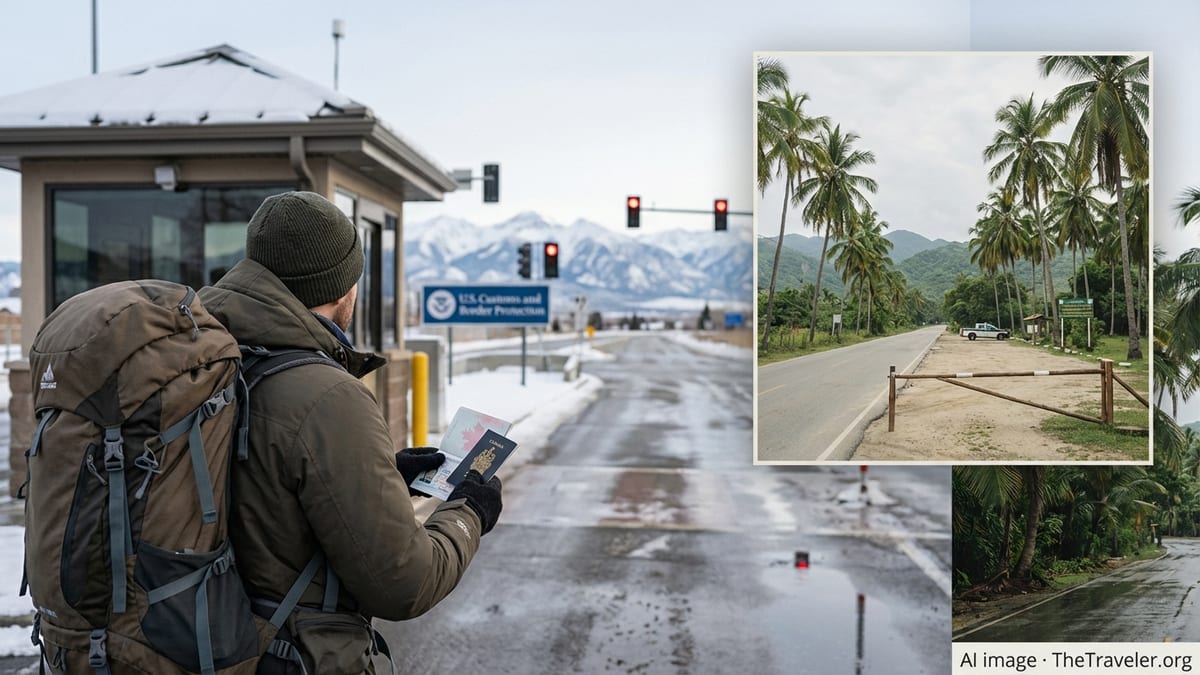
Canada Tightens Language on U.S. Border Entry Concerns
Global Affairs Canada has quietly sharpened its wording on travel to the United States, warning Canadians that some identity documents long used at land crossings may no longer be reliably accepted by U.S. officials. The move comes as questions mount around how U.S. Customs and Border Protection officers are handling secure status cards held by First Nations travelers and other cross-border commuters.
In an update published on February 19, Canadian officials underscored that the use of certain secure status cards for land and marine crossings is now effectively subject to the discretion of U.S. border officers. While the documents remain technically valid for some overland travel, the advisory stresses that they cannot be used for air travel and may be challenged in secondary inspection if officers demand additional proof of identity or status.
The clarified language does not change the underlying legal framework governing cross-border movement, but it signals a more cautious stance from Ottawa at a time when Indigenous travelers, frequent cross-border workers and snowbird tourists have reported inconsistent treatment. Community leaders have been advising members to carry valid passports and backup documentation, warning that any ambiguity can translate into delays, denied entry or, in rare cases, prolonged questioning.
For Global Affairs Canada, the message is less about discouraging travel to the United States and more about risk management. By flagging document uncertainty in its official advisory, the department is effectively putting Canadian travelers on notice that they bear greater responsibility for ensuring they carry the most widely accepted forms of identification, especially when traveling for work or extended stays.
First Nations Travelers Caught at the Center of Policy Ambiguity
The most immediate impact of the updated advisory is being felt by First Nations members who have historically relied on secure status cards to cross the border for family visits, cultural events and economic activities in neighboring U.S. communities. Indigenous leaders on both sides of the border say that what was once a relatively predictable process has become less certain over the past year.
In January, First Nations authorities began advising members to treat status cards as supplementary rather than primary documents when crossing into the United States. Travelers have been encouraged to carry passports, proof of right to live or work and any additional paperwork that may demonstrate their legal status, particularly for those who reside or plan to stay long term south of the border. Reports of inconsistent questioning and document demands have added to a perception that the rules are shifting in practice, even if they have not changed on paper.
Global Affairs Canada’s updated language reflects those concerns by acknowledging, in effect, that Canadian-issued documents do not guarantee smooth passage when U.S. officials apply their own standards at the border. The advisory notes that secure status cards may be accepted at some crossings but rejected or subjected to additional verification at others, creating what Indigenous advocates describe as a patchwork of experiences that can disrupt family life and economic activity in cross-border regions.
Policy experts say the diplomatic challenge for Ottawa lies in defending the rights and mobility of Indigenous travelers while respecting U.S. sovereignty over its borders. For now, federal officials are focusing on transparency: signaling to Canadian travelers that they should not assume past experiences will necessarily predict how their documents will be treated in 2026.
Border Anxiety Adds to a Shifting Landscape for Canadian U.S.-Bound Travel
The latest advisory update lands in the middle of a broader recalibration in Canadian attitudes toward travel to the United States. In recent months, surveys and travel industry data have pointed to a measurable drop in leisure road trips south of the border, even as air traffic has remained comparatively stable. Analysts attribute the trend to a combination of political tensions, a weaker Canadian dollar and growing uncertainty at land crossings.
For many Canadians, border friction is not just a matter of policy but of perception. High-profile disputes over immigration enforcement, shifting rules on entry documentation and anecdotal accounts of lengthy secondary inspections have discouraged some would-be visitors. The new Global Affairs Canada wording on document acceptance may reinforce those hesitations, particularly among travelers who live within easy driving distance of the U.S. but have alternative options for short-haul vacations.
Travel agents report that clients are increasingly asking detailed questions about what they need to carry when driving to U.S. destinations for shopping trips, concerts or sporting events. In response, many agencies are advising that every traveler, including children, hold a valid passport even for short journeys, treating older practices such as relying on enhanced driver’s licenses or status cards as outdated in the current environment.
While Ottawa has not raised the formal risk level for travel to the United States, the more cautious tone aligns with a global trend toward granular, issue-specific advisories. Rather than blanket warnings, governments are now more likely to highlight particular vulnerabilities, from documentation and consular access to localized security concerns, so that travelers can make more informed decisions about both destination and mode of travel.
Tayrona National Park Shuts Down Amid Escalating Security Risks
Far from the northern border crossings, Canadian travelers are facing a very different kind of disruption on Colombia’s Caribbean coast, where Tayrona National Natural Park has been closed indefinitely following a rapid deterioration in security conditions. The park, a dense mosaic of jungle-covered hills, secluded beaches and Indigenous sacred sites near Santa Marta, is one of the country’s marquee attractions and a staple of many Canadian backpacking itineraries.
Colombia’s national parks authority ordered the closure in mid February, shortly after officials and park rangers were targeted with threats linked to operations against illegal construction and occupation within the protected area. Authorities reported that protest actions and blockades at main access points, combined with irregular collection of entry fees by unauthorized actors, made it impossible to guarantee the safety of visitors or staff inside the park.
The decision marks a sharp shift from previous, time-limited closures of Tayrona that were coordinated with local Indigenous communities for environmental and spiritual reasons. In those cases, the park typically shut down for 15 days at a time to allow ecosystems to recover from heavy tourism pressure, with reopening dates clearly communicated months in advance. This year’s extension beyond the usual February closure period is explicitly tied to fears of violence and the presence of armed groups vying for control of the surrounding Sierra Nevada de Santa Marta.
For Canadian travelers already in Colombia, the suddenness of the shutdown has caused a wave of last-minute itinerary changes, as visitors reroute toward alternative northern-coast destinations. For those still at home planning spring getaways, the indefinite nature of the closure introduces a new level of uncertainty in a region that has long marketed itself as a relatively accessible blend of culture, wildlife and beach escapes.
Armed Groups and Indigenous Communities at the Heart of Tayrona’s Crisis
Beneath the immediate concern for visitor safety lies a complex conflict involving armed groups, state authorities and Indigenous communities who consider Tayrona and the surrounding Sierra Nevada to be ancestral territory. Security analysts in Colombia have linked the recent tensions to an intensifying turf war between rival criminal organizations seeking to control strategic drug trafficking routes along the Caribbean coast.
As state agencies have moved in to dismantle unauthorized tourist infrastructure and reassert control over park administration, local operators and community leaders have pushed back, saying that years of neglect and underinvestment left them with little choice but to build their own facilities. Some accuse national authorities of using security concerns as a pretext to sideline local stakeholders in decisions about how Tayrona’s tourism revenues are managed and shared.
Indigenous leaders, meanwhile, are caught between their longstanding efforts to protect the land and the encroachment of both illegal armed actors and mass tourism. The Kogui, Wiwa, Arhuaco and Kankuamo peoples have repeatedly warned that violence, forced displacement and environmental degradation in the Sierra Nevada are eroding their cultures and spiritual practices. International human rights organizations and United Nations officials have echoed those concerns, describing the situation as an “ongoing tragedy” that risks pushing some communities toward cultural extinction.
The indefinite closure of Tayrona has therefore become a symbol of overlapping crises: a security emergency fueled by organized crime, a governance dispute over who speaks for the park and its surrounding communities, and an environmental challenge in one of Colombia’s most fragile coastal ecosystems. For Canadian visitors monitoring the situation from afar, the park’s shuttered gates tell a larger story about the uneven progress of Colombia’s post-conflict transition.
How Global Affairs Canada Is Framing the Colombia Risk for Travelers
In its latest advisory for Colombia, Global Affairs Canada continues to urge travelers to exercise a high degree of caution nationwide, singling out certain regions and transport corridors for higher levels of risk. The Caribbean coast, including areas around Santa Marta and Tayrona, has generally been framed as more accessible than historically volatile interior regions, but the recent closure underscores how quickly local conditions can change.
Officials in Ottawa are emphasizing that Canadians considering travel to northern Colombia should follow local news closely, maintain flexible plans and be prepared for sudden changes to park access, road conditions and transport links. While no specific ban has been placed on travel to the Sierra Nevada or Santa Marta, the combination of armed group activity and targeted threats against park staff has elevated the overall risk profile of the area for foreign visitors.
Travel insurance providers have also begun reviewing their coverage language for trips that rely heavily on national parks and protected areas in Colombia. In cases where a destination like Tayrona is central to a package, some insurers are advising clients to consider postponement or rerouting rather than gambling on a near-term reopening that local officials are not yet ready to guarantee.
For budget-conscious Canadian travelers, the advisory language is particularly relevant. Many backpackers and independent travelers build loosely planned itineraries around national parks and remote regions that can be more vulnerable to volatility. Global Affairs Canada’s approach in 2026 is to encourage this style of travel to remain possible while stressing the need for up-to-date information, contingency budgets and a willingness to change course when local security dynamics demand it.
What Canadian Travelers Should Do Now
For Canadians with imminent trips to the United States by land, consular officials and travel experts are united on one main point: carry a valid passport and do not assume that alternative documents will suffice. Travelers relying on secure status cards or other border identification should treat them as complementary, not primary, and be ready to present additional paperwork if questioned about their purpose of travel, length of stay or right to work.
Those planning journeys to Colombia, particularly to the Caribbean coast, are being advised to monitor both Colombian authorities and Global Affairs Canada for day to day updates on Tayrona’s status and broader regional security developments. Travelers whose plans hinge on hiking within the park or staying in its lodges should contact tour operators and accommodation providers to confirm whether alternative routes and beach destinations can be substituted without incurring substantial penalties.
Across both destinations, the emerging theme is preparation rather than panic. Global Affairs Canada has stopped short of telling Canadians to stay away from either the United States or Colombia, but it is moving to close the information gap between changing realities on the ground and the expectations of travelers who booked trips months in advance. In an environment marked by shifting border practices and localized security crises, officials say that informed flexibility is now as important as flight tickets and hotel confirmations.
For the travel industry, these developments serve as a reminder that geopolitical and security dynamics can quickly reshape demand. Tour operators, airlines and booking platforms targeting Canadian travelers are already adjusting their messaging, highlighting destinations with stable access while reiterating the importance of comprehensive insurance, clear documentation and a plan B. As winter and spring travel seasons unfold, the impact of Canada’s sharpened advisories will become clearer in border traffic statistics, booking patterns and the stories returning travelers tell about how the world’s frontiers are changing in 2026.