

More news on this day
Poland has joined Germany, Switzerland, Hungary, Italy, France, Denmark and several other European nations on a heightened-risk list for Canadian travelers, after Ottawa issued an urgent advisory for Schengen countries citing unresolved visa questions, growing political tensions and a shifting security landscape ahead of the busy spring 2026 travel season.
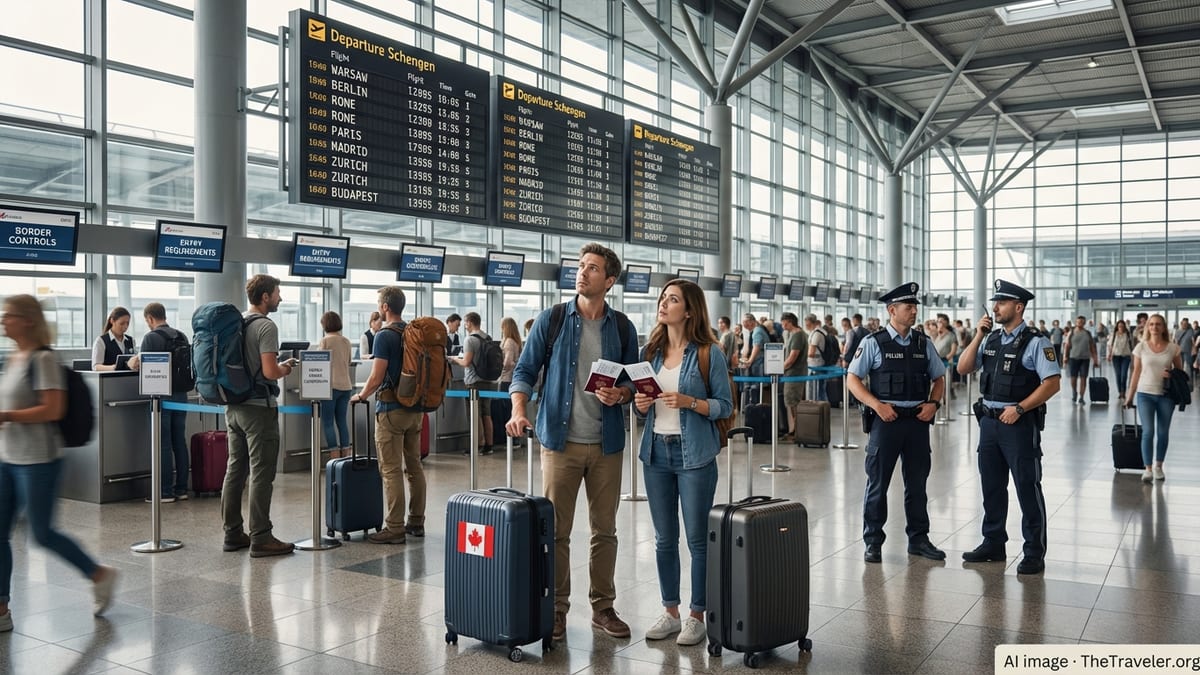
Ottawa Raises Alarm as Spring Travel Demand Surges
Canada’s latest advisory, issued in late February 2026, urges travelers to exercise a higher degree of caution when visiting a broad swath of Europe’s Schengen Area, including popular destinations such as Poland, Germany, Switzerland, Hungary, Italy, France and Denmark. The move comes just weeks before the usual spike in Canadian tourism to Europe for Easter, long weekends and early spring city breaks.
Officials in Ottawa are warning that a combination of evolving entry rules, higher scrutiny at external Schengen borders and occasional airport disruption could complicate trips that Canadians previously considered routine. While the advisory stops short of discouraging all nonessential travel, it stresses the need for careful planning, close monitoring of official updates and flexible booking arrangements.
The update follows a series of similar warnings Canada has issued for individual European and non-European destinations over the past year linked to tightening border controls, digital travel authorizations and a more volatile global security environment. By grouping a larger set of Schengen states into a single higher-alert category, the government is signaling that the risks are now systemic rather than isolated.
Visa Waivers, ETIAS and Entry Rules Create New Uncertainty
Although Canadians remain formally visa-exempt for short stays of up to 90 days within the Schengen Area, Ottawa notes that many travelers are still unaware of the coming European Travel Information and Authorisation System, or ETIAS, which is set to apply to Canadian passport holders starting in 2026. This electronic pre-screening scheme, similar to Canada’s own eTA, will be required for most tourism and business trips once fully in force.
Canadian officials caution that a lack of clarity around the precise rollout schedule and the potential for overlapping checks with existing visas or local permits has already led to confusion at some European consulates and border posts. Travelers making last-minute bookings or transiting multiple Schengen states on complex itineraries are considered most at risk of delays or secondary screening.
The advisory stresses that even when a visa is not required, airlines and border officers can deny boarding or entry if documentation, onward travel plans or accommodation details are incomplete or inconsistent. With ETIAS pre-screening, Schengen authorities will also be able to flag applications for manual review if they detect possible security or migration risks, adding another layer of uncertainty for a small but significant number of applicants.
Canada is urging travelers to verify current requirements country by country, pay close attention to passport validity rules and allow ample time for any new authorizations or supporting paperwork. Those planning extended stays, work assignments or study programs are advised to consult immigration specialists before departure.
Political Friction Tests Canada–Europe Relations
The travel advisory also reflects a more strained political climate between Canada and parts of Europe, even as trade and diplomatic ties remain broadly strong. Ottawa has clashed with European institutions and member states in recent years over issues ranging from resource and Arctic policy to regulatory disputes and agricultural market access.
Officials and analysts note that shifts in domestic politics across the European Union, including the rise of more hardline parties and debates over migration, border control and security, have complicated cooperation on mobility and consular matters. These dynamics have, at times, spilled into the treatment of foreign nationals at borders and in visa adjudication, prompting closer scrutiny by Canada’s foreign service.
In its latest notice, Canada points to the possibility that sudden policy changes, protests or parliamentary votes in key Schengen capitals could trigger rapid adjustments to entry rules, internal security measures or public-assembly restrictions. Travelers are advised that what is routine today may change with little warning, particularly in countries holding regional or national elections in 2026.
For Poland, which has now been explicitly highlighted alongside Germany, France and Italy, Canada’s concern centers on how domestic political debates and regional security pressures may influence policing of demonstrations, airport security postures and enforcement at land borders with non-Schengen neighbors.
Security Concerns: From Terror Threats to Civil Unrest
Beyond paperwork and politics, Ottawa’s advisory underscores a broader uptick in security risks across parts of the Schengen Zone. European security services have repeatedly warned of a persistent threat of terrorism, including possible lone-actor attacks in urban centers, transport hubs, cultural sites and large public gatherings that draw foreign visitors.
Canadian authorities are also tracking a rise in mass demonstrations linked to inflation, labor reforms, climate policy, foreign conflicts and other divisive issues. While the vast majority of protests in cities such as Paris, Berlin, Warsaw, Rome and Copenhagen remain peaceful, a minority have turned confrontational, leading to clashes with police, property damage and transport disruptions.
The advisory notes that Canadian travelers could be caught up in such events inadvertently, particularly in historic centers, around parliaments or near major train stations and airports. Ottawa is urging visitors to avoid large crowds, monitor local news and follow guidance from local authorities if demonstrations unfold near tourist districts.
At the same time, the government stresses that routine crime, including pickpocketing, scams targeting tourists and theft on public transit, remains a more common threat than terrorism for most visitors. Heightened vigilance at ATMs, in nightlife districts and around major attractions is recommended, especially during crowded spring weekends and festivals.
What Canadian Travelers Should Do Now
With less than a month before the start of the peak spring travel window, Canadian officials are encouraging anyone with upcoming trips to affected Schengen countries to take a fresh look at their plans. Travelers are urged to register with Canada’s voluntary abroad registry so they can receive direct updates, and to review their travel insurance to ensure coverage for delays, cancellations and medical emergencies in Europe.
Canadians are being advised to carry printed and digital copies of key documents, including passports, proof of accommodation, return or onward tickets, and any confirmations related to future ETIAS approvals once the system becomes operational. For multi-country itineraries that include Poland, Germany, France, Italy, Switzerland, Hungary and Denmark, officials suggest building in additional time between connections and avoiding unnecessarily tight layovers at major Schengen hubs.
Travel industry observers say the advisory is not expected to trigger a collapse in bookings to Europe, which remains a top long-haul destination for Canadians. However, tour operators and airlines are preparing for more questions about entry rules, and some are updating their terms and conditions to reflect the possibility of sudden regulatory or security changes.
For now, Canada’s message to its citizens is one of caution rather than alarm: Europe’s Schengen states remain open and eager for visitors, but the era of effortless, paperwork-free travel across the Atlantic is giving way to a more complex and closely monitored system just as the 2026 season gets underway.