

More news on this day
Canadian travellers planning spring and summer trips to Sweden and other popular destinations such as the Netherlands, Brazil, Germany, Italy, Thailand and France are being urged to review entry rules carefully, as new security measures, shifting visa policies and longer processing times combine to create a more uncertain environment at the border.
Get the latest news straight to your inbox!
Canada Tightens Travel Guidance As Global Risks Shift
Canada’s official travel advice for Sweden and a growing list of destinations highlights a more complex landscape for international trips in 2026. Recent updates to federal advisories emphasize heightened security concerns in Europe and the Middle East, the potential for sudden demonstrations or attacks in major cities, and the importance of carrying correct documentation at every stage of a journey.
Publicly available information on the Government of Canada travel portal shows that Sweden remains a generally safe destination, but travellers are reminded that European authorities continue to assess risks related to terrorism and organized crime, particularly in urban centres and transport hubs. Similar cautionary language appears in advisories for Germany, France, Italy and the Netherlands, reflecting shared regional concerns.
At the same time, Canada has issued rare top-level warnings for certain conflict-affected states, underscoring how quickly conditions can deteriorate. While those alerts focus on the Middle East, risk consultants note that shifts in one region can ripple into airline schedules and connecting routes used by leisure and business travellers heading to Europe, Asia and South America.
Travel analysts say the convergence of security alerts, changing visa rules and operational pressures at border crossings is pushing governments, including Canada, to actively steer citizens toward more careful trip planning and closer monitoring of official advice before departure.
Europe Reintroduces Border Checks and Stricter Entry Screening
Across the European Union’s Schengen area, several states have temporarily restored internal border controls in response to security and migration pressures. Immigration briefing notes circulated to multinational companies indicate that Germany, France and Sweden have each extended or reintroduced checks at land or internal borders, citing threats to public order, terrorism risks and strains on asylum and reception systems.
In Sweden’s case, the measures cover internal Schengen borders and land crossings with Denmark, linked to concerns about organized cross-border crime and past attacks involving explosives. Germany has focused on land borders with neighbouring states including Denmark, France, the Netherlands and others, while France continues controls along internal borders tied to terrorism threats and irregular migration.
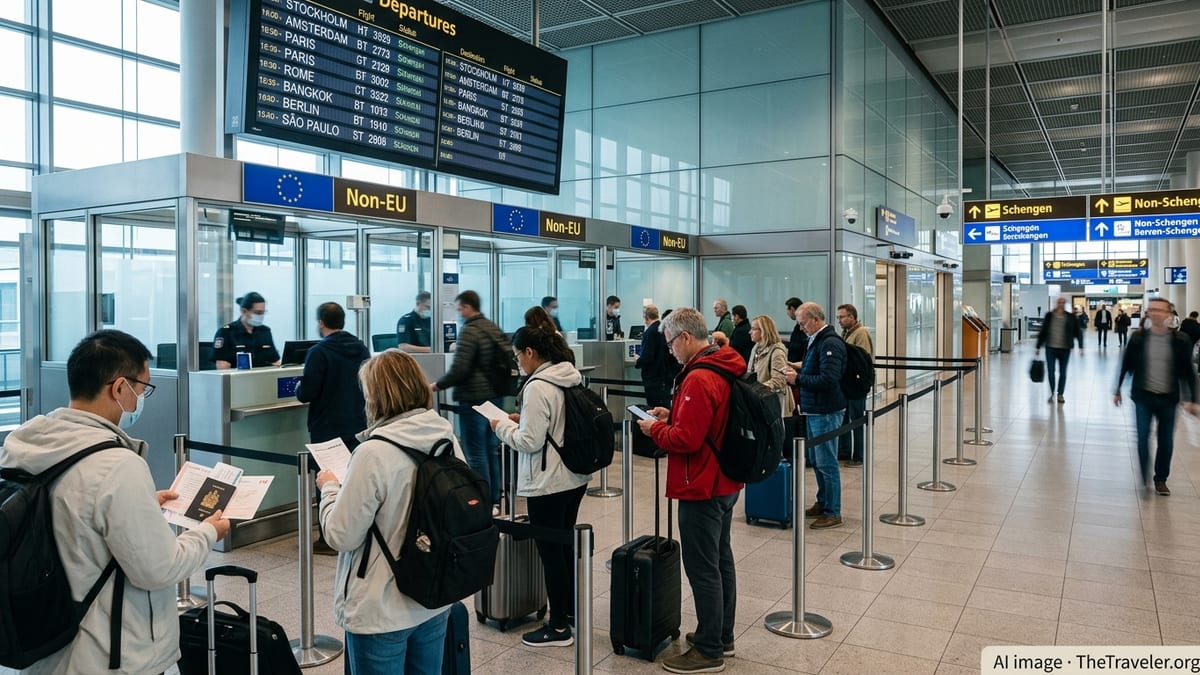
For Canadian tourists flying into major gateways such as Stockholm, Amsterdam, Paris, Frankfurt, Rome or Bangkok, the most visible impact may be longer queues and more detailed questioning at passport control. Travellers arriving from within the Schengen zone can no longer assume a completely frictionless experience when transiting between certain countries, and may be asked to show proof of onward travel, accommodation and sufficient funds.
Specialists in global mobility note that these measures are lawful under EU rules and have become more frequent since 2015, but the current cycle of extensions into 2026 means North American visitors should expect more checks, not fewer, at least in the near term.
Visa Policy Changes Add Confusion for Brazil and Other Destinations
Beyond Europe, shifting visa regimes are creating fresh complications for Canadians planning trips to Brazil and selected Asian destinations. Recent coverage in travel trade media highlights that Brazil has reinstated visa requirements for Canadian passport holders after a period of visa-free entry, obliging travellers to apply in advance and factor in processing times.
The policy change places Brazil in contrast with countries such as China, which have introduced or expanded short-term visa waivers for some nationalities, and South Korea, which has prolonged an exemption from its electronic travel authorization requirement for Canadian visitors until late 2026. The result is a patchwork of regimes that can be difficult for casual travellers to track.
Canada’s advisory framework reflects these differences by directing travellers to verify whether an e-visa, traditional visa, or electronic travel authorization is required for each leg of a multi-country itinerary. For example, a trip that combines Rio de Janeiro, Paris and Stockholm now involves three distinct sets of rules, even before considering transit stops through hubs such as Amsterdam or Frankfurt.
Travel planners caution that last-minute rule changes are still possible and highlight recent examples where airlines have denied boarding to passengers who lacked proper visas or who misunderstood transit requirements at intermediate airports.
Processing Backlogs and Extension Delays Disrupt Long‑Stay Travellers
Inside Canada, Immigration, Refugees and Citizenship Canada continues to adjust processing forecasts for visitor visas, study permits and work permits. Recent updates published by immigration news outlets and the federal department indicate that while some categories have seen modest improvements, others remain subject to extended waits stretching into weeks or months.
These delays can be especially disruptive for travellers trying to extend stays abroad or align new entry applications with expiring permissions. Canadians who overstay in Schengen countries such as Sweden, Germany, Italy, France or the Netherlands, even inadvertently, risk fines, entry bans or future visa complications, particularly now that border checks and passenger screening are more intensive.
Specialist briefings on European policy stress that overstays are taken increasingly seriously, and the planned roll-out of new EU-wide systems to register entries and exits is expected to tighten enforcement further. Until those systems are fully operational, temporary border controls and targeted checks remain primary tools, making accurate documentation of lawful stay periods essential.
Migration advisers recommend that travellers who anticipate needing a visa extension or status change abroad begin the process well in advance, monitor processing updates, and maintain clear evidence of application submissions and approvals to present at border crossings if questioned.
Passport Validity, Entry Rules and Practical Steps for Canadian Travellers
Alongside security warnings and visa complexities, Canadian travellers to Sweden, the Netherlands, Brazil, Germany, Italy, Thailand, France and many other destinations face stricter enforcement of passport validity rules and entry conditions. Many countries in Europe now expect non-EU visitors to hold passports valid for at least three to six months beyond the planned date of departure, and to carry proof of return travel.
Reports from airlines and travel agencies show an uptick in cases where passengers are denied boarding because their passport expires too soon, a passport’s blank pages are insufficient, or connecting airports impose transit visa requirements that travellers did not anticipate. These problems are surfacing more often as carriers apply carrier liability rules rigorously to avoid fines from destination states.
Travel experts suggest a series of practical steps in response to Canada’s reinforced messaging. Before booking, Canadians are advised to confirm visa obligations, health notices and security advisories for every stop, including transit points. After booking, they should double-check that their passport meets the strictest validity rule among all destinations, print or download confirmations of accommodation and onward travel, and allow extra time for queues at airports where internal border checks have been restored.
Observers of the global travel landscape note that while the vast majority of trips to these countries proceed without incident, the margin for administrative error has narrowed. In a year marked by heightened security vigilance, policy shifts and evolving border technology, well-prepared documentation has become as important as tickets and luggage for Canadians heading abroad.