

More news on this day
Canada’s chronic shortage of air traffic controllers is emerging as one of the biggest wild cards for the 2026 summer travel season, with airlines on both sides of the Atlantic quietly warning that even routine weather or technical hiccups could tip the system into widespread delays and cancellations.
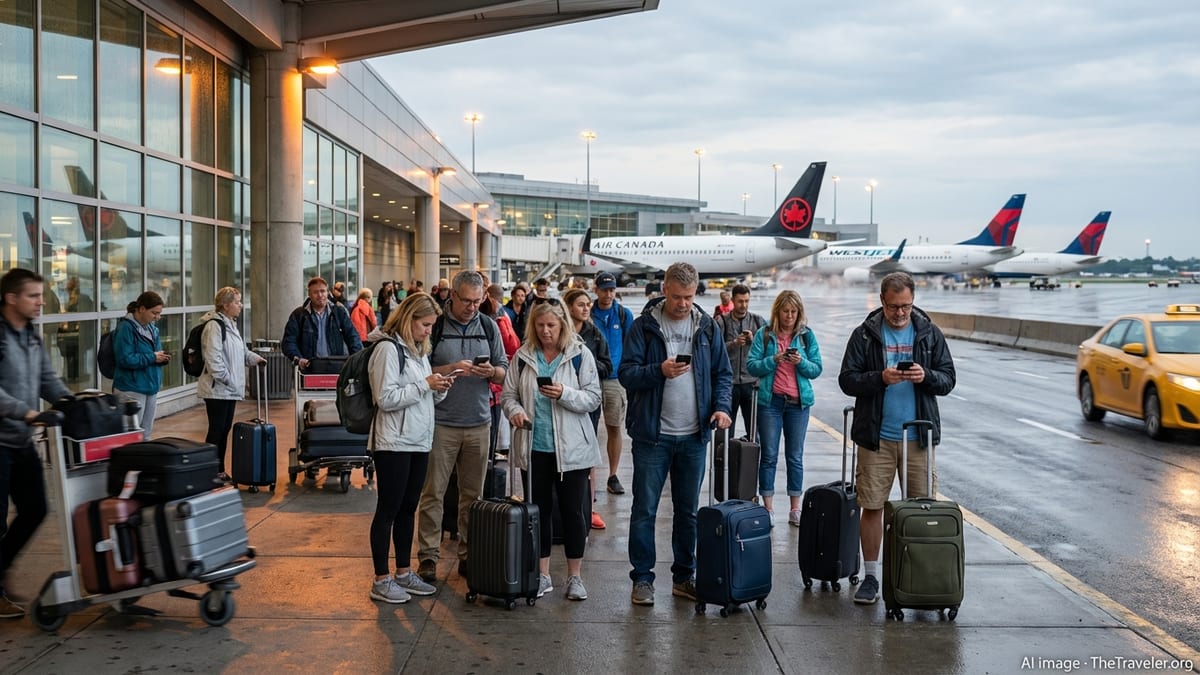
A Chronic Staffing Crisis That Will Stretch Into 2026
Canada’s air navigation system has been operating under a controller deficit for several years, and the gap is not expected to close before the peak summer 2026 travel period. Nav Canada, the private, non-profit corporation that manages the country’s civil airspace, has acknowledged it remains hundreds of fully qualified controllers short of what is needed for a resilient network. Industry estimates put the shortfall at roughly 200 to 250 controllers across the country, even as traffic rebounds toward or above pre-pandemic levels.
The bottleneck is structural. It typically takes two to three years for a trainee to become fully certified in a single operating environment, and longer to achieve multi-position proficiency at large hubs. Nav Canada has expanded intake and training capacity, with several hundred students currently in the pipeline and more planned through 2028, but retirements, attrition and the high-stress nature of the work are eroding much of that progress. Unions representing controllers argue that official staffing targets underestimate actual operational needs, leaving little margin when demand spikes or bad weather hits.
Recent summers have tested those limits. Controller shortages have already triggered traffic management initiatives, ground delays and flow restrictions at major airports, as well as periodic tower closures at mid-sized facilities when the sole controller on duty must step away for mandated breaks. Those episodes, industry observers say, are a preview of the fragility that could define peak days in July and August 2026.
From Vancouver to Winnipeg, Early Warning Signs in 2025
The effects of the staffing crunch became highly visible at several Canadian airports in 2025. At Vancouver International Airport, one of the country’s busiest gateways, controller shortages at Nav Canada contributed to hundreds of delays and dozens of cancellations over the Canada Day long weekend, forcing airlines to cap movements and spread out departures. WestJet and other carriers issued rare public advisories warning travelers to expect knock-on disruptions through the core summer months.
Further inland, tower operations at Winnipeg and Kelowna drew national attention after memos to pilots revealed that facilities could temporarily close when a lone controller was required to take a fatigue-management break. During those windows, the airports reverted to uncontrolled status, with pilots self-coordinating approaches and departures on common frequencies. While aviation authorities stressed that safety procedures remained robust, airlines reported that the change slowed operations and added risk of cascading delays for already tight schedules.
For passengers, the lived experience was brutally simple: longer waits, missed connections and unpredictable recovery. Airlines had to reroute aircraft and crews at short notice, sometimes tankering extra fuel on regional routes in case holding patterns or diversions became necessary. With the same structural staffing issues still in place and demand expected to rise into 2026, network planners now view those 2025 disruptions as a rehearsal rather than an anomaly.
How Air Canada, WestJet and Air Transat Are Positioning for Summer 2026
Canada’s three largest homegrown brands are entering the 2026 summer season with markedly different strategies, but all are baking controller-related constraints into their plans. Air Canada, the country’s flag carrier, has already trimmed parts of its transborder network and redeployed capacity toward domestic and leisure markets, in part to simplify operations and build more slack into key hubs like Toronto, Montreal and Vancouver. The airline has previously instructed crews and dispatchers to allow for potential flow restrictions at congested airports when controller staffing dips.
WestJet, which has been candid about the impact of Nav Canada staffing on both its summer and long-weekend performance, is expected to continue prioritizing reliability over raw capacity growth in 2026. The Calgary-based airline has already reduced some U.S. routes and pulled back frequencies on thinner domestic legs, a move industry analysts interpret as an attempt to protect its core Western Canada network from systemic shocks tied to controller availability.
Air Transat, the Montreal leisure specialist, is taking an even more radical approach. The carrier is in the process of exiting the United States market entirely by mid-2026, focusing instead on sun destinations, transatlantic leisure routes and emerging long-haul markets. While the decision is primarily driven by demand patterns and profitability, analysts note that concentrating flying on a smaller set of high-density routes may also make it easier to absorb air traffic constraints, provided Nav Canada can keep flows stable at major gateways like Montreal and Quebec City.
Delta, United and Lufthansa Weigh the Risks to Cross-Border Networks
For foreign carriers such as Delta Air Lines, United Airlines and Lufthansa, Canada is a critical but relatively small piece of broader global networks. That makes the controller shortage both easier and harder to navigate. On the one hand, these airlines can shift capacity among dozens of international markets, trimming Canadian frequencies or adjusting aircraft gauge if operational risk or delays become unmanageable. On the other, disruptions at Canadian hubs can ripple far beyond North America, affecting banked connections in Atlanta, Chicago, Newark, Frankfurt or Munich.
U.S. majors with large Canadian footprints have already encountered the practical consequences of Nav Canada staffing constraints. When Vancouver or Toronto imposes arrival or departure rate reductions, flights from Seattle, Minneapolis, Denver or New York can be held on the ground, eating into crew duty limits and connection windows. Delta and United, along with other U.S. carriers, have responded by padding schedules on certain routes, building in longer turn times, and coordinating more closely with airport authorities on peak-hour slotting.
Lufthansa and other European carriers are watching the situation with equal concern. Transatlantic flights into Canada are often tightly timed to feed morning or afternoon banks at home hubs, and extended holding or diversions due to controller-induced capacity cuts can undermine premium connections that are central to profitability. For the 2026 season, network planners are examining whether to build additional buffers into flight times, pre-position spare crews in North America, or temporarily consolidate services at airports less exposed to staffing volatility.
What a Controller Shortage Actually Means for Your Flight
For travelers, the term “air traffic controller shortage” can sound abstract, but the practical implications are felt at the gate and on the runway. When a facility like a terminal control unit or tower is short-staffed, managers often respond by reducing the number of aircraft that can land or take off in a given period. That can mean flow restrictions, with flights assigned specific departure slots, or metering of arrivals that forces aircraft to circle in holding patterns or slow their approaches to create spacing.
On clear, low-demand days, those measures may only translate into slight delays. During peak summer afternoons, or when thunderstorms, smoke or low visibility enter the picture, the capacity reduction can be severe. Airlines must then decide which flights to prioritize, sometimes cancelling lower-yield or redundant legs to preserve long-haul and hub-critical operations. Even if your specific flight operates, a late inbound aircraft or an out-of-position crew can mean a schedule slip that grows from minutes to hours.
In the rare but increasingly publicized cases where a tower temporarily closes due to a lone controller’s break or fatigue rules, the airport does not shut down altogether. Instead, it reverts to uncontrolled status, with pilots self-announcing their positions and intentions over a common frequency. While this remains safe within established procedures, it is not efficient. Approach spacing widens, runway movements slow, and airlines often avoid scheduling arrivals and departures in those windows, further concentrating traffic into already busy periods before and after.
Regulators, Unions and Nav Canada Search for Long-Term Fixes
The underlying causes of the controller shortfall are complex and politically sensitive. Unions such as the Canadian Air Traffic Control Association have stressed that the issue predates the COVID-19 pandemic, but acknowledge that early retirements, temporary layoffs and training disruptions during 2020 and 2021 deepened the hole. They argue that existing staffing models did not fully account for rising traffic complexity and that controllers have been asked to plug gaps through overtime that is neither sustainable nor conducive to safety.
Nav Canada and the federal government, for their part, highlight stepped-up recruitment campaigns, expanded training partnerships and a multi-year hiring plan aimed at bringing hundreds of new controllers online by the late 2020s. The agency has partnered with specialized training providers to accelerate the pipeline, and points to dozens of newly licensed controllers at complex facilities like Vancouver as evidence that progress is being made.
Regulators and international bodies are paying close attention. Industry groups have previously called out air navigation service providers in North America for staffing-related delays, and recent safety audits have underscored the need to strengthen operational resilience without compromising risk controls. All sides agree on one point: pushing existing controllers harder is not a solution. Instead, the focus is on better forecasting of staffing needs, improved training throughput and, potentially, streamlined recognition of foreign-qualified controllers who wish to work in Canada.
How Travelers Can Prepare for a Potentially Bumpy Peak Season
With airlines and Nav Canada signaling that the controller shortage will not be fully resolved by summer 2026, passengers are being encouraged to build more flexibility into their plans. Travel agents and corporate travel managers are advising clients to favor early-day departures, which typically have more recovery options if delays mount, and to allow generous connection times when routing through major Canadian hubs such as Toronto, Montreal and Vancouver.
Nonstop flights, even if slightly more expensive, may prove more resilient than itineraries requiring multiple connections across constrained airspace. Where possible, choosing flights on carriers with larger presences at a given airport, such as Air Canada at Toronto or WestJet at Calgary, can also improve rebooking odds if schedules unravel. Travelers heading to or from secondary airports that have experienced tower closures or heavy flow restrictions should closely monitor their flight status and remain prepared for last-minute gate or timing changes.
Ultimately, whether your specific flight on Air Canada, WestJet, Air Transat, Delta, United or Lufthansa is delayed in summer 2026 will depend on a mix of demand, weather, system outages and day-of staffing at key Nav Canada facilities. What is clear, industry insiders say, is that the margin for error remains thin. In such an environment, even a minor disruption in Canadian airspace can quickly spiral into a continent-spanning tangle of missed slots, missed connections and frustrated travelers.