

More news on this day
Canada is moving to overhaul its Super Visa program for parents and grandparents, in a shift that mirrors wider changes in family reunion and long-stay visitor rules in countries such as Brazil, the United States, the United Kingdom, Germany, Italy and Spain. The emerging framework is designed to make it easier for families to spend longer periods together while tightening financial, insurance and compliance requirements for extended visits.
Get the latest news straight to your inbox!
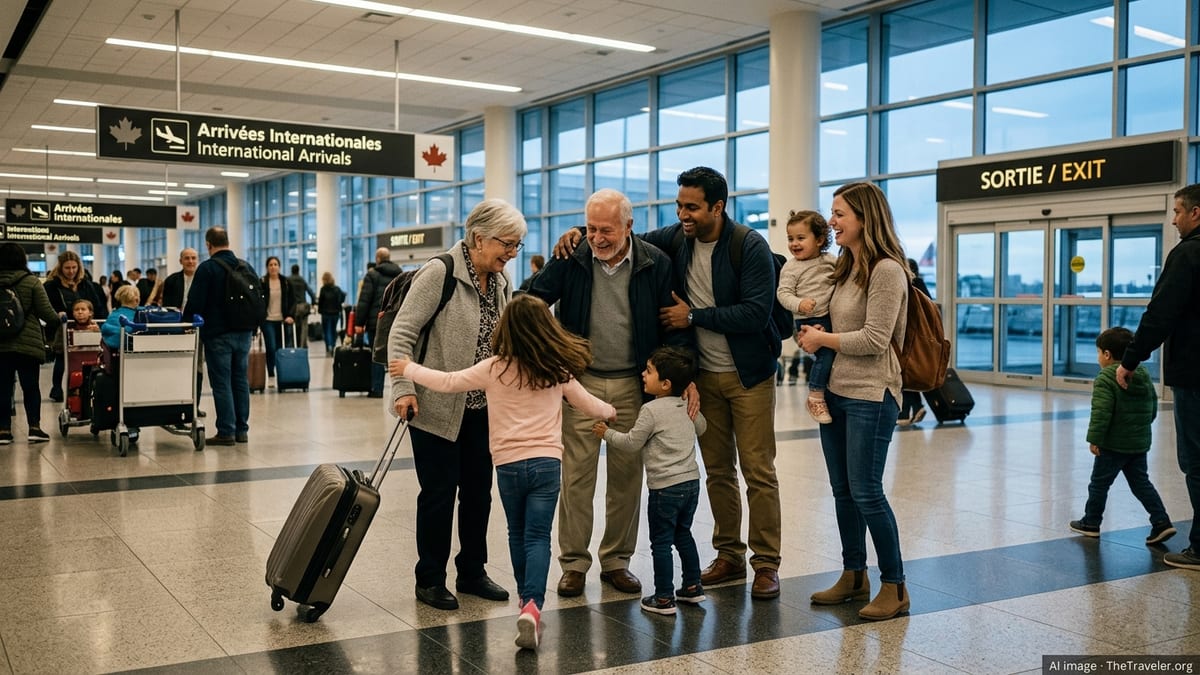
Canada’s Super Visa Becomes the Primary Path for Parents and Grandparents
Publicly available information shows that as of 2026 the federal Parents and Grandparents Program, which offered permanent residence through sponsorship, is closed to new applications. In practice, that leaves the Super Visa as the main route for Canadians and permanent residents who want their parents or grandparents to join them for extended periods without immigrating permanently.
The Super Visa is a multiple-entry temporary resident visa that already allows eligible parents and grandparents of Canadian citizens and permanent residents to stay in Canada significantly longer than standard visitor visa holders. Earlier reforms extended the initial authorized stay per entry from two years to up to five years, with options to apply for further extensions, meaning a potential stay of up to seven years in a single continuous visit under certain conditions.
Federal planning documents on immigration levels for 2024 to 2026 highlight the Super Visa as a key tool to balance family reunification with overall intake targets. Forecasts indicate tens of thousands of admissions in the parents and grandparents category over this period, with a growing share expected to arrive on temporary status. Policy material also points to ongoing pressure to reduce backlogs in family reunification files while maintaining tighter control over processing volumes.
While detailed regulatory text on the latest adjustments is still emerging, government briefings and parliamentary committee material indicate that future updates to the Super Visa may focus on longer admission periods per entry, clearer rules on in-Canada extensions, and more explicit pathways for repeat visits that effectively allow parents and grandparents to spend most of their time in Canada while remaining temporary residents.
Stricter Insurance, Income and Compliance Conditions for Long-Term Stays
Alongside the promise of longer stays, Canadian policymakers have steadily increased the obligations placed on both visitors and their Canadian hosts. Existing Super Visa rules already require an invitation letter from a child or grandchild in Canada, proof of income that meets or exceeds a Low Income Cut Off benchmark, and private medical insurance coverage purchased from a Canadian insurer for at least one year.
Senate committee follow-up material and submissions from immigration stakeholders describe these conditions as both protective and exclusionary. On one hand, the requirements reduce the risk of public health costs and income support burdens. On the other, travel advocates and community groups argue that the high price of private medical insurance and strict income tests keep many lower and middle income families from accessing the program, even when they have lived and paid taxes in Canada for years.
Recent briefing papers suggest that Ottawa is exploring ways to refine these safeguards rather than remove them. Possible avenues include more standardized minimum coverage levels, clearer disclosure rules for insurance products marketed to Super Visa applicants, and closer scrutiny of sponsors’ financial capacity over time, particularly if parents or grandparents spend multiple years in Canada on successive entries.
At the same time, officials have signaled interest in improving processing predictability, with targets to reduce uncertainty for families planning milestone visits such as births, graduations or medical caregiving. Any shift toward longer default stays and easier in-country extensions is expected to be paired with stronger data-sharing and overstay monitoring to reassure the public that the temporary nature of the visa is being respected.
Global Trend: Major Destinations Recalibrate Family and Visitor Routes
Canada’s recalibration of the Super Visa is unfolding against a broader international trend in which major destinations are tightening some immigration channels while experimenting with more flexible options for family visits and caregiving. In the United States, the standard B-2 visitor visa remains the primary route for parents and grandparents to visit family, with typical stays granted for up to six months and a maximum extension that can bring a single visit to about one year.
Analyses of recent U.S. policy show that the focus there has been less on bespoke long-stay family visitor visas and more on higher fees, stricter interview rules and special programs for select categories such as spouses and stepchildren of U.S. citizens. At the same time, new proposals circulating in Congress would create a dedicated temporary family visit category, reflecting growing recognition that existing tourist visas are a blunt tool for multigenerational caregiving and long reunions.
In the United Kingdom, family reunion and adult dependent routes have undergone repeated revisions since 2023. Policy documents and legal analyses point to higher minimum income thresholds for sponsors, additional health surcharges and tighter criteria for elderly parents who wish to reside with family members settled in the country. While there is no exact counterpart to Canada’s Super Visa, the UK system increasingly differentiates between short family visits and long-term dependent residence, with more demanding financial and health requirements for the latter.
Germany, Italy and Spain, operating within the Schengen framework, continue to rely primarily on short-stay visas that allow visits of up to 90 days in any 180-day period for many nationalities, alongside national long-stay permits that can be granted in cases of family reunification. Legal commentaries in these countries describe a trend toward greater scrutiny of dependent visas for older relatives and more attention to proof of accommodation, health insurance and sufficient income, mirroring debates taking place in Canada and the UK.
Family Reunification vs. System Capacity: A Delicate Policy Balance
The evolving Super Visa rules highlight a core tension in Canadian and global mobility policy. On one side are families who want parents and grandparents nearby for childcare, cultural continuity and end-of-life support. On the other are governments seeking to manage health system costs, social services and overall migration levels in the face of aging populations and housing pressures.
Canadian policy papers on immigration levels planning for 2024 to 2026 acknowledge high public support for keeping families together while stressing the need to avoid unsustainable growth in permanent admissions. By leaning on a strengthened Super Visa rather than expanding permanent sponsorship, Canada is aligning with an emerging model where long-term but technically temporary stays become the default for older relatives.
Critics in academic and civil society circles argue that this approach leaves many parents and grandparents in a precarious position. Without permanent residence, they may face repeated renewals, limited access to publicly funded services and uncertainty about their ability to remain close to family if their child’s financial situation changes. Supporters counter that longer Super Visa stays, if well regulated, can offer practical flexibility while preserving space in permanent immigration programs for workers, refugees and younger family members.
Comparative research on the United States, United Kingdom and major European destinations suggests that Canada is not alone in searching for this balance. Many countries are moving toward higher financial thresholds and more complex documentation, while experimenting with more generous stay durations or bespoke family visit categories. For international travelers, this means that long-term visits are increasingly possible, but they come with a higher compliance burden and less margin for error in applications.
What Prospective Super Visa Travelers and Hosts Should Watch Now
For families considering a Super Visa in the current environment, the practical implications of Canada’s evolving rules are clear. Longer initial stays and the possibility of staged extensions offer more scope for parents and grandparents to integrate into day-to-day family life, from helping with childcare to offering support during health challenges, without the immediate complexity of permanent immigration.
At the same time, observers advise that sponsors should plan for robust documentation of income, tax records and accommodation, as well as careful selection of medical insurance policies that meet Canadian standards. As regulators review the program, there is potential for more explicit benchmarks around coverage limits, exclusions and renewal practices, which may affect cost and product availability.
Prospective travelers are also watching for any adjustments to processing times and regional backlogs, as immigration authorities refine how Super Visa applications are prioritized against other temporary and permanent streams. Travel industry reports indicate that airlines, tour operators and insurers are beginning to tailor products specifically to multiyear family visits, anticipating a rise in extended-stay travel among older adults to Canada.
For now, Canada’s direction of travel places it among a group of advanced economies that are rethinking how parents and grandparents fit into the wider migration system. The country’s Super Visa is emerging as one of the more generous long-stay family visit options in the world, but its expanding benefits are tightly bound to financial, insurance and compliance rules that travelers and their families must navigate with care.