

More news on this day
Canada’s decision to raise passport fees from March 31, 2026, while tightening service guarantees around 30-day processing standards, is adding fresh uncertainty for travelers from Bahrain, the United Arab Emirates, Iraq, Qatar, Saudi Arabia, Kuwait, Lebanon, Israel and other parts of the Middle East who are already contending with complex visa and flight conditions across the region.
Get the latest news straight to your inbox!
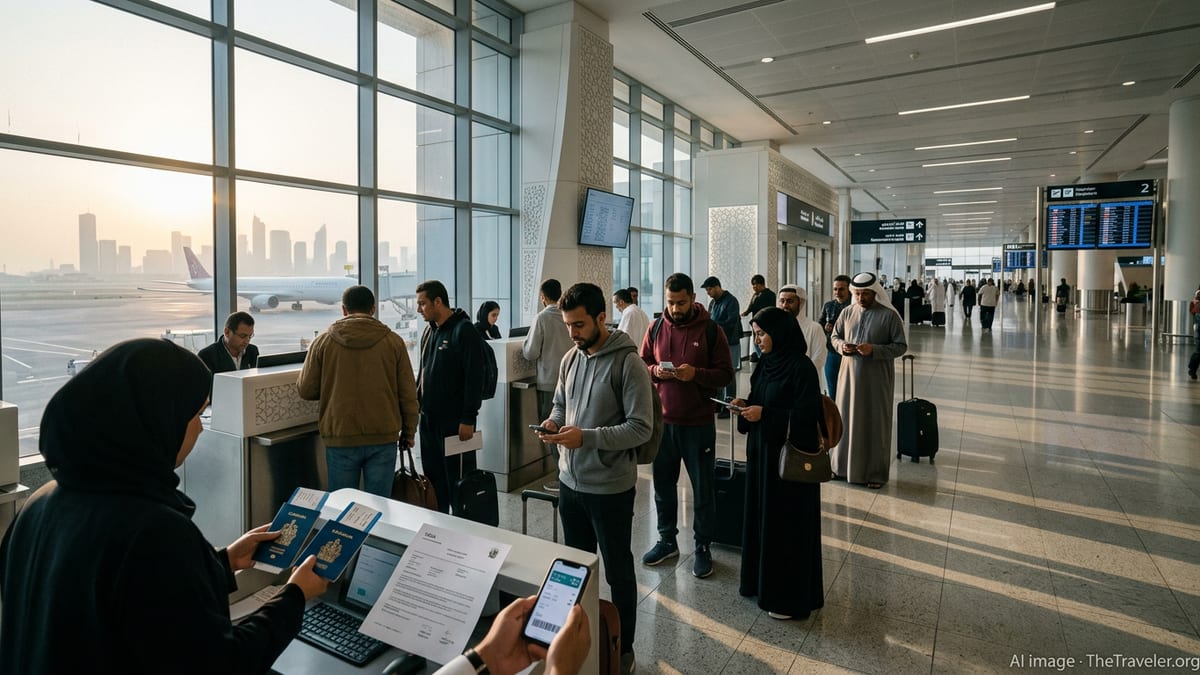
New Canadian Passport Fees Take Effect in March 2026
Publicly available government information shows that most Canadian passport and travel document fees will rise on March 31, 2026, marking the first comprehensive increase since 2013. The adjustments are linked to inflation and the growing cost of producing secure travel documents, and they will apply to standard five and ten year passports as well as a range of specialized travel documents.
For travelers in the Middle East, the direct cost increase primarily affects dual citizens and Canadian residents planning trips to or from countries such as Bahrain, the United Arab Emirates, Iraq, Qatar, Saudi Arabia, Kuwait, Lebanon and Israel. Many rely on Canadian passports to move between Canada and the region for family visits, business trips, pilgrimages and onward long haul connections. Higher fees may prompt households to consolidate renewals or delay non essential travel, particularly in larger families where multiple passports are due to expire.
Travel industry commentary indicates that the timing of the increase, less than three months before the peak summer season and ahead of major events such as the 2026 FIFA World Cup, could push some Canadians with Middle East itineraries to renew earlier than planned. Agencies that assist with documentation are already advising clients to check expiry dates and budget for the revised schedule of fees if applications will be submitted after the March deadline.
Stricter 30 Day Standards Highlight Visa Processing Risks
Alongside the fee hike, the Canadian government is promoting clearer service standards around 30 business day processing for complete passport applications. Official notices describe a system in which applications processed beyond that window may be eligible for fee refunds, framed as an accountability measure designed to reassure travelers.
However, publicly available data on temporary resident and visitor visa processing for many Middle Eastern countries shows that timelines can fluctuate widely, often well beyond 30 days, depending on local demand, security screening and seasonal surges. Recent coverage of Canadian immigration wait times notes that visitor visa decisions from some hubs in Asia and Africa have varied from several weeks to multiple months, even as authorities seek to streamline digital submissions and triage backlogs.
For applicants in Bahrain and neighboring states planning to travel to Canada, the emphasis on a 30 day benchmark may complicate expectations. While the guarantee is framed around completed passport applications rather than all visa categories, many travelers interpret such standards as a broader promise of speed. Travel planners in the region are urging clients to treat 30 days as a minimum planning horizon rather than a firm outer limit, and to file well ahead of key dates such as religious holidays, academic intakes and major trade events.
Middle East Travelers Already Managing Layered Restrictions
The Canadian measures arrive at a time when travelers in the Middle East are already adapting to a patchwork of regional restrictions, security checks and evolving visa regimes. Countries including the United Arab Emirates, Saudi Arabia, Qatar and Bahrain have modernized some entry procedures, but they also maintain rigorous screening for certain nationalities and routes, particularly where regional tensions or security alerts are in play.
Passengers moving between Canada and states such as Iraq, Lebanon or Israel often face multi leg itineraries routed through major hubs like Dubai, Doha or Riyadh, with each transit point adding its own documentation rules. Any delay in obtaining a Canadian visa or passport renewal can create a domino effect, forcing rebooking of long haul flights, loss of promotional fares and challenges securing connecting visas for transit stops.
Reports from travel agents and online advisory platforms suggest that some families in the Gulf are reconsidering the feasibility of short notice trips to Canada for weddings, medical appointments or property visits. When consular processing in Canada is combined with airline schedule changes and shifting regional entry rules, the margin for error narrows, especially for travelers who must coordinate multiple passports and residence permits across borders.
Bahrain Joins a Growing List of Concerned Markets
Bahrain has emerged as a notable example of how these changes resonate beyond Canada’s borders. The country’s residents frequently travel to Canada for education, healthcare and business, often using connections via the United Arab Emirates, Saudi Arabia and Qatar. Travel consultancies that track origin and destination patterns report that Canada remains a premium long haul choice for Bahraini nationals and expatriates, but cost sensitivity is increasing.
With passport and related fees edging higher in Canada, and service standards framed tightly around a 30 day ideal, Bahraini travelers may face tougher decisions about when to renew documents or initiate visa applications. Those who hold multiple nationalities, including Canadian citizenship, will need to weigh the expense of early renewals against the risk of cutting their timing too close before a planned departure.
Similar calculations are emerging in Kuwait, Lebanon and Israel, where communities with strong ties to Canada balance complex travel portfolios. In many cases, families maintain properties, study plans or business interests in Canadian cities while residing primarily in the Gulf or Levant. For them, any additional friction in the Canadian documentation process adds to the broader sense of travel uncertainty already shaped by regional geopolitics and airline capacity shifts.
Travel Planning Strategies Emerge Across the Region
As details of Canada’s new fee schedule and processing guarantees circulate, practical guidance is beginning to coalesce among travel advisers, immigration consultants and online forums serving Middle Eastern audiences. Common recommendations include renewing passports several months before expiry, budgeting for higher consular fees in 2026, and avoiding last minute bookings that depend on rapid visa decisions.
Advisers also highlight the importance of monitoring fluctuating processing times published by Canadian authorities, which can change by country and category with little notice. For residents of Bahrain, the United Arab Emirates, Saudi Arabia and neighboring states, tracking these updates has become an integral part of trip planning, alongside checking airline schedules, transit visa rules and health requirements.
While Canada continues to market itself as an accessible destination for tourism, education and investment from the Middle East, the combination of higher passport fees and strict 30 day benchmarks may prompt some travelers to diversify their options. Industry observers note that alternative destinations with more predictable or lower cost entry regimes could see incremental gains, especially among price sensitive families planning multi stop itineraries across Europe, Asia and North America.