

More news on this day
Thousands of air travelers across Canada and on transborder routes faced a cascade of disruption on March 15, as publicly available tracking data showed at least 92 cancellations and more than 750 delays affecting flights operated or marketed by Air Canada, Porter and several regional partners at major hubs including Toronto, Vancouver, Montreal, Ottawa and Winnipeg.
Get the latest news straight to your inbox!
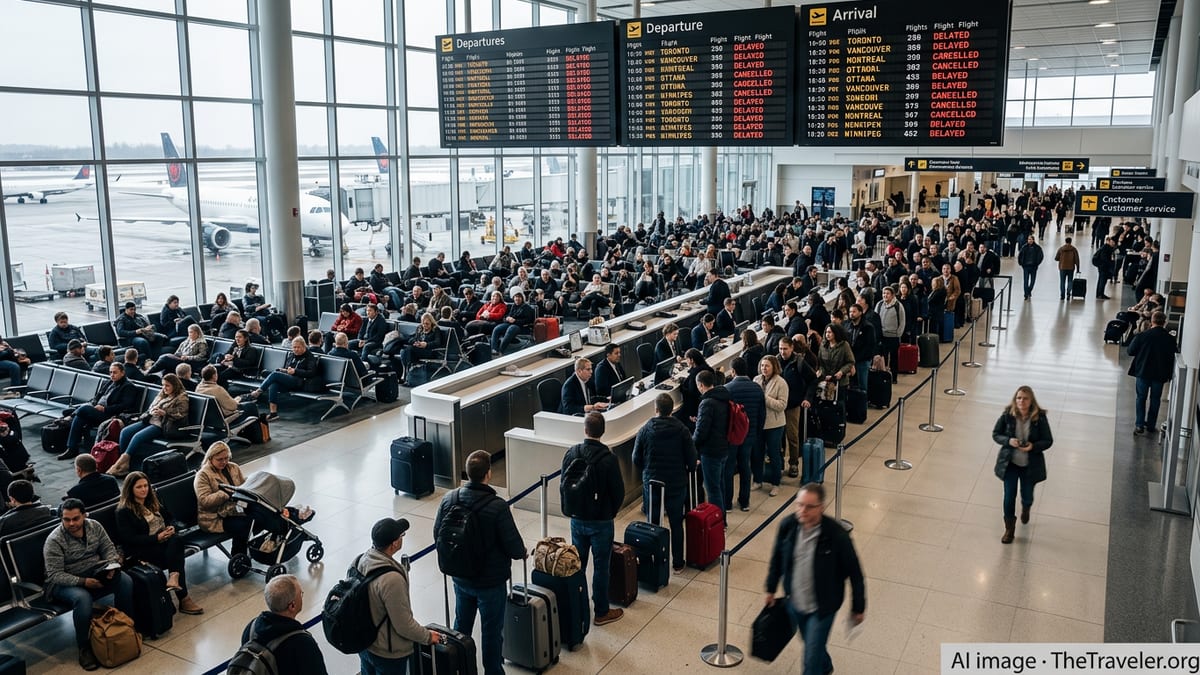
Major Hubs Struggle as Disruptions Spread Nationwide
Operational data from multiple flight-tracking platforms on March 15 point to concentrated disruption at Canada’s largest airports, with Toronto Pearson, Vancouver International and Montreal–Trudeau recording the highest number of late and canceled services. Secondary hubs such as Ottawa and Winnipeg also reported mounting delays as the day progressed, reflecting how issues at major connecting points ripple across the network.
The tally of at least 92 cancellations and 752 delays encompasses flights operated or marketed by Air Canada and its regional affiliates, as well as services flown by Porter Airlines and other partner carriers including Republic Airways, SkyWest and Jazz Aviation on cross-border and feeder routes. The figures highlight the vulnerability of tightly timed schedules when multiple carriers rely on shared airspace, infrastructure and ground handling capacity.
Reports from airport operations dashboards indicated that delays were most pronounced on short-haul and regional services, where aircraft are scheduled for multiple same-day turns through congested hubs. Once early-morning flights departed late, subsequent rotations struggled to recover, creating what aviation analysts frequently describe as “cascading delays” that intensify through the afternoon and evening peaks.
Domestic routes linking Toronto, Montreal, Ottawa and Winnipeg were among those most affected, alongside transborder services to U.S. cities where Republic, SkyWest and other regional operators feed larger networks. With aircraft and crews arriving late into Canada from the United States, several afternoon and evening departures were either pushed back significantly or withdrawn from the schedule.
Weather, Congestion and Tight Schedules Combine
The latest wave of disruption comes in the wake of a difficult winter season for Canadian aviation, in which heavy snow, freezing rain and recurring ground delays have repeatedly challenged on-time performance across major hubs. Earlier in the year, a powerful January winter storm brought record snowfall to Toronto and forced hundreds of cancellations, underscoring how quickly severe weather can overwhelm airport capacity even when airlines maintain high completion rates in normal conditions.
On March 15, publicly available meteorological summaries pointed to variable but largely manageable conditions at many Canadian airports, suggesting that a mix of lingering weather impacts, traffic congestion and knock-on operational constraints played a greater role than a single extreme event. Even when skies clear, airlines often spend days working aircraft and crews back into position after earlier storms or ground holds have disrupted rotations.
Industry performance reports published in recent weeks have emphasized how tightly built schedules, staffing limitations and chronic pressure on ground operations can amplify relatively modest disruptions into system-wide problems. When a morning bank of departures at a hub such as Toronto or Vancouver is slowed by de-icing, runway congestion or air traffic control restrictions, the resulting delays quickly propagate to connecting flights in Ottawa, Winnipeg and smaller regional airports.
Analysts note that regional partners like Jazz, Republic and SkyWest, which operate many of the shorter legs under major carrier brands, are particularly exposed to these dynamics. Their aircraft often operate multiple short segments per day, so even a minor disruption on one flight can cascade across three or four subsequent services, adding to the day’s delay and cancellation count.
Passengers Face Missed Connections and Overnight Disruptions
For passengers, the statistics translated into long queues at check-in and customer service desks, missed connections and, in some cases, overnight stays away from home. Social media posts and passenger forums throughout March have described travelers in Toronto, Montreal and Ottawa being rebooked multiple times, sometimes watching departure times slide back hour by hour before flights were ultimately removed from the schedule.
Reports from Ottawa and Winnipeg indicate that local delays were frequently tied to inbound aircraft arriving late from Toronto, Montreal or western hubs, leaving travelers with few immediate alternatives. With many flights operating near capacity during peak travel periods, available seats on later departures are limited, making same-day recovery more difficult when multiple services fall out of sequence.
Publicly available information on recent disruption patterns for both Air Canada and Porter suggests that travelers on multi-leg itineraries are especially vulnerable. A delay on a short domestic segment can cause passengers to miss an onward transborder or international connection, often forcing them to reroute through different hubs or wait for next-day departures, particularly when flying from smaller cities with limited frequencies.
Travel discussion boards show mounting frustration from customers who have experienced repeated delays over the past several months, including complaints about limited meal vouchers, lack of hotel accommodation in weather-related cases, and difficulty reaching airline support channels during peak disruption. At the same time, some frequent flyers acknowledge that winter operations in Canada are inherently complex, with safety-related procedures such as de-icing and runway clearing taking priority over punctuality.
Regulatory Framework and Passenger Rights in Focus
The ongoing waves of disruption are once again drawing attention to Canada’s Air Passenger Protection Regulations, which set out minimum standards of treatment and, in certain cases, financial compensation. Public guidance from the Canadian Transportation Agency explains that entitlements vary depending on whether a delay or cancellation is within the carrier’s control, within its control but required for safety, or outside the carrier’s control, such as severe weather or air traffic restrictions.
Advisory materials and consumer-rights portals note that, for events within an airline’s control and not related to safety, passengers on larger carriers may be eligible for compensation when delays exceed specified thresholds and when rebooking options are inadequate. For disruptions outside a carrier’s control, airlines are still expected to provide basic standards of treatment, including assistance with rebooking, though they are not generally required to cover hotels or additional expenses.
Recent enforcement decisions involving Canadian airlines, including administrative penalties issued in relation to earlier delays and cancellations, have underscored regulators’ willingness to scrutinize how carriers apply these rules in practice. Consumer advocates argue that transparency around disruption causes remains crucial, as classifications directly affect whether travelers can claim compensation or reimbursement.
Travelers affected by the March 15 disruptions are being urged by consumer organizations and online advisories to keep detailed records of their itineraries, boarding passes and receipts, and to submit formal requests for information on the cause category of their delay or cancellation. Several publicly available guidance documents recommend that passengers follow up in writing if they believe their situation has been misclassified or if they have not received the level of care described in airline policies.
Calls for Greater Resilience Ahead of Peak Travel Periods
The latest cluster of cancellations and delays has prompted renewed discussion about the resilience of Canada’s air transport system as carriers prepare for the busy spring and summer travel seasons. Industry commentary suggests that a combination of staffing investment, improved scheduling buffers and enhanced ground-handling capacity may be needed to reduce the frequency and severity of cascading disruptions at major hubs.
Aviation specialists point to the experience of the past two winters, when prolonged weather events and tight schedules exposed structural weaknesses in airline operations and airport infrastructure. They note that while extreme storms will continue to cause unavoidable disruption, better contingency planning and more conservative timetabling could help limit the knock-on effects from smaller disturbances, particularly on high-frequency domestic and regional routes.
Some observers highlight the growing role of data analytics and real-time performance monitoring in identifying vulnerable parts of the network. By mapping how delays spread from one hub to another, airlines and airports can adjust staffing and gate allocations, prioritize critical connections and, in some cases, preemptively consolidate flights to avoid day-long sequences of short, rolling delays.
For now, the March 15 figures serve as another reminder to travelers that flying through Canada’s largest hubs, especially in shoulder and winter seasons, carries an elevated risk of disruption. Travel advisers continue to recommend longer connection times, early-morning departures where possible, and flexible ticket options that make it easier to adjust plans when widespread delays and cancellations hit the country’s already stretched aviation system.