

More news on this day
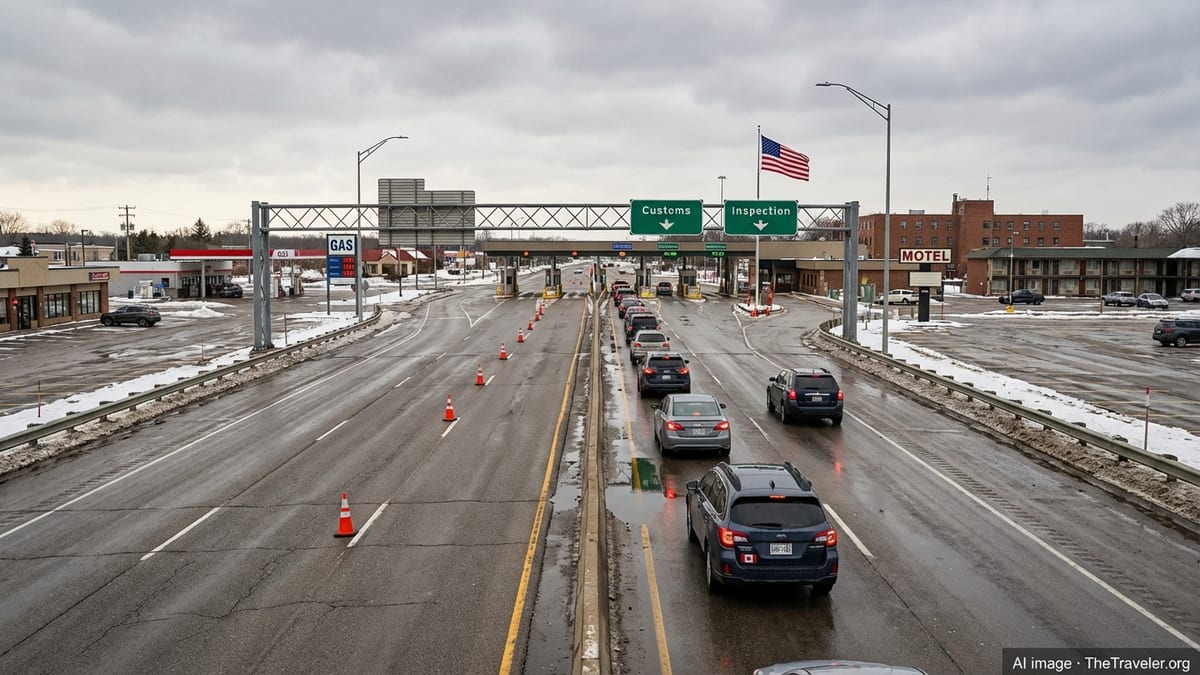
Canada’s once-reliable stream of visitors to the United States is drying up fast, as a politically charged travel boycott and tougher border policies combine to drain billions of dollars from U.S. tourism and rattle communities that long depended on their northern neighbors.
A Sudden Reversal in a Cornerstone Travel Relationship
For decades, Canadians have been the United States’ most frequent international visitors, accounting for roughly three quarters of all Canadian trips abroad and providing a steady lifeline to border economies. That pattern is now breaking down at remarkable speed. Official figures from Statistics Canada show Canadian trips that include a visit to the United States fell by more than 20 percent year over year in the second quarter of 2025, while broader data indicate an overall decline of about 23 to 25 percent in Canadian visitation across the year.
Industry analysts say the slide has accelerated into 2026, with cross-border flights and road crossings continuing to trend downward. Early 2025 brought double-digit monthly declines in Canadians returning from the United States by car and by air, followed by a summer season in which U.S. destinations reported 25 to more than 30 percent fewer Canadian guests. At the same time, Canadian travel to overseas destinations such as Mexico, France and the United Kingdom has risen, suggesting that many travelers are not staying home but deliberately avoiding the United States.
The shift has upended a long-standing imbalance in cross-border tourism. Canadian residents made about 39 million trips to the United States in 2024, compared with roughly 23.5 million U.S. trips to Canada. By mid-2025, however, officials on both sides of the border were noting that U.S. residents entering Canada now outnumber Canadians heading south, an inversion that underscores the scale and speed of the change.
Politics, Tariffs and Border Rules Fuel a Grassroots Boycott
While currency fluctuations and economic jitters play a role, tourism researchers and Canadian travelers themselves increasingly point to politics as the leading driver of the downturn. The return of the Trump administration in early 2025, coupled with a series of tariff measures and combative rhetoric toward Canada, has provoked a backlash among Canadian consumers that has spilled directly into their travel choices.
Interviews with tour operators and survey data collected in 2025 show that a large majority of Canadians who are changing their travel plans cite U.S. policy and politics as a major factor. Many point to new or proposed tariffs on Canadian goods, threats regarding energy exports and inflammatory comments about turning Canada into a “51st state” as reasons to turn away from U.S. vacations. In some cases, individual travelers openly describe forgoing Florida beaches or New York shopping trips as a moral stance intended to send an economic message.
This sentiment has coalesced into what some Canadian media outlets and social campaigns are calling a soft boycott of U.S. travel. Hashtags urging Canadians to “holiday at home” or choose Europe, Mexico or the Caribbean instead of the United States have gained traction, while a broader “Buy Canadian” movement has pushed shoppers away from U.S. brands. While not centrally organized, the trend has taken on a life of its own, amplified by talk radio, columnists and social media influencers who present skipping U.S. vacations as both a political signal and a point of national pride.
Tourism experts caution that such boycotts rarely remain purely symbolic. When layered onto already challenging economic conditions, they can fundamentally reshape travel flows, particularly in markets as heavily intertwined as the U.S.-Canada corridor.
Tougher Entry Policies Deepen Friction at the Border
Alongside political grievances, practical concerns about getting into the United States are discouraging many would-be visitors. Stricter screening, expanded data collection and the threat of being turned back at the border have become recurring themes in Canadian media coverage and traveler forums, reinforcing a perception that crossing into the United States is more hassle and risk than it is worth.
New and proposed measures, such as intensified social media vetting for some visitors, more aggressive questioning at ports of entry and stepped-up enforcement actions, have fueled anxiety. High-profile incidents involving the detention or denial of entry of Canadian residents, including students and dual nationals, have received outsized attention north of the border, feeding a broader narrative that the United States is less welcoming to foreign visitors.
Travel agents and tour operators say clients now routinely raise concerns about privacy, the possibility of border delays and the chance of being refused entry, especially if they have participated in online political discussions or protests. Even for Canadians who qualify for expedited programs and face low actual risk, the headline-grabbing stories and changing rules create an impression of unpredictability. Many conclude that if a family vacation can be spent in Europe, Mexico or within Canada with fewer bureaucratic worries, it is safer to avoid the United States altogether.
U.S. officials maintain that enhanced screening is necessary to protect national security and public safety, and note that the vast majority of Canadian visitors continue to cross without incident. Yet in the realm of tourism, perception can matter as much as reality. Once travelers come to view a destination as stressful or unfriendly, it can be difficult and costly to win them back.
Economic Pain Spreads From Border Towns to Theme Parks
The fallout from the Canadian pullback is being felt first and most acutely in border communities that for generations have depended on weekend shoppers and seasonal vacationers from across the line. Towns in northern New York, Michigan, Washington state and other border regions report sharp declines in Canadian traffic, with some local officials citing drops in Canadian customers of 30 to 50 percent at key crossings during 2025.
Retailers that once tailored hours, promotions and even currency policies to Canadian clientele now face thinning margins and difficult decisions about staffing. Independent motels, campgrounds and marinas near major crossings describe a visible emptying of parking lots once crowded with Ontario and Quebec license plates. Seasonal festivals that traditionally marketed heavily in Canadian cities report weaker ticket sales and reduced sponsorship interest, compounding pressures that began during the pandemic but had largely eased by 2023.
The pain is not confined to the border. Popular snowbird states including Florida and Arizona, as well as sunbelt and coastal destinations like California and Hawaii, are seeing a noticeable dip in Canadian bookings. In 2025, research firms tracking hotel performance estimated that reduced Canadian travel contributed to a multibillion-dollar hit to U.S. tourism receipts, with some projections pegging the loss at around 5 to 6 billion dollars for the year. That figure reflects not only fewer trips but also lower spending per visit, as cost-conscious Canadians shorten stays and trade resort weeks for long weekends closer to home.
Major attractions and hotel chains are sounding the alarm. Large resort operators and theme parks that have long marketed heavily in Canada warn that the downturn in cross-border travel is dragging on revenue just as they had expected a full post-pandemic rebound. While domestic demand and growth from other overseas markets have helped cushion the blow, executives acknowledge that losing a historically reliable market like Canada complicates planning and investment decisions for years to come.
Airlines Cut Transborder Routes as Demand Collapses
The airline industry offers one of the clearest barometers of the Canadian travel retreat. In early 2026, Canadian carriers announced sweeping reductions in U.S.-bound capacity, citing persistently weak demand and more attractive opportunities elsewhere. Montreal-based leisure airline Air Transat said it would exit the U.S. market entirely by this summer, discontinuing its remaining routes to Florida and redeploying aircraft to Mexico, the Caribbean and emerging long-haul markets in Europe and Africa.
WestJet, Canada’s second-largest carrier, has already suspended or scaled back a raft of transborder services, trimming its U.S. schedule by close to 10 percent and eliminating connections to several mid-sized American airports. Discount and regional airlines have followed suit, cancelling routes that once carried Canadian vacationers to coastal resorts and desert golf communities. Industry data for early 2026 show flights from Canada to the United States down around 10 percent year over year, with available seats falling even more sharply.
These cuts create a feedback loop that can further depress demand. As nonstop options disappear, Canadians face longer connections and higher fares for remaining U.S. routes, making alternative destinations more appealing. At the same time, fixed costs for American airports and tourism marketing organizations that invested heavily in attracting Canadian visitors become harder to justify, prompting a scramble to pivot campaigns toward other international markets.
For U.S. carriers, the picture is mixed. Some have reduced frequencies or downgraded aircraft on Canada routes, while others see opportunity in carrying more American residents north to take advantage of a favorable exchange rate and robust Canadian tourism promotion. Yet the net effect remains a significant contraction in the cross-border aviation market, one that industry insiders say could take years to rebuild even if political conditions improve.
U.S. Destinations Mount Charm Offensive to Win Back Canadians
Recognizing the scale of the threat, tourism boards, hotel groups and state agencies across the United States have launched a concerted campaign to woo Canadian travelers back. From “Dear Canada” advertising slogans to targeted social media outreach in Vancouver, Toronto and Montreal, the message is consistent: Canadians are wanted and welcome, regardless of political tensions between Ottawa and Washington.
Destination marketing organizations report ramping up spending in Canadian media markets after several years of muted promotion. Some are offering discounted packages, loyalty bonuses or flexible cancellation policies specifically tailored to Canadian residents, emphasizing value in the face of a weaker Canadian dollar. Others are highlighting cultural ties and shared history, framing cross-border travel as a way of supporting people-to-people connections even during moments of diplomatic strain.
Industry leaders stress that most Americans remain eager hosts for their northern neighbors, and point to the intertwined nature of families, business relationships and border communities as reasons to keep travel channels open. They also note that upcoming mega-events, including the 2026 FIFA World Cup and the United States’ 250th anniversary celebrations, provide powerful incentives for Canadians to cross the border in the coming years.
Still, tourism strategists acknowledge that marketing alone may not be enough to reverse a movement that many Canadians view as political and principled. Without visible changes in tone and policy at the federal level, they warn, discount offers and glossy campaigns risk being seen as out of step with the underlying concerns driving the boycott.
Looking Ahead: Can Mega-Events Offset Political Headwinds?
As 2026 unfolds, the U.S. tourism industry is pinning significant hopes on a calendar packed with events that, in theory, should draw visitors from around the world, including Canada. Hoteliers and analysts point to the World Cup, which will be jointly hosted by the United States, Canada and Mexico, as a potential turning point. Large hospitality groups with substantial U.S. footprints predict that the tournament, combined with milestone national celebrations and a strong domestic economy, could help reverse the recent slide in visitor numbers.
In this optimistic scenario, Canadian fans travel south for matches, concerts and city festivals, rediscovering American destinations and helping to mend frayed perceptions. Cross-border travel could benefit from improved transportation links tied to World Cup planning, as well as collaborative marketing between Canadian and U.S. host cities that emphasize shared excitement rather than political discord.
Yet the path to such a rebound remains uncertain. The same political dynamics that drove many Canadians to cancel trips in 2025 are still in play, and border policies continue to evolve in ways that can either reassure or unsettle prospective visitors. Tourism economists warn that even major events cannot fully overcome a climate of mistrust or resentment if travelers continue to see U.S. trips as a statement they are unwilling to make.
For now, the numbers tell a clear story: Canadian travel to the United States has fallen sharply, and the resulting economic hit is substantial and growing. Whether upcoming spectacles and carefully crafted outreach can overcome the momentum of a deepening boycott will be one of the most closely watched questions in North American tourism over the next two years.