

More news on this day
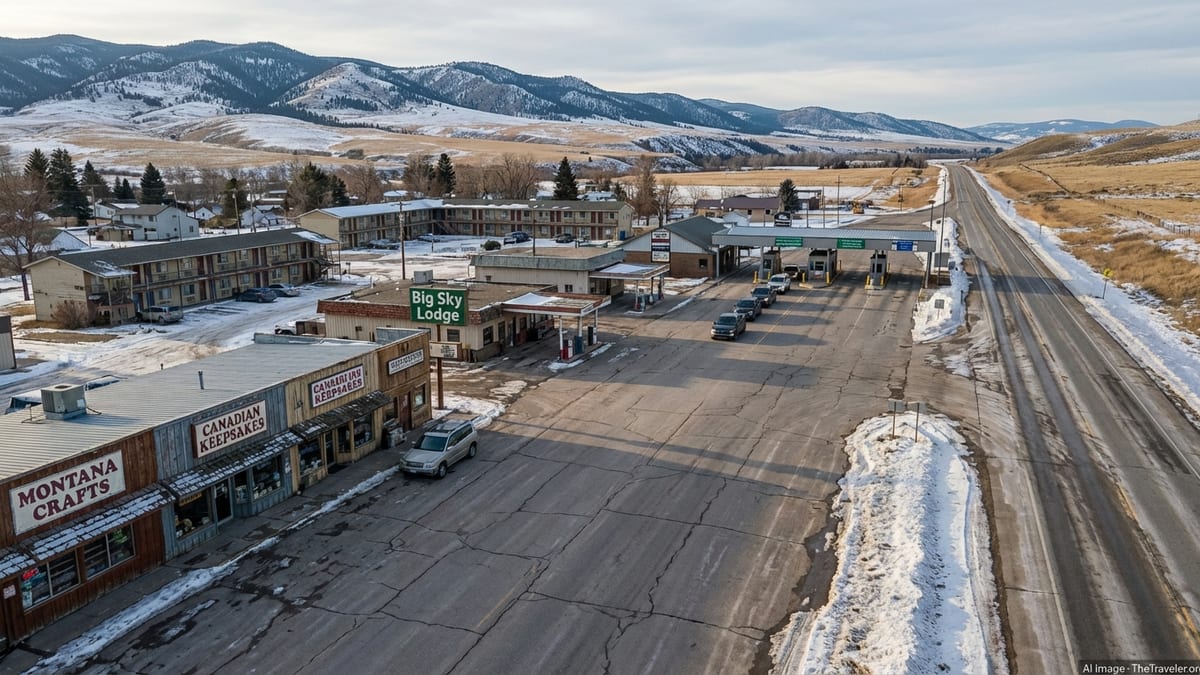
Montana has become the latest flashpoint in a deepening tourism slump across the United States, as Canadian visitors abandon traditional cross-border trips in response to political tensions, tougher entry rules and shrinking air links, dealing fresh blows to destinations from Florida and California to Minnesota, Maine, Vermont and North Dakota.
Montana’s Cross-Border Lifeline Weakens
For years, Canadians have been a pillar of Montana’s visitor economy, drawn by Glacier National Park, ski resorts and small-town shopping just across the border. That flow has slowed dramatically since 2024, with state and industry data showing steep drops in both crossings and spending through 2025. At several key ports of entry, including Roosville and Sweetgrass, authorities have reported double-digit percentage declines in Canadian traffic compared with the previous year, while tourism researchers estimate that Canadian visitors once accounted for nearly one in ten nonresident travelers to the state.
The impact is being felt most acutely in border communities such as Whitefish and Kalispell, where hotels, restaurants and retail outlets depend heavily on weekend and holiday trips from Alberta and British Columbia. Local businesses report sharp increases in cancellations and quieter shoulder seasons that would normally be buoyed by Canadian skiers and road trippers. Credit card transaction data tell a similar story, with spending by Canadian cardholders in Montana tumbling by more than 40 percent in some recent months, erasing gains made after the pandemic recovery.
In response, Montana tourism officials are shifting marketing budgets toward domestic travelers from other US states and encouraging longer in-state stays to offset the loss of short cross-border visits. Destination marketers describe the situation as a structural break rather than a temporary dip, pointing to survey evidence that many Canadians are now actively avoiding US trips until the political climate and border conditions change.
Border States From Vermont to North Dakota Feel the Strain
The downturn is not confined to Montana. Along the northern tier, states with historically strong Canadian ties are experiencing similar declines in arrivals and revenue. In Vermont, organizers of cross-border events report that Canadian attendance has collapsed, with ticket sales for some festivals falling from hundreds of buyers to just a handful. In North Dakota and Minnesota, duty-free shops, outlet malls and casino resorts that once marketed aggressively to motorists from Manitoba and Saskatchewan are facing prolonged slumps in cross-border traffic.
Tourism boards in Maine and other New England states say that coastal towns which used to count on Canadians to fill inns and vacation rentals in late summer and early fall are now grappling with unexpected vacancies. Even traditional winter "snowbird" corridors into Florida and California have weakened, as more Canadians opt to stay within their own country or choose overseas destinations where they feel the political environment is less fraught.
Local officials warn that the ripple effects reach far beyond hotels and attractions. Reduced Canadian visitation lowers tax receipts from lodging and sales, cuts seasonal hours for hospitality workers and strains small suppliers in sectors such as transportation, food service and events. In several border counties, chambers of commerce have begun lobbying state and federal authorities for targeted relief and for measures aimed at making cross-border travel less cumbersome for returning Canadian guests.
Politics, Policy and Perception Reshape Canadian Travel Choices
Underlying the numbers is a marked shift in Canadian public sentiment toward travel in the United States. A series of national surveys conducted through 2025 found that a majority of Canadians now say they feel less safe or less welcome south of the border, citing concerns about polarization, heated campaign rhetoric and a harder line on immigration and security. Many respondents describe US trips as increasingly stressful, pointing to longer waits, more intensive questioning at ports of entry and high-profile incidents involving detentions or device searches.
New policy measures have reinforced that perception. Additional registration requirements for longer stays, tougher scrutiny at land crossings and an environment of heightened enforcement have convinced some Canadians that discretionary travel may no longer be worth the hassle or risk. Advocacy groups, including professional associations in Canada’s academic sector, have gone as far as advising members to postpone nonessential trips to the United States, particularly for individuals who may draw extra attention at the border.
At the same time, a protracted trade dispute and tariffs have spilled over into the travel realm, fueling "buy local" and "vacation local" campaigns within Canada. Travel analysts note that while Canadian trips to the United States have fallen sharply, Canadian outbound travel overall is growing, with more residents choosing domestic destinations, Europe, the Caribbean and Asia. The pattern suggests not a broad retreat from travel but a deliberate reallocation away from US destinations in response to politics and policy.
Airlines and Border Infrastructure Amplify the Downturn
The air corridor between Canada and the United States, long one of the world’s busiest, is also showing signs of strain that reinforce the tourism slide. Aviation data through late 2025 and early 2026 indicate a significant year-over-year drop in flight bookings on transborder routes, particularly during peak leisure seasons. Major Canadian carriers have begun trimming capacity, cutting routes and reallocating aircraft to markets where demand is more robust, effectively making spontaneous weekend trips or short shopping hops to US cities less convenient and more expensive.
Those cuts come on top of congestion and staffing pressures at land crossings along the northern border. Government audits in late 2024 and 2025 flagged chronic understaffing and outdated equipment at multiple US ports of entry, warning that travelers could face longer processing times and unpredictable delays. For Canadians already uneasy about the political climate, reports of protracted queues and stepped-up inspections reinforce a perception that cross-border leisure travel has become a hassle.
Tourism operators say the combined effect of reduced airline capacity and strained border infrastructure is to harden the floor under the current boycott. When fewer flights are available and driving across the border is seen as stressful or confrontational, price-sensitive visitors are more inclined to choose destinations closer to home or overseas routes that offer a smoother experience, even at similar cost.
States Scramble for Solutions as Losses Mount
Faced with mounting losses, state tourism offices and local destination marketing organizations are experimenting with strategies to reconnect with Canadian travelers and reassure them that they remain welcome. Some have launched bilingual advertising campaigns in Canadian media that emphasize shared history, cultural ties and the practical benefits of cross-border tourism for communities on both sides. Others are working with border agencies and consular officials to communicate clearly about entry procedures and to highlight trusted traveler programs that can ease the crossing experience.
Montana has stepped up outreach in nearby Canadian provinces, tailoring messages around outdoor recreation, family road trips and less crowded alternatives to big-city US vacations. Florida and California, worried about waning numbers of Canadian snowbirds, are partnering with airlines and tour operators to offer targeted fare sales and flexible booking policies designed to reduce perceived risk. In New England and the Upper Midwest, local chambers are organizing familiarization trips for Canadian travel agents and influencers in an effort to rebuild confidence through first-hand experiences.
Yet many in the industry acknowledge that promotional campaigns alone may not be enough to reverse the slide as long as broader political and regulatory frictions persist. Until Canadians feel that cross-border travel is once again straightforward and apolitical, Montana and its fellow border and sunbelt states may need to brace for an extended period in which one of their most reliable visitor markets remains stubbornly below pre-slump levels.