

Set beside Winnipeg’s historic Forks district, the Canadian Museum for Human Rights is one of Canada’s most powerful cultural institutions. Before you step inside its dramatic glass tower, it helps to understand exactly what you will pay to visit, what is free, and how to budget for the extras that can quietly inflate the cost of a day at the museum. This guide walks you through current ticket prices, discounts, free admission days and practical visit costs so you can plan with confidence.
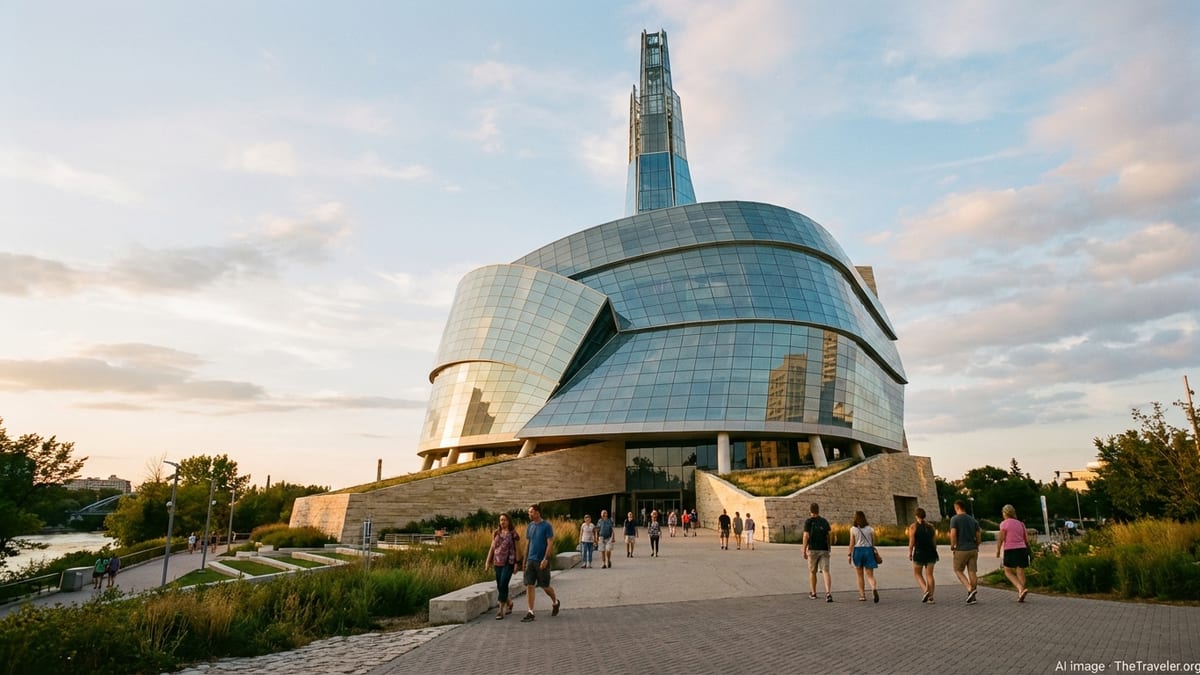
Where the Canadian Museum for Human Rights Fits in Your Trip Budget
The Canadian Museum for Human Rights (CMHR) is Canada’s national museum dedicated solely to human rights, located at 85 Israel Asper Way in downtown Winnipeg. Its striking architecture and deeply immersive exhibits make it a marquee stop for visitors to Manitoba’s capital, but it is also one of the better-value major attractions in the city. Ticket prices are competitive with other leading Canadian museums, and a wide range of discounts and free-entry options keeps the experience accessible for many travelers.
Because the museum is at The Forks, a riverside hub of markets, restaurants and walking paths, you can easily combine your visit with other low-cost or free experiences. That makes it possible to build a full day out while keeping overall spending fairly modest. The key is to know in advance how ticket categories work, how long you plan to stay, and whether you are likely to add paid tours or experiences.
In practical terms, many independent travelers find that admission plus parking and a light meal or coffee are the main costs. Families and multi-generational groups can also take advantage of family pricing and free admission policies that significantly reduce the per-person price compared with buying individual adult tickets.
What follows is a detailed, up-to-date breakdown of how CMHR pricing works as of early 2026, along with realistic examples of what a visit may actually cost different types of travelers once all the extras are included.
Current Ticket Prices and How Admission Works
The Canadian Museum for Human Rights sells same-day general admission tickets that provide unlimited re-entry to the galleries during opening hours. According to the museum’s official information and recent visitor guides, standard admission pricing is structured by age and concession status, with separate categories for adults, youth, students, seniors and families.
As of early 2026, published rates commonly cited for general admission are approximately 18 Canadian dollars for adults aged 18 to 64, 8 Canadian dollars for youth from about 7 to 17, and 14 Canadian dollars for post-secondary students and seniors with valid identification. Children aged 6 and under are generally admitted free of charge, and there is a family ticket available for a modest discount that covers up to two adults and several youth in the same group. Prices can change periodically, so it is wise to treat these figures as a guide and confirm the exact amount just before you buy your tickets.
Admission is paid once, not per gallery, and you are free to move throughout the building at your own pace. Many visitors spend at least three to four hours on site, but the flexibility of same-day re-entry means you can step out for a break at The Forks and then return later the same day if that fits your schedule and energy level.
Tickets can be purchased on site at the museum, and at busy times it can be helpful to arrive early in the day to avoid queues. Online reservations are also typically available, which can be practical for those planning a specific time slot or visiting during school holidays and special events when demand is higher.
Free Admission, Discounts and Who Pays Less
One of the biggest advantages of visiting the CMHR is the range of free and reduced-cost options offered to different groups. Indigenous visitors are welcomed with free general admission, which reflects the museum’s location on Treaty 1 territory and its focus on Indigenous histories and rights. Children aged six and under do not pay admission, which can significantly lower the total cost for families with young kids.
The museum also follows a common practice among Canadian national museums of offering complimentary tickets for support persons accompanying a visitor with a disability. In practical terms, that means a caregiver, interpreter or support worker can enter without paying when accompanying someone who requires assistance. Travelers who rely on support persons should be prepared to explain the relationship at the ticket counter and may wish to bring documentation if they typically use it in other settings, although staff are generally trained to handle these situations with respect and discretion.
At select times, the museum offers free admission to all visitors. Recent schedules have included free entry on Canada Day on July 1, the National Day for Truth and Reconciliation on September 30, Remembrance Day in the afternoon of November 11, and Human Rights Day on December 10. These commemorative dates are popular but can be a compelling way for budget-conscious travelers or large local families to experience the museum without paying regular admission.
Seasonal promotions sometimes add extra value, such as free admission for children 12 and under during spring break or temporary national initiatives that provide free or reduced entry for youth and young adults over the summer. Travelers planning a trip specifically around such offers should double-check dates and eligibility, because details can change from one year to the next.
Opening Hours, Seasonal Changes and Timing Your Visit
The Canadian Museum for Human Rights typically operates on a daytime schedule, with regular opening hours centered on late morning to late afternoon from Tuesday through Sunday. The museum is usually closed on Mondays, a pattern shared by many cultural institutions in Canada. In previous years, certain days, particularly Fridays, have occasionally featured extended evening hours, although visitors in 2026 should verify the available hours for their specific date.
Holiday schedules add another layer to timing your visit. Around major holidays, hours may be shortened or the museum may close altogether. For example, closures on Thanksgiving, Christmas Eve, Christmas Day and Boxing Day have been common in past years, while days like Remembrance Day may have reduced afternoon-only opening. Because the calendar of special openings and closures is updated each year, it is prudent to confirm hours for the exact date of your visit as you finalize your travel plans.
Special event periods can influence both crowd levels and costs. During spring break in Manitoba, the museum often attracts more families and school groups, and may introduce promotional admission offers such as free entry for younger children. Commemorative dates like National Day for Truth and Reconciliation or Human Rights Day typically draw larger crowds yet also coincide with free entry for everyone, making them both rewarding and cost-effective times to visit, provided you are comfortable with busier galleries.
If you prefer a quieter experience, mornings shortly after opening on typical weekdays outside school holidays are often the calmest. That can be especially valuable for travelers who want space and time to absorb emotionally intense exhibits without feeling rushed, and it may also make it easier to access staff, interpretation materials or mobility aids when needed.
Parking, Transport and Other On-the-Ground Costs
Admission is only part of the story. The CMHR’s location beside The Forks means there is no large, free museum-owned parking lot, but there are numerous paid surface lots and metered spaces within a short walk. Current guides to visiting the museum indicate that parking in the immediate area typically costs around 2 Canadian dollars per hour, with some variation depending on the specific lot or street and the time of day.
Travelers arriving by car should budget for at least three to four hours of parking if they intend to explore the museum in depth, and potentially more if they plan to combine their visit with time at The Forks markets or the riverside paths. For a typical visit, that can mean a parking cost in the range of 6 to 10 Canadian dollars per vehicle. During peak periods and special events, lots can fill quickly, so arriving earlier in the day can improve your chances of finding a nearby space without circling for too long.
Public transport is an alternative that can help lower total visit costs. Winnipeg Transit routes serve The Forks area and the museum, with several bus lines stopping within an easy walk. For visitors already staying downtown, it may even be feasible to walk, as the CMHR is within a short stroll of many central hotels and the main core of the city. Cycling is another option in warmer months, and there is bike parking near The Forks, though travelers should bring a good lock and be prepared for changeable prairie weather.
Inside the museum, additional costs are optional rather than mandatory. A visit to the café or restaurant can add noticeably to a family’s budget, so those watching their spending may choose to eat before or after their museum time, or focus on coffee and light snacks. The gift shop carries books, art and souvenirs related to human rights and Canadian history, which can be meaningful purchases but also easy to overspend on if you have not set a rough limit for yourself or your children in advance.
Guided Tours, Programs and Accessibility Services
Many visitors are satisfied with a self-guided visit, using the interpretive panels and multimedia in each gallery. However, the museum also offers additional programming that can expand your understanding of the exhibits, sometimes at an extra cost. These may include scheduled guided tours, special temporary exhibitions, or educational workshops geared to school and community groups. When these carry a separate fee, it is usually clearly stated in addition to general admission, so you can decide on the spot whether the experience fits your interests and budget.
For independent travelers, the museum’s mobile app functions as a kind of digital guide, providing audio tours, text, video and sign language content that can be accessed on a personal device. Using the app over the museum’s wireless network does not add extra admission charges, although standard data or roaming fees may apply if you are not on Wi-Fi. For those who want a structured route through the exhibits without joining a group tour, this can be a cost-effective way to deepen the visit.
Accessibility services are broad and focused on removing both physical and financial barriers. The building is designed to be barrier free, with elevators to all levels, ramps and accessible washrooms, including features such as adult-sized change tables and lifts. Mobility aids such as wheelchairs, scooters and strollers are available to borrow, usually at no charge, with a photo ID or credit card taken as a deposit rather than a payment.
Support persons for visitors with disabilities are admitted free, an important financial consideration for travelers who rely on regular assistance. Communication supports may also be available, including tools for visitors who are blind or have low vision, and resources in sign languages. These services do not typically add to the cost of admission, but they can dramatically increase the value and accessibility of the experience.
Sample Budgets for Different Types of Visitors
To help translate ticket prices and on-the-ground costs into real numbers, it can be useful to work through a few hypothetical budgets. All figures here are approximate and assume current pricing patterns, so they should be treated as planning tools rather than exact totals.
Consider a solo adult traveler visiting on a regular day. If admission is around 18 Canadian dollars and parking works out to about 8 Canadian dollars for four hours, the basic museum cost lands near 26 Canadian dollars. Add a modest coffee and snack from the café and perhaps a small souvenir postcard or magnet for another 10 to 15 Canadian dollars, and the visit totals roughly 35 to 40 Canadian dollars.
A family of two adults and two children aged 8 and 12 might opt for a family ticket instead of buying separate admissions. If the family pass is priced slightly below the combined cost of individual tickets, they could expect to spend just under 50 Canadian dollars on admission. Coupled with 8 to 10 Canadian dollars for parking, and a shared light meal or treats in the 30 to 40 Canadian dollar range if they choose to dine on site, the day’s museum-related costs might sit around 80 to 100 Canadian dollars.
On a free-entry day such as Canada Day or the National Day for Truth and Reconciliation, admission costs drop to zero for everyone. In that scenario, a couple visiting with no children might only pay for parking and a snack, potentially keeping their museum-related spending at or below 25 Canadian dollars total. Budget-minded travelers who time their visit for one of these days can experience the full museum while committing far less of their overall travel funds.
The Takeaway
Visiting the Canadian Museum for Human Rights is both a powerful emotional experience and, with a bit of planning, a financially manageable one. General admission prices are in line with other major Canadian museums, and the structure of discounts, free admission for young children and Indigenous visitors, free entry for support persons, and several free days each year goes a long way toward keeping the museum accessible.
Most travelers will find that the largest costs beyond tickets are parking and any food or souvenirs they choose to purchase. By setting expectations in advance about how long you plan to stay, whether you will eat on site, and how much you want to spend in the gift shop, you can avoid surprise expenses and focus your energy on engaging fully with the exhibits.
For families, combining a CMHR visit with time at The Forks can yield a full and memorable day with relatively modest out-of-pocket costs, especially if you take advantage of family passes or free-entry days. Solo travelers and couples can benefit from visiting during quieter periods to make the most of their time while still keeping a close eye on the budget.
Above all, understanding ticket prices and visit costs in advance takes the guesswork out of your planning. Whether you are a local returning with visitors, a cross-Canada road tripper, or an international traveler exploring Winnipeg for the first time, a clear sense of what you will spend allows you to step into the museum ready to focus on the stories, histories and human rights conversations that make this institution so distinctive.
FAQ
Q1. How much does a regular adult ticket to the Canadian Museum for Human Rights cost?
An adult ticket is typically in the high teens in Canadian dollars, often cited around 18 dollars, though visitors should confirm current pricing before they go.
Q2. Are there discounts for children, students and seniors?
Yes. Youth pay a reduced rate, post-secondary students and seniors with valid identification usually pay a mid-range concession price, and children six and under generally enter free.
Q3. Do Indigenous visitors have to pay admission?
No. Indigenous visitors are welcomed with free general admission, which is a standing policy at the museum, though it is still wise to verify details before visiting.
Q4. Is there free admission for support persons accompanying visitors with disabilities?
Yes. Support persons who accompany visitors with disabilities are typically admitted free, which helps reduce barriers for those who rely on personal assistance.
Q5. Are there specific days when everyone can visit the museum for free?
Yes. Recent schedules have included free entry on days such as Canada Day, the National Day for Truth and Reconciliation, Remembrance Day and Human Rights Day.
Q6. How much should I budget for parking near the museum?
Most nearby surface lots and metered spaces charge roughly 2 Canadian dollars per hour, so a three to four hour visit usually means 6 to 10 Canadian dollars per vehicle.
Q7. Can I save money by taking public transportation instead of driving?
Often yes. Winnipeg Transit buses serve the area around The Forks and the museum, and using transit or walking from a downtown hotel can eliminate parking costs entirely.
Q8. Are guided tours or special programs included in the ticket price?
General admission covers the permanent galleries, while some guided tours or special programs may carry an extra fee. These are clearly signposted so you can decide on the spot.
Q9. How much do food and souvenirs typically add to the cost of a visit?
For many visitors, a modest café purchase and a small souvenir might add 15 to 30 Canadian dollars to the day’s spending, though costs vary widely depending on personal choices.
Q10. Is it worth timing my trip around a free-entry day to save money?
If your schedule is flexible, planning a visit on a free-entry day can significantly reduce costs, though you should be prepared for larger crowds and a busier atmosphere in the galleries.