

Canada’s museums tell stories that stretch from ancient fossils and Indigenous histories to cutting-edge contemporary art. Among them, the Canadian Museum for Human Rights in Winnipeg stands out as a purpose-built national institution dedicated to one theme: the ongoing struggle for human dignity. For travelers choosing where to invest limited time in cities like Toronto, Ottawa, Montreal, or Winnipeg, it is worth asking how this relatively new museum compares with long-established giants such as Toronto’s Royal Ontario Museum, the Art Gallery of Ontario, the Canadian Museum of History near Ottawa, and other major institutions across the country.
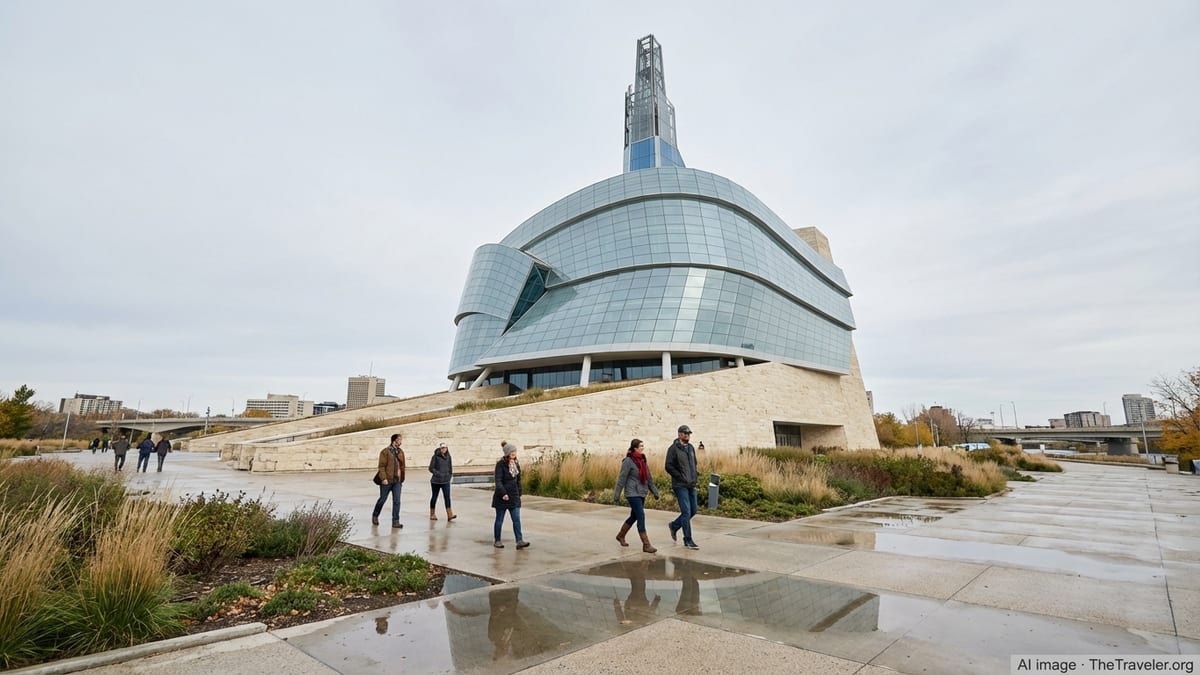
A New Kind of National Museum in Winnipeg
The Canadian Museum for Human Rights, often shortened to CMHR, opened in 2014 at The Forks in Winnipeg, a historic meeting place at the confluence of the Red and Assiniboine Rivers. Unlike most national museums, which focus on art, natural history, or archaeology, this one is dedicated entirely to exploring the concept and reality of human rights. Its mandate is less about displaying objects and more about prompting reflection, dialogue, and sometimes discomfort around difficult histories and present-day injustices.
For travelers, this focus makes the CMHR feel more like an immersive narrative experience than a traditional museum. Exhibitions use multimedia storytelling, testimonies, film, and interactive digital stations more than glass cases and rare artifacts. The subject matter ranges from Indigenous rights in Canada and the legacy of residential schools to global cases of genocide, political repression, and social movements that have advanced equality. Visitors who come prepared for emotional complexity often describe the experience as inspiring, sobering, and thought-provoking in equal measure.
The museum’s location also contributes to its character. Winnipeg is far from Canada’s usual tourist triangle of Toronto, Montreal, and Vancouver, yet the CMHR has quickly become a defining landmark for the city. Visitor surveys have reported very high satisfaction and inspiration ratings, and a substantial share of its guests arrive from outside Manitoba, which underscores its role as both a regional anchor and a destination in its own right.
Architecture and Atmosphere: CMHR vs Traditional Museum Icons
Architecture is one of the clearest ways to feel the difference between the CMHR and other major Canadian museums. Designed by architect Antoine Predock, the CMHR is meant to guide visitors on a symbolic journey from darkness toward light. From the outside, the structure combines rough stone “roots,” sweeping glass forms, and a striking glass tower that rises above the prairie skyline. Inside, a network of glowing alabaster ramps leads visitors through a sequence of galleries, finally arriving at the glass Tower of Hope with panoramic views over Winnipeg.
This thematic architecture contrasts with the more encyclopedic design of longstanding institutions like Toronto’s Royal Ontario Museum. The ROM occupies a vast complex of early 20th century stone buildings married to the angular glass and metal Michael Lee-Chin Crystal addition. The result is a bold urban presence, but its architecture primarily serves to contain a huge, varied collection rather than embody a single narrative. The Art Gallery of Ontario in Toronto takes another approach, with a graceful Frank Gehry redesign featuring a curving glass facade along Dundas Street and warm wood interiors that foreground the artworks.
Other major museums, such as the Canadian Museum of History in Gatineau, also use architecture to tell a story, but in different ways. That riverside complex, with its flowing forms and earth-toned materials facing Parliament Hill across the Ottawa River, evokes landscapes and long human occupation on the land. Still, it houses wide-ranging history exhibitions that encompass everything from Indigenous cultures to political history and popular culture. By contrast, every design decision in the CMHR, from the height of ceilings to the quality of light on each level, is tuned to support its specific theme of human rights.
For visitors, these differences in architectural intent shape the emotional tone of a visit. Walking into the ROM or AGO feels like entering a vast repository of world culture or art, where one can wander freely and choose from many unrelated paths. Stepping into the CMHR feels more like entering an unfolding story with a beginning, middle, and end, carefully choreographed by the ramps and changing ambience of the galleries.
Collections vs Stories: What Is on Display
One of the most practical contrasts between the CMHR and other major museums is the role of physical collections. The Royal Ontario Museum holds tens of millions of objects across natural history, archaeology, world cultures, and art. Visitors can move in minutes from dinosaur skeletons to ancient Egyptian sarcophagi, Chinese temple sculptures, and biodiversity galleries. The Art Gallery of Ontario, with one of North America’s largest art museum spaces, presents European masters, Canadian and Indigenous art, photography, and contemporary work in depth.
The CMHR, by contrast, is not built around a large traditional collection. It does display artifacts, documents, artworks, and personal items, but always as part of stories about rights and resistance rather than as masterpieces to be admired for their own sake. A single object, such as a survivor’s personal belonging, might anchor an entire digital experience or testimony. The emphasis is on context, lived experience, and critical questions rather than on the rarity or monetary value of items.
Comparing the CMHR to history-focused institutions is also instructive. The Canadian Museum of History near Ottawa, or the Manitoba Museum in Winnipeg, combine artifacts with immersive settings to tell regional and national stories, from Indigenous histories and fur trade routes to space exploration and social history. These museums present broad timelines where objects illustrate economic, political, and cultural developments. At the CMHR, timelines exist, but they are deliberately selective and organized around themes such as genocide, migration, or the expansion of legal rights.
Travelers who love the feeling of being surrounded by vast numbers of artifacts may find the CMHR visually quieter than the largest art and natural history museums. On the other hand, visitors who value in-depth storytelling, ethical questions, and strong use of multimedia often find that a few well-chosen objects and testimonies have more impact than rows of display cases.
Confronting Difficult Histories and Contemporary Debates
Another major difference between the CMHR and other leading Canadian museums is how directly they confront traumatic histories and contemporary controversies. Many institutions host powerful exhibitions on war, colonialism, and injustice. The Canadian Museum of History has long-running displays on Indigenous histories, treaties, and the residential school system. The Montreal Holocaust Museum focuses intensely on the Holocaust and its contemporary lessons, with testimony from survivors and educational programs about antisemitism, racism, and hatred.
The CMHR joins this landscape as a museum that embraces difficult knowledge as its core mission rather than as one subject area among many. Galleries explore the Holocaust, genocides in Rwanda and elsewhere, the oppression and resistance of Indigenous peoples in Canada, the history of slavery, and the experiences of women, LGBTQ+ communities, and people with disabilities. These stories are often presented through the voices of survivors and communities, which demands careful attention to ethics and representation.
Human rights museums worldwide face ongoing debates about how activist they should be, and the CMHR is no exception. Scholars and community advocates increasingly argue that such institutions have responsibilities not only to educate but also to partner with affected communities and avoid exploiting suffering. The CMHR has, over time, expanded its collaboration with Indigenous groups, diasporic communities, and human rights organizations, but visitors may still notice tensions in how some narratives are framed or which stories receive the most prominence.
Compared with more traditional art or natural history museums, which can sometimes feel safely removed from current events, a day at the CMHR places visitors squarely inside urgent questions about power, responsibility, and solidarity. For travelers, this can be deeply meaningful, but it also requires emotional energy. It is a museum where taking breaks in quiet spaces, such as the Garden of Contemplation, is not just recommended but built into the design.
Visitor Experience: How a Day at CMHR Compares
From a traveler’s perspective, planning a visit to the CMHR feels somewhat different than planning a day at the ROM, AGO, or Canadian Museum of History. The CMHR is compact enough to explore its core exhibitions in a half day or a long afternoon, especially if you follow the intended route from the lower “roots” galleries upward. However, the emotional density of the content means that many visitors choose to move more slowly, linger with testimonies, and pause for reflection, often stretching a visit to most of a day.
By contrast, museums such as the ROM or the Canadian Museum of History reward repeat visits and strategic planning because their collections are so vast. Travelers often prioritize marquee attractions such as dinosaur galleries, First Peoples exhibits, or blockbuster temporary shows, then leave entire wings for another time. These institutions also tend to have more extensive family zones, hands-on science areas, and broad-spectrum programs that appeal to various interests in one group, from natural history enthusiasts to art lovers.
The CMHR’s exhibits are highly multimedia, with substantial use of films, touchscreens, and soundscapes. Audio levels are generally well controlled, but some visitors may prefer noise-cancelling headphones or to seek out quieter galleries if sensory overload is a concern. Wayfinding is largely built into the architectural ramp system, which gently encourages you to follow a particular sequence. Other large museums rely more on maps, signage, and clearly divided wings, allowing for free-form wandering but also increasing the risk of feeling lost or overwhelmed by choice.
Practical amenities are comparable across major Canadian museums, with cafes, gift shops, accessible washrooms, and seating areas. What distinguishes the CMHR is the integration of contemplative spaces, including water features and dimly lit rooms intended for rest and processing. For some travelers, especially those visiting several large museums on a single trip, this emphasis on mental and emotional rest can be a welcome change of pace.
Location, Accessibility, and Who Each Museum Serves
Location matters, particularly for travelers planning cross-country itineraries. The largest concentration of major museums lies in the Toronto and Ottawa regions. In downtown Toronto, the ROM and AGO sit within walking or short transit distance of each other, along with smaller institutions and university galleries. Visitors can easily combine multiple venues in a single day or weekend, creating a dense cultural circuit with restaurants, theaters, and shopping nearby.
Ottawa and Gatineau form another museum cluster. The Canadian Museum of History in Gatineau faces Parliament Hill across the river, while the National Gallery of Canada, the Canadian War Museum, and several specialized museums lie within a relatively compact urban area. Travelers can move between political landmarks and cultural institutions with ease, often on foot or by short transit rides.
The CMHR, in contrast, is a flagship attraction in a smaller and more spread-out city. Located at The Forks, it is within walking distance of Winnipeg’s downtown hotels, the railway station, and riverfront markets, but there is no comparable concentration of large national museums nearby. Instead, visitors might pair a CMHR visit with local attractions such as The Forks Market, the Manitoba Museum, or neighborhood explorations in the Exchange District. This encourages a slower, more place-focused experience and can deepen a traveler’s sense of Winnipeg as a distinct cultural landscape rather than a quick museum stop on a standard tourist circuit.
In terms of accessibility, major Canadian museums, including the CMHR, have made significant efforts to provide barrier-free access, guided tours, and educational resources for visitors with different needs. The CMHR’s design process explicitly foregrounded accessibility, from ramp gradients to seating placement and tactile elements. Other institutions continue to retrofit historic buildings and develop new wings to meet or exceed contemporary standards. Travelers with mobility or sensory needs should still consult the latest accessibility information before visiting, but overall, Canada’s leading museums aim to be welcoming to a wide range of visitors.
Ethics, Community Engagement, and Indigenous Perspectives
One of the most consequential shifts in Canadian museology over recent decades has been the growing emphasis on Indigenous rights, community partnerships, and ethical stewardship. Nearly all major museums now grapple with issues such as the repatriation of remains and sacred objects, co-curation with Indigenous communities, and how to center Indigenous voices in permanent galleries. For travelers, this means that visiting these institutions often becomes a crash course in ongoing debates about land, sovereignty, and memory.
The CMHR approaches these questions through a human rights lens, highlighting stories of Indigenous resistance, treaty rights, and the long-lasting impacts of residential schools. Exhibitions feature testimony from survivors and recognize that human rights violations are not just historical but ongoing. The museum has consulted with Indigenous advisors and collaborates on programming and exhibits, although, as with many institutions, this work remains a living, evolving process rather than a completed project.
Other major museums hold large Indigenous collections and have been involved in repatriation and co-curation initiatives. The Canadian Museum of History, for example, presents extensive First Peoples galleries developed with community input. The ROM and AGO have increasingly foregrounded Indigenous art, both historical and contemporary, and partnered with Indigenous curators and artists to rethink older displays. Travelers interested in this aspect of Canadian cultural life can gain complementary perspectives by visiting both the CMHR and these institutions, noting how each frames Indigenous knowledge and rights.
Community engagement extends beyond Indigenous partnerships. The CMHR works with local and international human rights organizations, educators, and survivor communities to develop programs and temporary exhibitions. Other major museums maintain similar networks in their respective fields, from archaeology and biodiversity to contemporary art and diaspora histories. The difference lies in emphasis. At the CMHR, partnership with affected communities is part of the core mission, because without those voices, the museum’s legitimacy as a human rights institution would be incomplete.
Planning Your Itinerary: When to Choose CMHR, When to Choose Others
For travelers with limited time, the choice between the CMHR and other major Canadian museums will depend largely on interests, energy, and route. If your itinerary revolves around Toronto and Ottawa, it is hard to ignore the ROM, AGO, Canadian Museum of History, and National Gallery because of their sheer scale, diversity of collections, and architectural presence. These institutions give broad overviews of art, history, and natural science that can serve as a cultural introduction to Canada and the wider world.
However, if your route brings you through Winnipeg, or if you are drawn to museums that tackle ethical questions head-on, the CMHR offers something distinct that even Canada’s largest museums do not replicate. It is particularly compelling for travelers who are already familiar with more traditional museum experiences and are looking for a deeper engagement with social justice, memory, and activism. It also pairs well with visits to Holocaust and genocide-focused institutions elsewhere in Canada, such as the Montreal Holocaust Museum, creating a thematic journey through remembrance and rights.
Travelers planning cross-country trips might consider balancing their schedule with both types of museums. For example, a journey that includes a full day at the ROM or Canadian Museum of History, a separate day exploring art at the AGO or the National Gallery, and a dedicated day at the CMHR will offer a nuanced picture of how Canada remembers its past, imagines its present, and debates its future. Each museum excels in different areas, and seeing them in combination can be more rewarding than trying to decide that one is better than another.
It is also worth factoring in emotional bandwidth. A day among dinosaur skeletons, decorative arts, and landscape paintings can be uplifting and pleasantly educational, while a visit to a human rights museum may be moving in a heavier way. Neither type of experience is inherently superior; they simply demand different things from visitors. Building in time after the CMHR to walk along the river at The Forks, share a meal, or simply sit in a quiet space can help you process what you have seen.
The Takeaway
The Canadian Museum for Human Rights represents a relatively new chapter in Canada’s museum landscape. Instead of centering vast collections of art or artifacts, it places stories of struggle, solidarity, and justice at the heart of the visitor experience. Its architecture, exhibitions, and location in Winnipeg all reinforce this focus, creating a journey that is as much about reflection as it is about information.
By contrast, long-established institutions such as the Royal Ontario Museum, the Art Gallery of Ontario, the Canadian Museum of History, and other major Canadian museums excel at breadth. They offer travelers a chance to encounter dinosaur fossils, ancient civilizations, Indigenous histories, European painting, and contemporary installations in a single building. These are the places where you can lose yourself for hours among galleries and still feel there is much left unseen.
For travelers deciding where to go, the choice is not so much a contest as a question of what kind of encounter with Canada you are seeking. If you want a sweeping survey of art, nature, and history, the country’s largest museums in Toronto and the Ottawa region remain essential. If you are ready to engage deeply with the promises and failures of human rights, and to hear the voices of those who have lived through injustice, the CMHR offers an experience that is uniquely focused, emotionally resonant, and difficult to forget.
In the end, Canada’s major museums complement rather than replace one another. Together, they invite visitors to think not only about what has happened but also about how we choose to remember, who gets to tell the story, and what responsibilities come with knowledge. Planning an itinerary that includes both the CMHR and other leading museums can turn a trip into a layered conversation about the past, present, and possible futures of human rights and cultural life in Canada.
FAQ
Q1. What makes the Canadian Museum for Human Rights different from other major Canadian museums?
The CMHR focuses specifically on human rights stories and ethical questions rather than on large art or natural history collections, using architecture and multimedia to guide visitors through a thematic journey.
Q2. How long should I plan to spend at the Canadian Museum for Human Rights?
Most visitors should allow at least three to four hours to follow the main sequence of galleries, with additional time if you prefer to move slowly, watch full films, and use contemplative spaces.
Q3. Is the CMHR suitable for children and families?
The museum welcomes families and offers educational content, but some exhibits address difficult topics such as genocide and residential schools, so parents may want to preview materials and tailor the visit based on age and sensitivity.
Q4. How does the CMHR compare to the Royal Ontario Museum or Art Gallery of Ontario?
The ROM and AGO offer vast and varied collections of art, natural history, and world cultures, while the CMHR is smaller, more thematically focused, and centered on human rights narratives rather than encyclopedic displays.
Q5. Can I visit the CMHR and the Manitoba Museum in the same day?
It is possible to see both in one day because they are in the same city, but each offers a substantial experience, so many travelers prefer to devote separate half days or full days to avoid rushing.
Q6. Are the exhibitions at the CMHR very graphic or intense?
Some content is emotionally heavy and may include images or testimonies about violence and oppression, but the museum generally presents these with care and provides quieter areas where visitors can pause and reflect.
Q7. How accessible is the CMHR for visitors with mobility challenges?
The CMHR was designed with accessibility in mind, incorporating ramps, elevators, seating, and other features intended to support visitors with a range of mobility and sensory needs.
Q8. Do major Canadian museums collaborate with Indigenous communities?
Yes, leading museums including the CMHR, Canadian Museum of History, ROM, and AGO work with Indigenous communities on exhibits, interpretation, and in some cases repatriation, though the depth of collaboration varies by institution and project.
Q9. Which Canadian museums are best if I only have time for one in Toronto and one outside Ontario?
In Toronto, many travelers choose between the ROM and AGO based on whether they prefer natural history and world cultures or art. Outside Ontario, the CMHR in Winnipeg stands out for its distinct human rights focus.
Q10. Is it necessary to book tickets in advance for the CMHR and other major museums?
Advance booking is recommended, especially during peak travel seasons or for special exhibitions, to secure entry times and avoid queues, although same-day tickets are sometimes available depending on demand.