

More news on this day
Passengers across Canada are facing another wave of travel disruption as regional and mainline carriers record dozens of cancellations and hundreds of delays affecting connections to St. John’s, Winnipeg, Greater Moncton and other key destinations.
Get the latest news straight to your inbox!
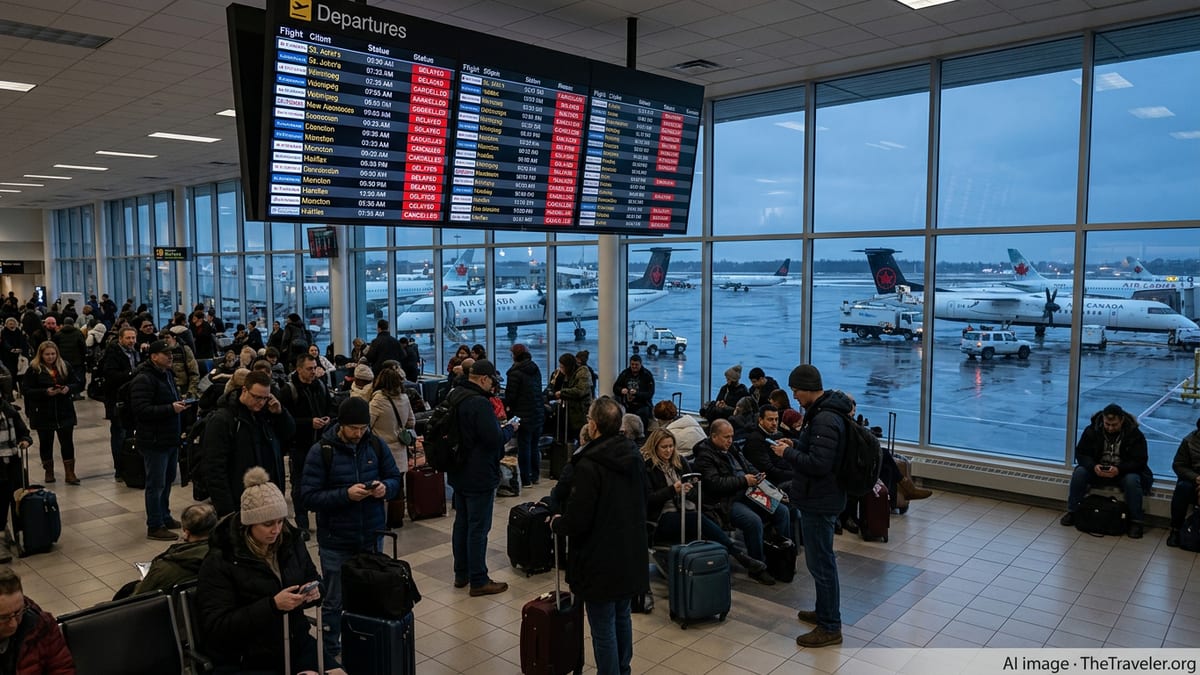
Dozens of Cancellations and Hundreds of Delays Reported
Publicly available flight-tracking data for Tuesday, March 17, 2026, indicates that airports in Montreal, Ottawa, Halifax and Happy Valley-Goose Bay are experiencing a fresh bout of operational disruption, with 49 cancellations and 276 delays recorded across the day. The disruption is concentrated among regional and domestic services that link major hubs with smaller cities in Atlantic Canada and central Canada.
Regional operator Jazz Aviation, which flies many routes under the Air Canada Express banner, appears prominently in the list of affected flights, alongside Air Canada, PAL Airlines, Air Borealis and other carriers. The issues are rippling outward from the hubs, interrupting connections across Eastern Canada and into the Prairies as aircraft and crews fall out of position.
While large-scale nationwide shutdowns are not in evidence, the volume of late and canceled departures is significant enough to affect thousands of travelers, particularly those relying on onward connections or essential regional links. Same-day rebooking options on certain thin routes are limited, increasing the risk of overnight stays and missed events.
Operational data suggests that the pattern of disruption follows common pressure points in the Canadian network, with regional flights bearing a disproportionate share of the delays due to tight turnaround schedules and limited spare capacity.
Key Hubs: Montreal, Ottawa, Halifax and Happy Valley-Goose Bay
Montreal–Trudeau International Airport remains one of the main chokepoints, acting as a central node for flights into Atlantic Canada, northern routes and western connections. High utilization of aircraft and constrained turnaround times on shorter regional legs mean that even modest operational issues can quickly cascade into wider delays.
Ottawa International Airport is facing similar strain, particularly on regional services linking the national capital to Atlantic destinations and secondary cities. Short-haul sectors operated by Jazz Aviation and other regional partners are especially vulnerable when crews or aircraft arrive late from prior segments.
Halifax Stanfield International Airport, the primary hub for much of Atlantic Canada, is seeing knock-on effects as delayed inbound flights compress already busy afternoon and evening departure banks. As a key connecting point for Newfoundland and Labrador, as well as Maritime destinations, any sustained disruption at Halifax can rapidly spread across eastern routes.
In Labrador, Happy Valley-Goose Bay is experiencing cancellations and delays that weigh heavily on communities with limited alternative transport options. With smaller fleets and fewer frequencies, regional carriers in this part of the network have less room to absorb disruptions, amplifying the impact on local travelers and essential services.
Routes to St. John’s, Winnipeg and Greater Moncton Heavily Affected
Among the most affected destinations are St. John’s, Winnipeg and the Greater Moncton area, which all rely on a mix of mainline and regional operations. Flights into St. John’s are particularly exposed because they often depend on tightly timed feeder services through Halifax, Montreal and other hubs.
Winnipeg, a major crossroads for central Canada and the Prairies, is seeing delays that appear linked to late inbound aircraft from eastern hubs. When regional jets or turboprops depart behind schedule, the resulting aircraft rotations can push subsequent flights beyond their planned departure windows.
Greater Moncton Roméo LeBlanc International Airport is also affected by the current wave of disruption, with several regional services subject to extended delays and schedule changes. For travelers in New Brunswick, limited same-day alternatives on certain routes increase the likelihood of missed connections and last-minute itinerary overhauls.
The pattern of disruption highlights the interconnected nature of Canada’s domestic network, where a single delayed aircraft can touch multiple cities over the course of a day, compounding travel difficulties far from the original point of departure.
Regional Carriers Under Pressure
The latest operational difficulties underscore the central role of regional airlines in Canada’s air transport system. Jazz Aviation, PAL Airlines and Air Borealis collectively operate many of the short-haul and remote routes that feed larger hubs, often using turboprop aircraft with multiple sectors scheduled in rapid succession.
When disruptions occur, these carriers have fewer spare aircraft and crews to deploy, making recovery slower than on higher-frequency trunk routes. Publicly accessible industry discussions and recent performance data point to a mix of ongoing challenges, including tight staffing, heavy winter schedules and the lingering effects of an intense travel rebound.
Air Canada, which relies on regional partners to maintain its domestic network, is also visible in the delay statistics, particularly where mainline flights depend on inbound regional feeders. Late-arriving passengers and crews from smaller stations can push departure times at hub airports outside their scheduled windows.
Operational pressures on regional carriers have been a recurring theme in Canadian aviation over recent years, with several reports highlighting the difficulty of balancing demand growth, resource constraints and challenging winter operating conditions.
What Travelers Can Expect in the Coming Days
Based on the current pattern of disruptions, travelers using affected airports and airlines in the coming days should be prepared for possible last-minute schedule changes, especially on regional and connecting itineraries. Publicly available travel advisories and past disruption patterns suggest that residual delays can persist even after the initial trigger has eased.
Passengers with essential travel to or from St. John’s, Winnipeg, Greater Moncton, Happy Valley-Goose Bay and other regional destinations may face reduced same-day alternatives if flights are canceled. Tight capacity on popular routes can make it more difficult to secure rebooked seats at preferred times.
Industry observers note that Canadian carriers often require several operational cycles to fully reset their networks after a day of heavy disruption. As aircraft and crews are repositioned and maintenance schedules adjusted, schedules tend to stabilize, but localized issues can linger on thinner routes.
For now, the latest wave of delays and cancellations illustrates how quickly disruption at a handful of major and regional airports can spread through Canada’s interconnected domestic network, leaving travelers from Atlantic Canada to the Prairies grappling with another round of travel uncertainty.