

More news on this day
As Bali prepares to switch off the lights and close its airport for the 24-hour Hindu Day of Silence known as Nyepi, Canadian tourists are still flocking to the island for spring break 2026, brushing aside a tangle of flight disruptions, regional conflict fallout and heightened travel advisories.
Nyepi Shutdown Collides With Peak Spring Break
The timing could hardly be more dramatic. This year’s Nyepi, the Balinese Hindu New Year marked by a strict island-wide shutdown, falls on March 19, right in the middle of North America’s spring break window. For 24 hours, Bali’s I Gusti Ngurah Rai International Airport closes to all flights, streets empty, beaches fall silent and even hotel exteriors go dark as residents observe a day of reflection.
Local tourism calendars and government notices have warned for months that the airport, ports and most services will be suspended, with travelers urged to adjust itineraries accordingly. Yet travel agents in Canada say bookings to Bali for March remain strong, with many clients either unaware of the full impact of Nyepi or unconcerned about being effectively confined to their hotels for the day.
“Some actually see it as a once-in-a-lifetime cultural experience,” said a Vancouver-based Asia specialist, noting that clients often accept losing a day of sightseeing in exchange for lower shoulder-season fares and Bali’s enduring appeal. “They just want to be there, even if the runway lights go off for a day.”
Hotels and villas across southern Bali are ramping up on-property programming to keep guests occupied indoors during the shutdown, from poolside movie marathons held behind blackout curtains to yoga sessions and Balinese cooking classes staged in low lighting to respect local rules.
Middle East Conflict Sends Shockwaves Through Bali Flights
The planned Nyepi airport closure comes just as Bali’s air links have been shaken by a separate crisis. Over the past several days, escalating conflict in the Middle East and temporary closures of airspace around key Gulf hubs have forced airlines to cancel or reroute flights, including services to and from Bali that rely on transit through Dubai, Abu Dhabi and Doha.
Airport officials in Denpasar report that at least 15 international flights were canceled between February 28 and March 2, affecting thousands of passengers as carriers such as Emirates, Qatar Airways and Etihad adjusted schedules or suspended certain routes. Canadian travelers, who commonly connect to Bali via these Gulf hubs from Toronto, Vancouver and Montreal, have found themselves among those stranded or rebooked at short notice.
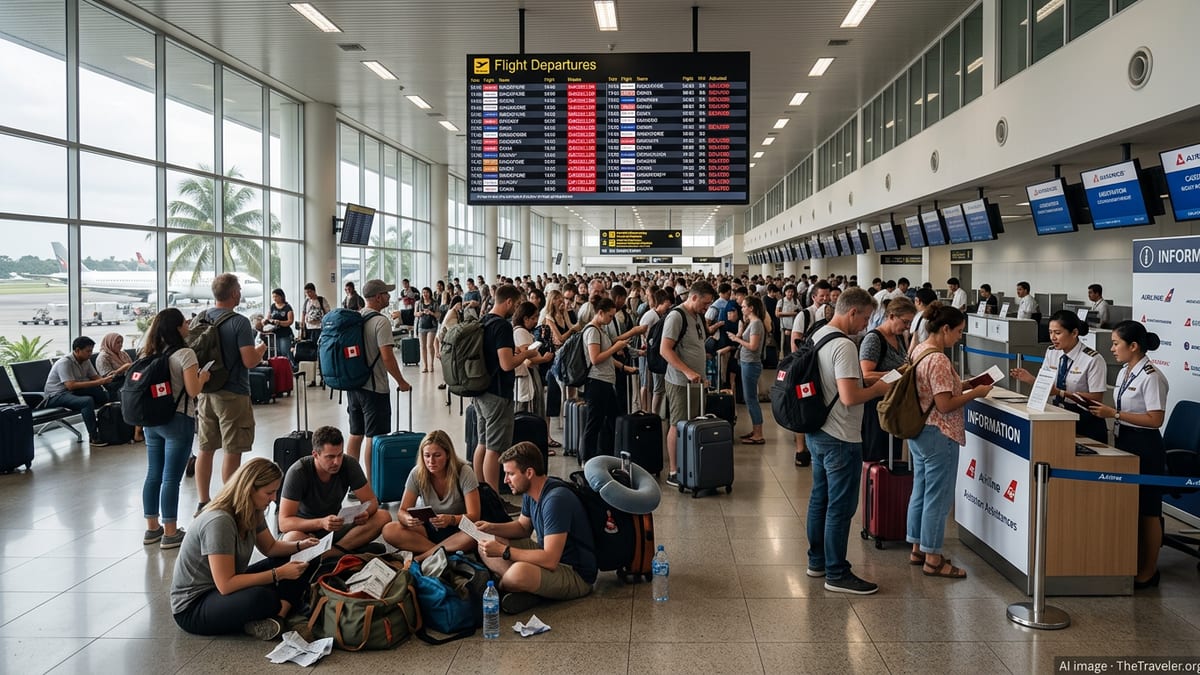
Video from the international terminal has shown long lines at airline counters and passengers camped out near a special help desk as they await updates. Local legislators have called on Bali authorities to move quickly to support foreign tourists caught up in the disruption, emphasizing both the island’s duty of care to visitors and its reliance on their spending.
For now, Bali’s own airport infrastructure remains intact and operating normally outside the Nyepi closure window. The disruption stems from airspace restrictions and damage at several Middle Eastern airports following strikes and missile attacks, a stark reminder of how distant geopolitical shocks can ripple into holiday plans on a tropical island.
Canada’s Cautious Messaging Meets Traveler Optimism
Ottawa’s official travel advice for Indonesia has grown more pointed in recent updates, urging Canadians to exercise a high degree of caution due to crime, the risk of terrorism, natural disasters and localized unrest in parts of the country. Bali and neighboring Lombok are highlighted as hotspots for petty theft, scams and occasional violent crime targeting tourists.
The advisory stops well short of telling Canadians to stay away from Bali, but it does urge visitors to remain vigilant, monitor local media and follow instructions from Indonesian authorities. It also underscores Indonesia’s exposure to earthquakes, tsunamis and volcanic eruptions, any of which can rapidly disrupt transport and essential services.
Despite that messaging, Canadian bookings suggest a persistent confidence in Bali as a largely safe, good-value destination. Travel counselors describe an emerging split between risk-averse clients who prefer destinations closer to home, and a younger, more price-sensitive demographic that appears willing to accept layers of uncertainty in exchange for an aspirational trip.
“They read the advisories, but it doesn’t always translate into canceled plans,” said a Toronto-based consultant. “If anything, people are asking more practical questions about insurance coverage, airline flexibility and what happens if they get stuck for a couple of extra days.”
Stranded Tourists Test Bali’s Hospitality System
As cancellations linked to the Middle East conflict mounted, Bali’s hospitality industry has been pressed into service as an informal safety net. Local media report that more than 8,000 international passengers have been affected by the latest wave of flight disruptions, with many forced to extend stays while waiting for new departure dates.
Hotels and guesthouses from Kuta to Ubud have fielded urgent requests for extra nights, late checkouts and flexible rates. Some properties offered discounted extension packages to long-haul travelers whose itineraries collapsed around them, while others worked with airlines to coordinate airport transfers and updated flight information.
Bali’s provincial government has been urged to coordinate more closely with consulates and tourism stakeholders to ensure stranded visitors, including Canadians, have access to accurate information, accommodation and, if needed, emergency assistance. Legislators say the episode should serve as a stress test for Bali’s crisis-response mechanisms as the island pursues its ambition to become a major international hub.
For many affected tourists, the experience has been frustrating rather than frightening. Social media posts from Canadian and European visitors describe days spent juggling airline apps by the pool, unexpected side trips to quieter parts of the island and a creeping anxiety about missed work or school back home.
Is This the Boldest Spring Break of 2026?
The convergence of a once-a-year island shutdown, a volatile geopolitical backdrop and firm-but-cautious government travel advisories has created an unusually complex landscape for spring break travelers. Yet Canadians continue to push ahead with Bali plans, a mix of optimism, bargain hunting and a desire for meaningful experiences outweighing the risks for many.
Travel experts stress that “bold” need not mean reckless. They encourage Canadians heading to Bali this month to build extra flexibility into itineraries, avoid tight connections through the Middle East, and purchase robust insurance that covers schedule changes linked to conflict or airspace closures. They also recommend arriving at least a day or two before Nyepi, both to adjust to the time zone and to avoid last-minute bottlenecks as the airport winds down operations.
For those who do make it, Bali in March offers a striking juxtaposition: the raucous Ogoh-Ogoh parades on the eve of Nyepi, as towering effigies of demons are carried through village streets, followed by a full day of enforced stillness under a darkened sky. It is a setting in which the usual spring break grammar of beach clubs and bar crawls gives way, at least temporarily, to quiet reflection.
Whether that counts as the boldest spring break of 2026 may depend less on the flight a traveler takes and more on how they navigate the island’s unique blend of vulnerability and resilience once they arrive.