

More news on this day
Alarmist headlines claiming the Canary Islands are now a “no-go” zone for British tourists are spreading fast, fueled by images of mass protests and fresh warnings over pollution and overtourism across Spain’s most popular winter-sun destination. Yet behind the dramatic language, the situation on the ground is more complex – and your upcoming holiday is unlikely to be cancelled overnight.
Get the latest news straight to your inbox!
Is There Really a ‘No List’ Travel Warning for the Canaries?
Recent UK and Spanish media coverage has suggested that the Canary Islands are effectively on a “no list” for British travellers, creating the impression of an official red flag on the archipelago. However, publicly available information shows that, as of mid-March 2026, the Canary Islands remain under the same general safety and security guidance as the rest of Spain. There is no blanket ban or formal advisory telling British holidaymakers to avoid the islands altogether.
What has changed is the tone of conversation around sustainability and visitor behaviour. Travel coverage increasingly highlights the strain mass tourism places on local infrastructure, particularly during peak seasons, and points to growing social tensions. This has led some outlets to frame the Canaries as an emerging flashpoint, even though airlines and tour operators continue to run normal schedules and promote the islands as a core winter and spring destination.
For British travellers, this means bookings are still going ahead, but there is more scrutiny on where and how people travel. Tour companies are under pressure to show stronger environmental credentials, and there is heightened sensitivity to the impact of all-inclusive resorts, cruise calls and short-term holiday lets. The “no list” language reflects this reputational risk rather than a formal legal restriction.
In practical terms, holidaymakers are being encouraged to monitor official travel advice more closely, consider travel insurance that covers disruption from protests or extreme weather, and stay informed about local conditions on their specific island and in their chosen resort area.
Pollution, Black-Flag Beaches and Environmental Strain
Alongside social unrest, environmental concerns have added a sharper edge to travel warnings. Reports drawing on assessments by environmental groups describe a patchwork of beaches around Spain, including in the Canary Islands, that have been flagged for problems such as sewage spills, chemical contamination, coastal overdevelopment and inadequate waste management. Some UK coverage has referred to “black flag” designations used by campaigners to highlight the worst-affected stretches of coastline.
These findings do not mean that the islands as a whole are unsafe, but they underline how vulnerable popular coastal areas are to pollution and climate-related pressures. Heavy rainfall events, overflowing sewage systems and rapid urbanisation can temporarily degrade water quality, particularly near densely built resort zones. Environmental campaigners argue that the cumulative impact of millions of visitors each year is pushing some ecosystems to breaking point.
For tourists, the main consequence is the need to pay attention to local beach notices, lifeguard warnings and municipal updates about water quality or temporary closures. Many beaches in the Canaries still meet high environmental standards and retain Blue Flag status, but conditions can change quickly after storms or infrastructure failures. Travellers who prioritise swimming and water sports are increasingly checking independent water-quality data and choosing resorts known for stronger environmental oversight.
The pollution debate is also feeding into a broader discussion about the future of coastal development in the archipelago. Planning battles over new hotels, golf courses and marina projects have become lightning rods for residents worried about water scarcity, soil erosion and biodiversity loss. These disputes can, at times, spill into the headlines that British travellers see when researching their next holiday.
Inside the Anti-Tourism Protests Shaking the Archipelago
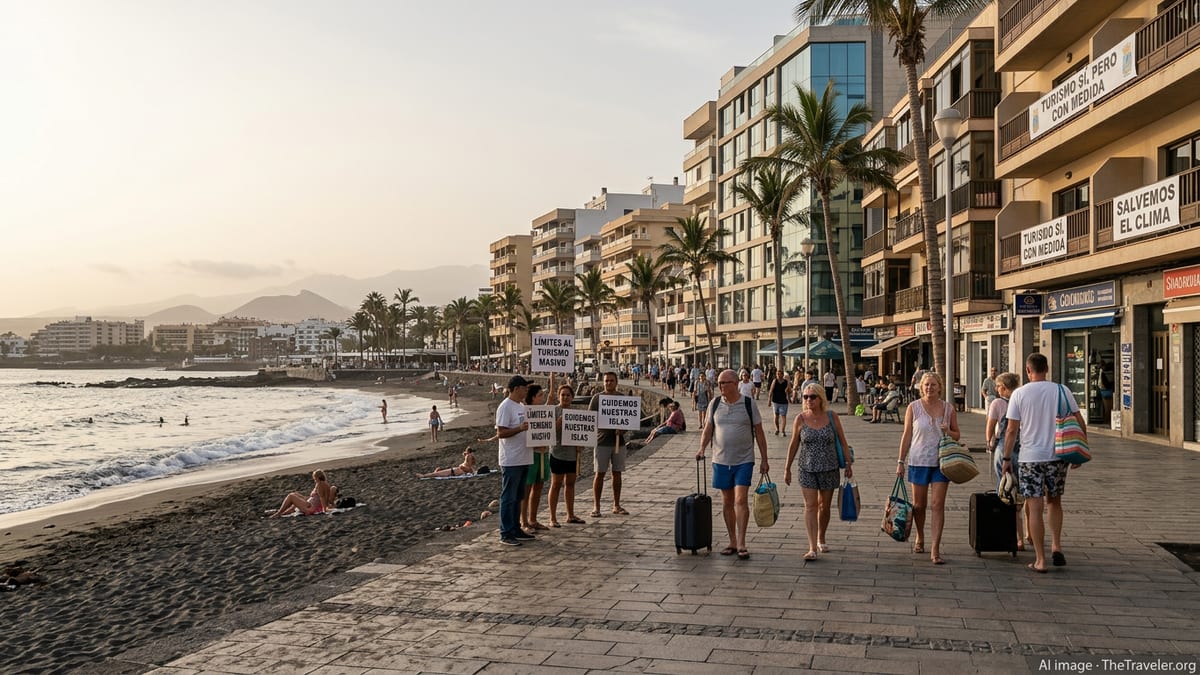
The most visible driver of the current anxiety is the wave of anti-overtourism protests that has swept across the Canary Islands since 2024. Demonstrations in Tenerife, Gran Canaria, Lanzarote and other islands have brought tens of thousands of residents onto the streets, with slogans targeting the dominant tourism-led economic model rather than holidaymakers as individuals.
Published coverage from Spanish and international outlets describes a protest movement focused on housing costs, low wages, environmental degradation and congestion. Local groups argue that record visitor numbers have not translated into broad social benefits, pointing to long hospital waiting lists, pressure on water supplies and the growth of precarious work. Activists have called for measures such as caps on visitor numbers, tougher rules on holiday rentals and an eco-tax to fund conservation.
At the same time, some of the imagery emerging from protests and street graffiti has been interpreted abroad as overt hostility toward tourists, especially those from the UK, who make up one of the largest visitor groups. Social media clips showing anti-tourism slogans, confrontations in resorts or calls to “go home” have been widely shared, often without context. This has contributed to a perception of rising hostility that can feel unsettling to would-be visitors planning family breaks.
On the ground, reports suggest that most protests have been peaceful, organised in urban centres or outside government buildings rather than inside resort complexes. Demonstrations are typically announced in advance and concentrated on specific weekends or public holidays. Travellers in recent seasons have largely been able to continue their holidays, although occasional disruption to traffic, public transport or access to certain city-centre areas has been reported.
How British Travellers Are Reacting
Despite the wave of negative headlines, surveys by UK travel industry bodies and data from Spanish tourism statistics indicate that demand from British travellers remains remarkably resilient. Britain continues to rank among the top source markets for the Canary Islands, and arrivals in 2025 reached or exceeded pre-pandemic records in several key months.
Analysts note that price, flight availability and year-round sunshine still weigh more heavily in booking decisions than concerns about protests or local politics. Many British holidaymakers continue to book package deals to established resort areas where day-to-day life appears largely unchanged, with hotel pools full and restaurants busy throughout the peak winter and Easter periods.
However, there are signs of a gradual shift in attitudes. Travel agents and tour operators report more questions about sustainability credentials, local regulations on holiday rentals and the likelihood of disruption from demonstrations. Some British travellers are opting for smaller properties, rural stays or lesser-known islands in search of a lower-impact and more locally rooted experience. Others are spreading their trips across the year to avoid peak-season pressure.
For now, there is little evidence of a mass exodus from the Canaries to alternative destinations, but the reputational damage from ongoing protests and environmental debates is becoming a strategic concern for both Spanish and UK travel businesses that rely on the archipelago’s appeal.
Practical Advice if You Have a Canary Islands Trip Booked
For British holidaymakers with flights already booked, the key message emerging from publicly available information is to stay informed, not panicked. Normal tourism operations continue, and the vast majority of trips are running without serious incident. Airlines, ferry operators and tour companies have not announced large-scale cancellations linked directly to the protests or pollution issues.
Travellers are being advised by consumer and travel publications to check their booking conditions carefully, particularly around cancellations or changes due to civil unrest or environmental incidents. Comprehensive travel insurance that covers delays, missed excursions or last-minute itinerary changes can provide extra reassurance, especially during busy periods when protests are more likely to be scheduled.
Once in the islands, visitors can reduce the risk of friction by staying updated on local news, respecting any restrictions on sensitive natural areas and being mindful of how their spending and behaviour affect nearby communities. Choosing locally owned accommodation or services, conserving water in drought-prone zones and avoiding littering or off-path hiking in protected areas are all practical steps that align with the concerns raised by protest groups.
Ultimately, the current tension in the Canary Islands is less about shutting the door on tourism and more about redefining how it works. For British visitors, that means holidays are still very much possible, but the expectation is shifting toward more responsible, better-informed travel in an environment where local voices are demanding a greater say in how their islands are shared with the world.