

More news on this day
British holidaymakers heading to the Canary Islands in 2026 are being urged to pay closer attention to new tourism rules and ongoing local protests, as the Spanish archipelago tightens controls on short-term rentals and residents step up calls to curb overtourism.
Get the latest news straight to your inbox!
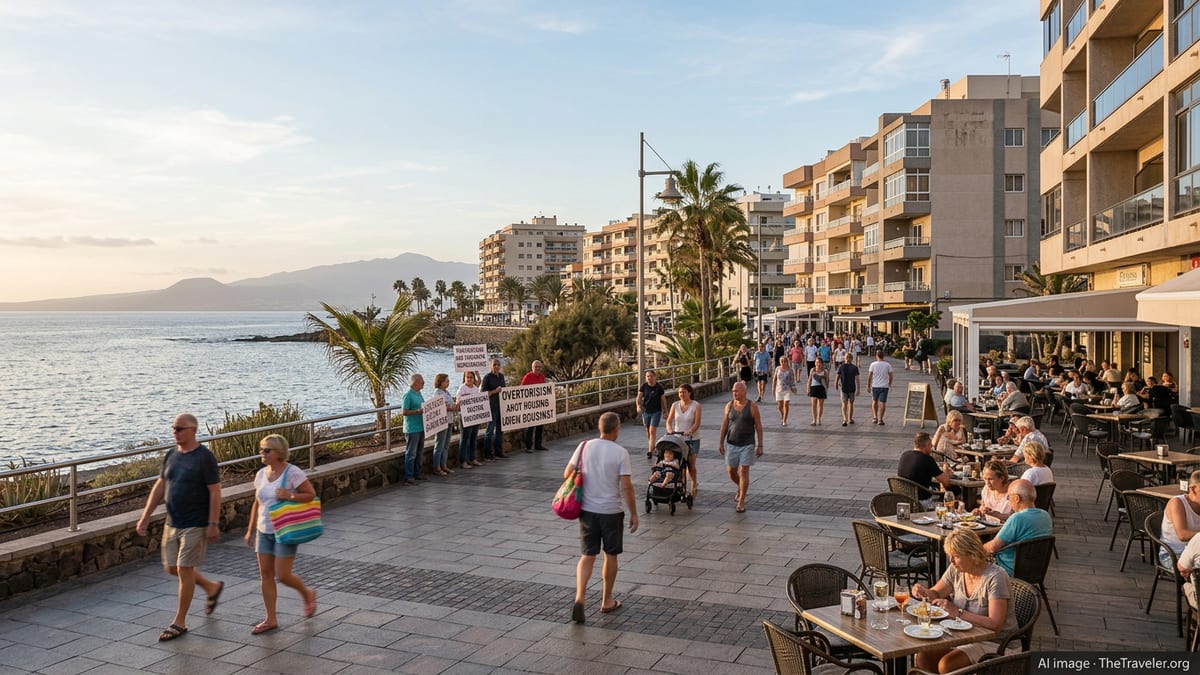
Why the Canary Islands Are Under Pressure in 2026
The Canary Islands remain one of Spain’s most visited destinations, with tens of millions of passengers passing through the islands’ airports in recent years and visitor numbers continuing to edge upwards. Publicly available data from national statistics and tourism bodies shows that international arrivals set new records through 2024 and 2025, underlining the scale of reliance on holidaymakers from the United Kingdom and other European countries.
At the same time, reports from Spanish and international media describe a growing backlash from residents who say mass tourism has pushed up housing costs, strained local services and damaged the environment. Coverage of protests in 2024 and 2025 highlights recurring complaints about overcrowded resorts, pressure on water resources and sewage systems, and the expansion of large luxury developments in already saturated coastal areas.
The result in 2026 is a destination that is still welcoming visitors but also openly debating how many tourists it can reasonably host. British travellers planning spring and summer trips are being advised, by travel industry commentary and local coverage, to be aware of the changing mood on the islands and of new regulations that affect where and how they can stay.
New Holiday Rental Rules British Tourists Need to Understand
From December 2025, a new regional framework for holiday rentals has begun to reshape the accommodation market across the Canary Islands. Specialist legal and real-estate briefings explain that the updated law limits tourist rentals to a maximum share of the residential building capacity in each municipality, with a commonly cited ceiling of around 10 percent of the total buildable residential area. In practice, this is designed to prevent entire neighbourhoods from becoming holiday lets at the expense of long-term housing for residents.
According to compliance guides aimed at owners and expats, any property marketed to tourists must now meet stricter planning and zoning rules, hold an approved licence and, in many cases, respect a “ten-year rule” that restricts new-build homes from being converted immediately into short-term lets. Municipal plans play a crucial role: if a town’s urban plan does not explicitly allow vacation rentals in a given zone, new licences there may be refused.
For British visitors, these changes mean that staying in a licensed property is more important than ever. Spanish regulatory action against unregistered rentals, including large fines at national level for platforms advertising unlicensed accommodation, signals a broader crackdown. Publicly available information indicates that authorities are cross-checking registration numbers and have warned that illegal rentals can face sanctions, and guests may be required to relocate if a property is found to be non-compliant.
Travel advisers and legal briefings therefore recommend that tourists check that any apartment, villa or rural house has a visible registration number and that booking confirmations clearly identify the property and operator. Package holidays booked through established tour operators are generally considered lower risk, as large companies typically run internal checks on regulatory compliance.
Local Protests and How They Affect Visitors
Since April 2024, the Canary Islands have seen repeated demonstrations calling for a change of tourism model. Reporting by national and international outlets has documented marches across Tenerife, Gran Canaria, Lanzarote and other islands, with slogans that focus on housing affordability, environmental protection and limits to new tourist developments rather than opposition to individual visitors.
In 2025, protests under banners such as “Canarias tiene un límite” once again drew thousands of people into the streets, according to Spanish press coverage. Demonstrations have taken place in capital cities like Santa Cruz de Tenerife and Las Palmas de Gran Canaria as well as in resort areas, sometimes coinciding with travel trade events or major holiday periods to draw attention to the issue of overtourism.
For British tourists in 2026, these protests are more likely to be a visible backdrop than a direct safety concern. Available reporting does not point to systematic targeting of foreign visitors, although isolated incidents of tensions between residents and tourists have been noted in other parts of Spain. Travellers may encounter marches, banners, or occasional disruption in central areas on protest days, and local media often gives advance notice of gatherings and expected traffic diversions.
Visitors are generally encouraged, in travel and sustainability commentary, to respect demonstrations by avoiding blocking marches, following instructions from event stewards and staying informed through hotel notices, local news and official advisories. Many protest organisers stress that their criticism is focused on policies and large-scale developments rather than on individual holidaymakers.
Costs, Tourist Taxes and Rising Scrutiny of Mass Tourism
The debate over overtourism in the Canary Islands is closely linked to the rising cost of living for residents. Analysis in Spanish media and market research referenced by local commentators suggests that the archipelago’s image has begun to shift, with concerns that constant tourist growth could damage both community wellbeing and the long-term appeal of the destination.
Some municipalities have experimented with modest local levies on overnight stays, similar to tourist taxes already in place in parts of mainland Spain. Legal decisions reported in regional outlets indicate that at least one coastal municipality in Gran Canaria has pursued a per-night fee, which has been subject to court scrutiny but remains a live policy tool for local authorities. Regional political debates in 2025 also featured renewed calls for a broader Canary Islands tourist tax, although any island-wide scheme would require new legislation.
Even where no formal new tax applies, British travellers in 2026 are likely to notice higher prices for accommodation and services in the most popular areas compared with pre-pandemic years. Commentaries from travel industry figures and local businesses note that energy, food and staffing costs have all risen, while demand during peak British holiday periods has remained strong. This combination gives hotels and licensed rentals limited incentive to discount, particularly in resorts on Tenerife, Gran Canaria and Lanzarote.
The increased scrutiny of mass tourism is also feeding into a wider Spanish push against unregulated short-term rentals. A significant fine imposed on a major booking platform in late 2025 for advertising unlicensed properties is one prominent example reported by international news agencies. This enforcement trend reinforces the message to visitors that cheaper, unofficial options may carry greater risk in 2026.
Practical Advice for British Tourists Visiting in 2026
While there is no broad prohibition on travel to the Canary Islands, publicly available foreign-travel guidance for Spain continues to advise visitors to monitor local news and follow the advice of local services in case of demonstrations, severe weather or transport disruption. Recent coverage of strong winds affecting Atlantic destinations, including the Canaries, shows that ferry routes and high-altitude hiking can be temporarily suspended, particularly in the western islands and on Gran Canaria.
For accommodation, British tourists are advised by legal and property experts to favour clearly licensed hotels, aparthotels and registered holiday rentals, checking paperwork carefully when booking through peer-to-peer platforms. Paying attention to house rules on noise, rubbish disposal and community facilities can help maintain good relations with neighbours in residential buildings that host tourists.
Visitors can also respond to the local debate over tourism by making more sustainable choices. Travel and environmental organisations active in the Canaries often highlight simple steps such as using public transport where feasible, respecting signposted paths in protected natural areas, supporting local-owned businesses and avoiding activities that place extra strain on limited water resources.
As 2026 progresses, the balance between welcoming tourists and protecting residents is likely to remain a central issue in Canary Islands politics. British holidaymakers who stay informed about new rental rules, remain aware of ongoing protests and travel with sensitivity to local concerns are well placed to continue enjoying the islands’ climate and landscapes while contributing positively to the communities that host them.