

More news on this day
Des Moines International Airport experienced a fresh wave of schedule disruptions today, with publicly available tracking data indicating eight flight cancellations and 25 delays affecting passengers bound for Chicago, Dallas and other major U.S. cities.
Get the latest news straight to your inbox!
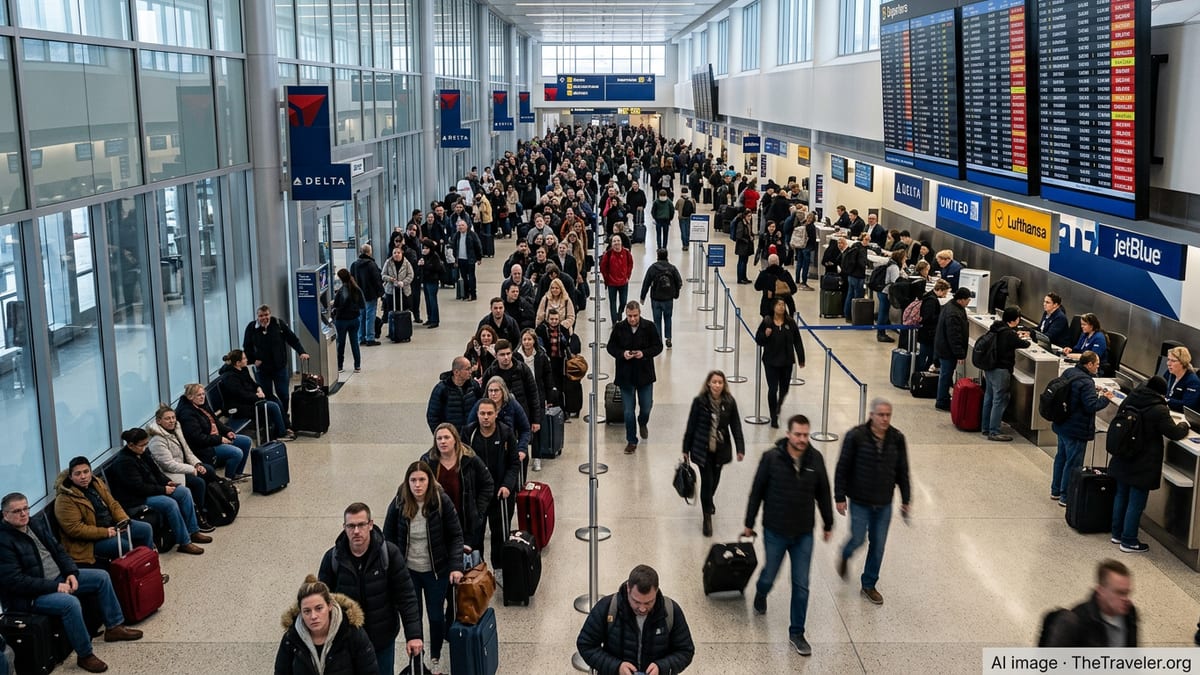
Regional Carriers Lead a Difficult Day at DSM
Flight status boards at Des Moines International Airport on April 2 showed a concentrated cluster of disruptions among regional and low cost operators, with SkyWest Airlines, PSA Airlines and Allegiant Air accounting for a significant share of the irregular operations. Publicly available data from flight tracking and aviation analytics platforms indicate that the airport recorded eight cancellations and 25 delayed departures and arrivals over the course of the day, an elevated level for a mid sized Midwest facility that typically sees modest congestion.
SkyWest and PSA, both major regional partners for the country’s largest network carriers, feed traffic from Des Moines into hubs such as Chicago O’Hare and Dallas Fort Worth. When their schedules are disrupted, passengers booked on large mainline airlines can face missed connections across the United States and into international networks. Allegiant Air, which focuses on point to point leisure routes from Des Moines to sun and city break destinations, adds another layer of complexity when its flights fall behind schedule, because many travelers do not have alternative same day options.
Des Moines International Airport has been growing steadily and is in the midst of a terminal expansion set to boost gate capacity. Even so, the airport remains highly dependent on regional operators and a limited roster of carriers. This structure can magnify the impact of a relatively small number of cancellations and delays, particularly when they are concentrated on peak morning and late afternoon departure banks.
Operational data compiled by federal transportation agencies and independent analysts in recent years show that SkyWest, PSA and Allegiant all operate with on time performance levels that fluctuate around national averages, but each has periods where weather, congestion and operational constraints contribute to spikes in delays and cancelations. Today’s pattern at Des Moines appears to fit within a broader cycle of strain on regional carriers serving large hub airports.
Knock On Effects for Chicago, Dallas and Beyond
The disruptions at Des Moines are closely tied to conditions at larger hubs. In recent days, published aviation coverage has highlighted severe thunderstorms and operational programs at Chicago O’Hare that triggered hundreds of delays and cancellations, particularly among regional operators such as SkyWest and PSA that handle a high volume of feeder flights. Those bottlenecks tend to ripple outward to spoke airports, including Des Moines, as aircraft and crews are held at hubs or repositioned late.
Chicago bound passengers from Des Moines today faced extended waits and rebookings as delayed inbound aircraft pushed back scheduled departure times. Once in Chicago, travelers connecting onward to destinations like New York, Toronto, Detroit and Atlanta encountered already strained banks of departures. When multiple short haul flights from cities such as Des Moines arrive late, connection times compress and missed connections rise, forcing airlines to reaccommodate travelers on later services.
Dallas Fort Worth also plays a key role in Des Moines connectivity, particularly through regional affiliates operating on behalf of one of the largest U.S. carriers. Weather and air traffic management measures in Texas over the past week have contributed to scattered disruptions across the network. When a Dallas flight cancels or departs significantly late from Des Moines, passengers whose trips depend on single daily frequencies to smaller markets often have few alternatives, leading to overnight stays or complete trip cancellations.
This dynamic illustrates how an airport with a relatively small number of flights can still feel outsized impacts from national irregular operations. A handful of cancellations on regional routes can strand families, business travelers and students, and can quickly fill remaining seats on other departures from Des Moines to major hubs.
National Context: Elevated Disruptions Across the U.S.
The issues at Des Moines are unfolding against a backdrop of heightened disruption across the United States. In the last two days, travel industry outlets have reported thousands of delays and hundreds of cancellations nationwide, driven by a mix of storm systems, congestion at major hubs and ongoing crew and equipment imbalances. Chicago O’Hare, in particular, has recorded more than a thousand delays in a single day alongside a substantial number of cancellations, with regional partners such as SkyWest and PSA frequently listed among the hardest hit carriers.
Other large airports including Los Angeles, Denver, Houston and New York LaGuardia have also seen elevated disruption levels, illustrating how interconnected the domestic network has become. When large hubs reduce arrival or departure rates because of weather or airspace constraints, regional carriers in secondary cities like Des Moines often absorb the first wave of cuts, as airlines prioritize maintaining long haul and high demand trunk routes.
Historical performance data compiled by transportation authorities and independent analysts show that regional and low cost carriers can face particular challenges during these periods. Allegiant, which operates a lean, low frequency schedule with limited spare capacity, has less flexibility to swap aircraft or crews at short notice. SkyWest and PSA must juggle complex contractual schedules across multiple hubs for different mainline partners. These structural factors help explain why, on a day of national disruption, they are frequently prominent in delay and cancellation statistics.
For passengers departing from or arriving to Des Moines, this means that even localized good weather and clear skies do not guarantee smooth operations. Problems occurring hundreds of miles away can still translate into empty gates, rolling departure times and boarding announcements that never materialize into pushback.
What Travelers at Des Moines Are Experiencing
Passengers at Des Moines International Airport today have encountered a familiar modern travel scenario: departure boards dotted with delayed indicators, sudden switches from late departures to outright cancellations, and long lines at airline service counters. With eight flights cancelled outright and 25 operating behind schedule, many travelers have had to rebook connections, adjust hotel plans and seek meal or hotel vouchers where applicable under airline policies.
Because Des Moines relies heavily on hub connections, even a single cancelled flight to Chicago or Dallas can disrupt dozens of onward journeys. Travelers heading to smaller regional cities, or to vacation destinations with only a few weekly services, face particularly constrained options. Some may divert their trips through alternative hubs such as Denver or Minneapolis, while others wait for next day departures.
Airline customer service guidance and travel industry advisories emphasize the importance of monitoring flight status closely through airline apps and airport displays, especially during periods of widespread operational strain. Same day schedule changes have become more common as carriers attempt to recover networks after storms or air traffic programs at key hubs. At Des Moines, this can mean that a flight appearing on time in the morning is later retimed or cancelled as updated information from Chicago, Dallas or other hubs filters through.
Travel planners note that passengers with tight connections at major hubs may want to build longer layovers into itineraries during active storm seasons or when national disruption levels appear elevated. For Des Moines based travelers, selecting earlier departures in the day and avoiding the last connection of the night can provide an additional buffer when irregular operations hit.