

More news on this day
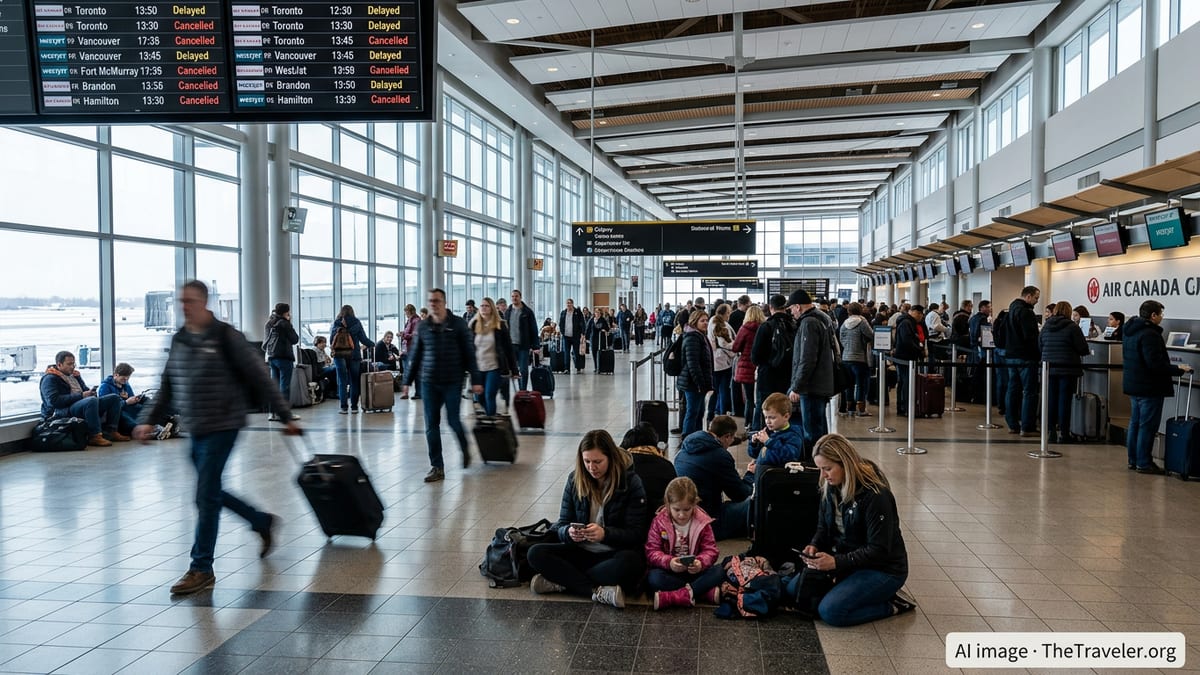
Hundreds of passengers at Calgary International Airport faced an anxious day of queues, rebookings and missed connections on March 9, 2026, as a cluster of flight cancellations and rolling delays affecting Air Canada and WestJet Encore upended travel plans to major Canadian cities.
Five Key Cancellations Ripple Across Domestic Network
Operational disruptions at Calgary International Airport culminated in five confirmed cancellations involving Air Canada and WestJet Encore on Monday, compounding a broader day of irregular operations across the country. Industry data providers tracking live schedules at Calgary reported that the bulk of the cancellations were concentrated on high-demand domestic routes, including services to Toronto, Vancouver, Fort McMurray, Brandon and Hamilton, while additional flights operated with significant delays.
Among the affected services were short-haul links between Calgary and Fort McMurray and regional connections serving Brandon and Hamilton, key spokes in the domestic network for both Air Canada and WestJet’s regional arm. These routes are frequently used by workers commuting to resource-sector jobs in northern Alberta and business travellers connecting through Calgary to larger hubs, making any disruption particularly consequential.
The cancellations at Calgary came against a backdrop of elevated travel chaos nationwide. Aviation and travel intelligence platforms tracking same-day operations reported dozens of scrapped flights and well over 300 delays across Canadian airports on March 9 and March 10, with Calgary, Toronto and Vancouver among the hardest-hit hubs. While the majority of services still operated, the selective cancellations on popular routes magnified the impact for those caught in the disruption.
Weather, Congestion and Knock-On Effects Blamed
While neither airline immediately issued a detailed, route-by-route breakdown, operational experts pointed to a familiar combination of weather-related constraints, tight aircraft utilization and crew availability as likely contributors to Monday’s disruptions. Recent storms and winter systems moving through central and western Canada have already left major hubs dealing with residual delays, forcing carriers to reshuffle aircraft and crew at short notice.
When a small number of peak-time departures out of Calgary are cancelled, the effects can quickly radiate throughout the network. Flights to Toronto and Vancouver are often heavily booked and act as feeders for onward domestic and international connections. The loss of a single departure can push later services beyond capacity, leaving some passengers with no same-day options and requiring overnight stays or rerouting through alternative cities.
Air Canada and WestJet Encore have also been operating in an environment where recovery margins remain thin. Following years of pandemic-related restructuring and more recent labour disputes, carriers continue to rebuild schedules with limited slack. Under these conditions, even moderate weather or air traffic control restrictions can prompt preemptive cancellations on select routes in order to keep the broader operation running, inevitably stranding some travellers despite otherwise clear skies in Calgary itself.
Scenes of Frustration Inside Calgary International Airport
Inside Calgary International, the impact of the day’s cancellations and delays was visible from early morning. Long queues formed at check-in areas and service desks for both Air Canada and WestJet as passengers sought clarification on their flight status, rebooking options and overnight arrangements. Many travellers only learned of their cancellations after arriving at the terminal, prompting hurried calls to employers, family members and hotels.
Passengers bound for Toronto and Vancouver described waiting in line for hours to secure alternative departures, competing for limited remaining seats on later flights and, in some cases, being routed through secondary airports. Others heading to Fort McMurray and Brandon, where frequencies are lower, reported being offered rebookings one or more days later, or being advised to consider journeys via other cities in order to reach their destinations.
Families returning from school holidays, business travellers on tight schedules and workers commuting to northern job sites were among those affected. Several passengers expressed frustration at receiving mixed messages between airline apps, airport departure boards and email notifications, a recurring complaint during periods of disruption. Customer-service staff at Calgary spent much of the day explaining options under Canada’s Air Passenger Protection Regulations and assisting with hotel and meal arrangements where policies allowed.
Impact Spreads to Toronto, Vancouver, Hamilton and Brandon
The cancellations and severe delays at Calgary were felt well beyond Alberta. Downline airports including Toronto Pearson, Vancouver International, Hamilton and Brandon reported incoming flights arriving late or not at all as aircraft failed to depart on schedule from Calgary. In practical terms, that meant families waiting at arrivals boards watching estimated times repeatedly pushed back, and in some cases, learning that flights had been scrubbed altogether.
In Hamilton and Brandon, which each see a relatively small number of daily departures, the loss of a single Calgary-linked service can effectively erase an entire day’s worth of direct connectivity. Travellers booked on these flights often have limited alternatives beyond accepting multi-stop itineraries or postponing trips. Local tourism and business groups have previously warned that repeated disruptions on regional routes can dampen confidence and push travellers to larger hubs, even when that requires a longer drive.
In Toronto and Vancouver, Canada’s busiest gateways, the Calgary disruption added to already busy operational days. Delayed Calgary arrivals translated into missed onward connections to domestic and transborder destinations, forcing carriers to rebook passengers across multiple flights and partners. Airport staff in both cities reported brisk traffic at connections counters and rebooking desks throughout the day as they worked to clear backlogs created upstream in Calgary.
Airlines Urge Passengers to Monitor Flights and Know Their Rights
As operations slowly stabilized late in the day, both Air Canada and WestJet Encore advised travellers to continue monitoring flight status closely through official channels before heading to the airport. Airlines typically encourage passengers to use mobile apps and text alerts, which can reflect last-minute gate changes, delays or cancellations more quickly than static screens in terminals or third-party platforms.
Consumer advocates meanwhile urged passengers affected by Monday’s disruptions to document their experiences and keep receipts for any out-of-pocket expenses related to accommodation, meals or ground transport. Under Canada’s Air Passenger Protection Regulations, compensation and assistance entitlements depend on the cause of the disruption, the size of the carrier and the length of the delay in reaching the final destination. Weather and certain safety-related issues may exempt airlines from cash compensation, but they can still be responsible for rebooking and care in many circumstances.
For now, Calgary International Airport remains fully open and processing traffic, but Monday’s events serve as a reminder of the fragility of tightly scheduled domestic networks during late-winter operations. With more unsettled weather expected across parts of Canada in the coming weeks and high travel demand continuing into the spring break period, travellers heading through Calgary, Toronto, Vancouver, Fort McMurray, Brandon, Hamilton and other affected cities are being advised to build in extra time and prepare for the possibility of further last-minute changes.