

More news on this day
Travelers moving through Minneapolis–Saint Paul International Airport on March 6 faced a tense start to the spring break rush as at least 10 flights operated by SkyWest, Envoy Air and Southwest Airlines were canceled and many more delayed, disrupting links to cities across Minnesota and the wider Midwest, including Saint Paul, Kansas City, Chicago, Appleton and Bismarck.
Cancellations Hit Regional and Mainline Carriers
The day’s disruption centered on a cluster of cancellations involving regional operators SkyWest and Envoy Air, along with low-cost giant Southwest Airlines, all of which maintain busy schedules through Minneapolis–Saint Paul International Airport. According to operational data reviewed on Friday, a total of 10 flights touching MSP were scrubbed, a relatively small number in national terms but enough to cause significant localized strain as aircraft and crews fell out of position.
Several of the canceled services were short-haul regional links operated under major-airline brands, affecting travelers relying on quick hops to and from outlying cities. SkyWest and Envoy, which fly feeder routes for larger U.S. carriers, saw a handful of their Minneapolis rotations dropped, severing connections that many passengers had counted on to reach larger hubs or smaller Midwest communities.
Southwest Airlines, which operates from Terminal 2 at MSP, also reported cancellations and rolling delays on its point-to-point network. The timing, coinciding with the first wave of 2026 spring break traffic, amplified the impact on families and leisure travelers, many of whom had little flexibility to rebook without losing valuable vacation time.
While the exact causes varied from flight to flight, a combination of tight schedules, knock-on effects from weather and air traffic congestion elsewhere in the system, and crew availability issues contributed to the cancellations. Airline representatives emphasized that safety considerations would always take precedence over on-time departures, even during peak periods.
Knock-On Effects Across the Upper Midwest
The disruption in Minneapolis rippled quickly across the Upper Midwest, disturbing travel plans in a string of regional cities that rely heavily on MSP as a connecting hub. Flights serving communities such as Appleton in Wisconsin and Bismarck in North Dakota were among those affected, leaving some travelers with lengthy waits before alternative options could be arranged.
In Kansas City and Chicago, passengers reported delayed departures and aircraft swaps as airlines attempted to rebalance their operations. Some Midwest-bound travelers found themselves re-routed through alternative hubs or onto later flights, often with tight connections or overnight stays added at short notice.
For business travelers and those heading to family events, even modest timetable changes caused outsized problems. Missed meetings, rescheduled appointments and disrupted weekend plans were common refrains in terminal waiting areas, as electronic departure boards at MSP cycled through rows of yellow “delayed” labels.
Regional airports that depend on a small number of daily flights were particularly vulnerable. With fewer frequencies to fall back on, a single cancellation could effectively wipe out an entire day’s connectivity for some routes, underlining how even a limited number of scrapped flights can significantly disrupt smaller markets.
Spring Break Surge Magnifies Passenger Frustration
The timing of the cancellations could hardly have been worse. Minneapolis–Saint Paul International Airport is entering one of its busiest stretches of the year as spring break travelers fan out to beaches, ski resorts and family gatherings. Airport officials have noted a sharp uptick in passenger volumes in early March compared with previous years, reflecting both pent-up demand and an expanded route network.
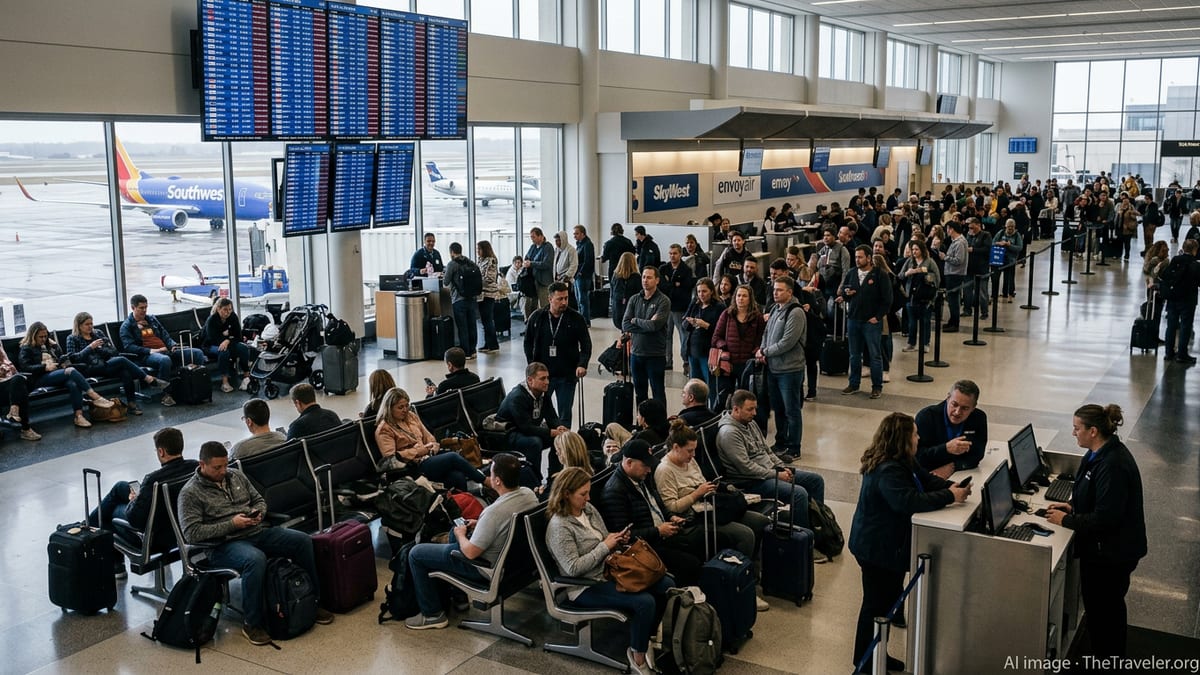
As a result, terminal spaces that might normally absorb schedule disruptions more easily were already close to capacity on Friday. Long lines formed at airline service counters as stranded passengers queued to secure rebookings or seek hotel and meal vouchers, while gate areas filled with families guarding strollers and carry-ons as they waited for updates.
Retailers and concessions within the terminals saw a mixed impact: some restaurants reported steady business from travelers lingering between delayed flights, but many customers expressed concern about rising prices while they waited for clarity on their journeys. For airport staff, the priority remained crowd management and clear communication, with extra personnel deployed to help direct passengers and answer questions.
The broader context of recent system-wide volatility added to the sense of unease. Travelers aware of recent high-profile disruption days at other U.S. hubs expressed worry that the MSP issues could escalate into more widespread chaos if weather or staffing challenges worsen over the coming days.
Airlines Work to Rebook and Recover Schedules
In response to the disruption, SkyWest, Envoy and Southwest moved quickly to re-accommodate impacted customers, offering same-day rebooking where seats were available and, in some cases, providing waivers for travelers willing to shift their plans. As the day progressed, operations teams focused on repositioning aircraft and crews so that the weekend schedule could proceed as close to normal as possible.
Rebooking efforts were complicated by strong demand tied to spring break travel. Many alternative flights were already near capacity, leaving limited room for displaced passengers. Some travelers accepted routings through alternate hubs or agreed to travel at unpopular hours in exchange for getting to their destinations on the same day.
Experts noted that regional carriers such as SkyWest and Envoy face particular challenges when recovering from disruptions, because their fleets are tightly scheduled and primarily dedicated to short-haul operations. Any delay or cancellation can quickly cascade through the day’s rotations, especially when spare aircraft or reserve crews are limited.
Southwest, with its point-to-point model, also walks a fine line during peak travel windows. When a single leg in a multi-stop itinerary is affected, the consequences can echo along subsequent segments, forcing last-minute adjustments and contributing to the rolling delays seen across parts of its network on Friday.
What Travelers at MSP Can Expect in the Coming Days
With the spring break wave continuing through the weekend and into next week, passengers using Minneapolis–Saint Paul International Airport can expect ongoing pressure on flight operations, even if no major new disruptions emerge. Airlines and airport officials have urged travelers to build in extra time, monitor flight status closely and be prepared for gate or schedule changes.
Frequent flyers recommend checking in as early as possible and traveling with carry-on luggage whenever feasible, which can make it easier to accept last-minute rebookings. Those connecting through MSP from smaller markets such as Appleton or Bismarck are being advised to allow longer layovers to reduce the risk of misconnecting if their first flight runs late.
Despite Friday’s difficulties, airport leaders emphasize that MSP’s overall performance remains strong by national standards, and they point to recent investments in infrastructure, concessions and staffing aimed at improving the passenger experience. The current episode of cancellations and delays, they argue, reflects the tight margins under which modern airline networks operate rather than any single point of failure at the airport itself.
For now, however, the human impact is unmistakable: weary travelers stretched out on terminal seating, children napping beside overstuffed bags, and departure boards filled with revised departure times. As airlines work to stabilize their schedules, the scenes at Minneapolis–Saint Paul offer a vivid reminder of how vulnerable even routine journeys can be when multiple carriers suffer simultaneous disruptions.