

More news on this day
Travellers moving through Vancouver International Airport on March 6 faced a fresh wave of disruption as a cluster of at least eight flight cancellations and dozens of delays involving Air Canada, WestJet and several regional carriers rippled across Western Canada, affecting links to cities including Edmonton, Winnipeg, Kelowna, Powell River and Regina.
Morning Operations Unravel After Technology and Capacity Strains
The latest bout of travel distress at Vancouver International Airport followed what airport officials have described in recent days as a fragile recovery in operations after an overnight information-technology update earlier in the week triggered check-in slowdowns and congestion. While core systems were back online by Friday, March 6, airlines were still dealing with displaced aircraft and crews, leaving schedules vulnerable to further disruption.
By mid-morning, departure and arrival boards at Vancouver showed a patchwork of delays stretching from minor holdups of 20 to 30 minutes to pushes of more than two hours on some regional services. Passengers reported long lines at customer service counters and gate areas as carriers rebooked flyers and reworked connections onto limited remaining seats.
Airlines cited a mix of operational knock-on effects from earlier delays, high aircraft utilization and weather-related spacing requirements in parts of Western Canada. While no single factor fully explained the misalignment, the result for travellers was another day of uncertainty at one of the country’s busiest hubs.
Air Canada and WestJet, the dominant players at Vancouver, were the most visible faces of the disruption, with their logos repeatedly appearing beside cancelled or late flights. Smaller regional partners that operate under their banners were also drawn into the mess as tight turnarounds proved difficult to maintain.
Eight Cancellations Hit Key Western Canada Routes
Among the most disruptive elements for travellers were at least eight outright cancellations recorded through the morning and early afternoon, many of them on short-haul routes that connect Vancouver with secondary cities across Western Canada. These services are vital for business travellers, health-related trips and family visits, making each lost flight disproportionately impactful despite relatively modest passenger loads.
Links between Vancouver and Edmonton were among those affected, with at least one Air Canada rotation scrubbed from the schedule after an earlier delay sequence left the aircraft and crew out of position. Some passengers were offered later same-day flights, while others were routed through Calgary or Toronto to reach their final destinations, significantly lengthening journey times.
Connections to Kelowna and Winnipeg also saw selective cancellations layered onto a background of lingering delays. In Kelowna’s case, travellers heading to and from Vancouver faced a higher risk of missed onward connections to national and international services, as fewer alternate flights were available compared with the country’s larger hubs.
In British Columbia’s coastal network, at least one flight serving Powell River from Vancouver was cancelled, complicating travel plans for residents of smaller communities that already have limited air service options. The loss of even a single frequency on these thin routes can force travellers into multi-day waits or costly last-minute changes.
Regional Cities Grapple With Knock-On Disruptions
The operational woes at Vancouver quickly reverberated across the region, with Regina, Winnipeg, Edmonton, Kelowna and other airports reporting scattered delays tied to late-arriving inbound aircraft from the coastal hub. Though some departures left on time, others showed creeping pushbacks throughout the day as crews waited for connecting passengers and luggage.
In Regina, travellers bound for Vancouver and onward connections reported tense waits at gates, uncertain whether their flights would depart in time to protect same-day itineraries to destinations such as Asia or Eastern Canada. Airport displays there continued to show the Vancouver services as operating, but with delays narrowing already tight connection windows.
In Edmonton and Winnipeg, airlines attempted to consolidate loads by accommodating disrupted Vancouver passengers on lightly booked flights, but that strategy left some travellers facing long queues at service desks and conflicting information between mobile apps and airport screens. The uneven communication added to frustration among those already anxious about missing events or commitments.
Kelowna and other interior British Columbia airports saw their own schedules flex as inbound aircraft from Vancouver arrived late and crews bumped up against duty-time limits. Even where flights ultimately departed, stacks of small delays accumulated into missed shuttles, rental car pickups and hotel check-ins for travellers across the region.
Passengers Face Long Lines, Limited Rebooking Options
For travellers caught in the disruption, the most immediate challenge was securing an alternate seat. With March traffic already elevated by winter getaways and business travel, spare capacity on popular Vancouver routes was thin, leaving many rebookings pushed to later in the day or even the following morning.
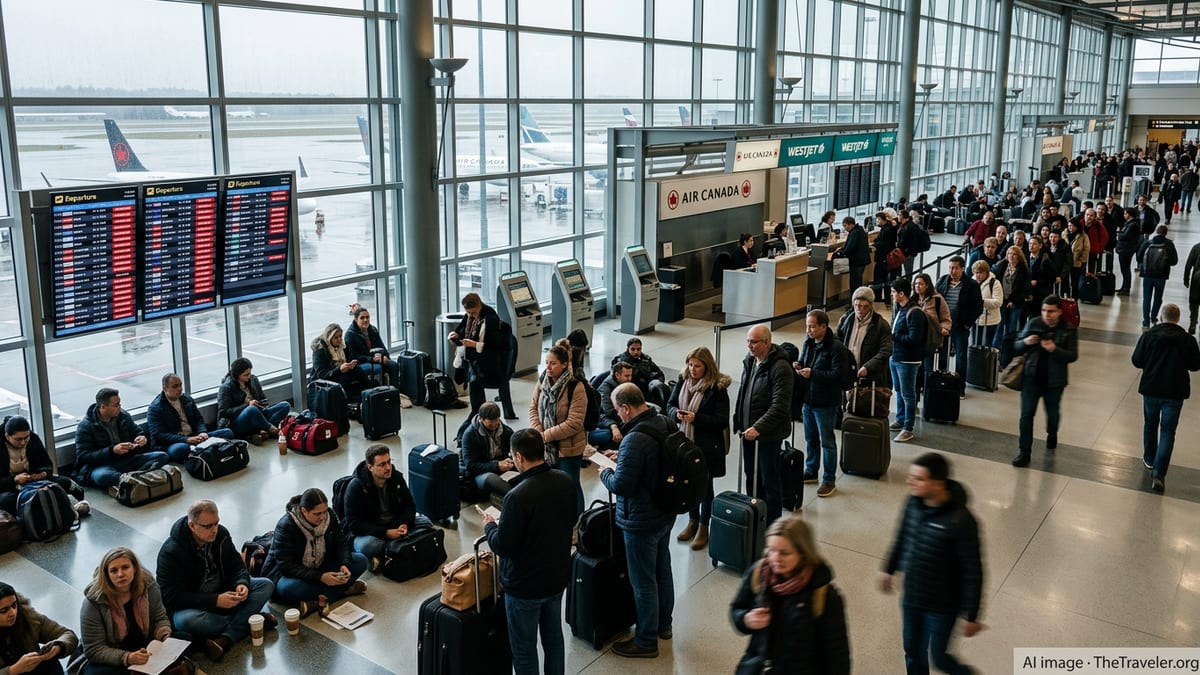
At Vancouver, lines formed early outside airline service counters as passengers from cancelled flights tried to get ahead of the rush. Some queued for more than an hour to speak to an agent, only to learn that remaining same-day options were heavily waitlisted or would require complex routings via multiple cities.
Others turned to airline apps and call centres, hoping to adjust travel plans before arriving at the airport. However, high call volumes and sluggish digital tools left many reporting repeated timeouts or long holds. Travellers seeking to change itineraries that included multiple carriers or separate tickets often faced additional complications and costs.
Families traveling with children and older passengers appeared particularly affected, as extended waits and uncertainty over hotel and meal vouchers added stress to what were meant to be straightforward journeys. Social media feeds through the day carried images of crowded gate areas and tired passengers resting on the floor beside carry-on bags.
Airlines Pledge Recovery as Vancouver Remains Under Scrutiny
By early evening on March 6, airlines were working to stabilize operations, positioning aircraft and calling in reserve crews where possible to protect the late-day and overnight schedules. Both Air Canada and WestJet have said in recent days that they are reviewing procedures at Vancouver to reduce the risk that a single disruption cascades through their regional networks.
Airport officials reiterated that they are coordinating closely with carriers and air-traffic authorities to smooth passenger flows and restore on-time performance. They emphasized that while the number of outright cancellations remained limited compared with peak winter storms, even a modest cluster can cause outsized pain for travellers when the broader system is already stretched.
The latest difficulties come as Vancouver International Airport continues to face scrutiny from travellers and industry groups over its resilience to operational shocks. Previous episodes of severe winter weather, air-traffic control constraints and technology outages have all led to crowded terminals and multi-day disruption for passengers connecting through the coastal hub.
For now, airlines are urging travellers with upcoming itineraries through Vancouver and other Western Canada airports to monitor flight status regularly, allow extra time at the airport and consider more flexible routing options when booking. As the spring travel season approaches, the performance of Vancouver’s operations will remain closely watched by carriers, regulators and passengers alike.