

More news on this day
Travelers moving through Japan’s key gateways of Narita and Naha faced mounting frustration this week as a cluster of cancellations and widespread delays involving United Airlines and ANA Wings disrupted tightly packed winter travel schedules and left many passengers scrambling for alternative routes.
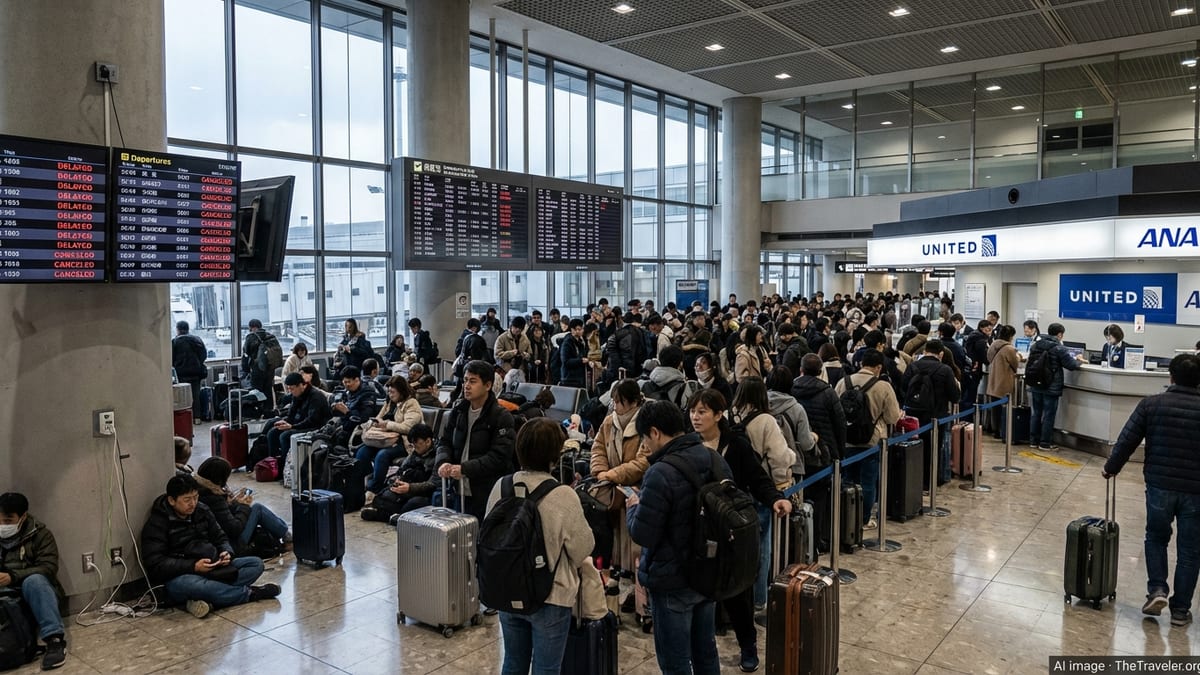
Cluster of Cancellations Hits Narita and Naha
Japan’s already strained air network absorbed another blow as at least five United Airlines and ANA Wings flights were canceled alongside a wave of delays, impacting both domestic hops and long-haul itineraries routed through Narita International Airport near Tokyo and Naha Airport in Okinawa. The disruptions, which unfolded over a single operational period, rippled across onward connections to North America and key Japanese cities, amplifying the effect far beyond the original itineraries.
While Japan has seen repeated bouts of air travel turmoil in recent months, including a string of cancellations and delays affecting carriers such as Air Japan, United, ANA Wings and Skymark across major hubs like Fukuoka, New Chitose, Kagoshima and Narita, the latest issues again underscored how vulnerable domestic and international schedules remain during the busy winter season. Passengers at Narita reported departure boards peppered with delay notices, while in Naha, long queues formed at customer service counters as travelers sought rebooking options.
Airline representatives described the latest cancellations as a targeted response to a mix of adverse weather and operational constraints, rather than a broader schedule pullback. Nonetheless, the clustering of five grounded flights in a short window, coupled with numerous knock-on delays, was enough to spark crowding in departure halls and complicate transfers through two of Japan’s most important holiday and business gateways.
For some travelers, the disruption marked the second or third time this winter their Japan-bound or Japan-domestic plans had been upended, reinforcing a perception that itinerary flexibility has become essential across the country’s skies, even on routes historically viewed as stable.
Weather, Congestion and Network Strain Drive Disruptions
Behind the latest wave of problems at Narita and Naha lies a familiar mix of winter weather volatility, airspace congestion and tight aircraft utilization. Even modest storms or strong crosswinds can trigger flow control measures at major Japanese airports, reducing arrival and departure capacity and leaving airlines with limited room to absorb delays without cascading impacts on their networks.
United’s operations into Tokyo are particularly exposed during winter, when snow and low visibility can slow ground handling and deicing at Narita, and when upstream weather issues in North America ripple into transpacific departures. ANA Wings, which serves as a key regional and feeder carrier, faces a different but related challenge: short-haul sectors built on tight turnarounds leave little slack when a single rotation runs late, and that delay then propagates through the day’s sequence of flights.
Industry analysts note that Japanese carriers, including ANA Group, have been carefully adjusting capacity and schedules around Narita, not just for seasonal demand but also to cope with crew availability, maintenance planning and airport slot constraints. At the same time, United and other international operators continue to rebuild and refine their Asia networks, a process that still entails occasional schedule tweaks and aircraft swaps that can contribute to irregular operations.
The result for passengers is a system in which even a relatively small number of cancellations can quickly spill over into missed connections and multi-hour delays, especially at key transfer points like Narita, where many long-haul flights are banked within narrow time windows.
Travelers Stranded and Rebooking Options Tested
At the passenger level, the immediate impact of the five cancellations and multiple delays was felt in long lines at transfer desks, packed rebooking queues in airline apps, and a scramble to secure the last remaining hotel rooms near airports. At both Narita and Naha, travelers reported waiting extended periods to speak with agents as frontline staff worked through complex itineraries involving United’s transpacific services and ANA Wings’ domestic links.
For those booked on affected United flights to and from Narita, options depended heavily on cabin class and fare type. Premium-cabin customers and top-tier loyalty members often found it easier to secure scarce seats on later departures or reroutes via alternative hubs such as Haneda or other Asian gateways. Economy passengers holding discounted tickets, by contrast, sometimes faced longer waits and fewer same-day solutions, emphasizing the value of flexible or changeable fares in the current environment.
ANA Wings customers saw a different pattern. Because many of its routes connect regional Japanese airports with Naha and other domestic hubs, rebooking could mean shifting to later same-day flights, rerouting via alternate cities, or even transferring to Japan Rail services on overlapping corridors when available. Yet with Naha’s role as a central gateway to Okinawa’s islands and resort destinations, some travelers bound for remote locales had few alternatives beyond waiting for the next operating flight.
Travel insurance, where purchased, offered an additional safety net for some international visitors, helping to offset last-minute accommodation costs or rebookings on competing carriers when options with United and ANA Wings were exhausted. However, the fine print of many policies requires documented proof of cancellations and restricts coverage for delays below a certain threshold, leaving a subset of passengers to shoulder extra costs themselves.
Operational Responses from United and ANA Wings
Facing frustrated travelers and high-profile disruption at two major airports, both United and ANA Wings moved to stabilize operations and contain the fallout. Operational control teams focused first on ensuring that stranded passengers could be re-accommodated within the same travel day wherever possible, prioritizing those with onward long-haul connections and time-sensitive plans.
United has relied on its established playbook for weather and congestion-related disruptions in Japan, including limited use of travel waivers that relax change fees and fare differences on affected routes and dates when conditions deteriorate. Such waivers, when issued, allow customers greater flexibility to shift itineraries ahead of the worst of the disruption, though many travelers only learn of them after they are already at the airport.
ANA Wings, operating under the broader ANA Group umbrella, coordinated closely with mainline ANA flights at both Narita and Naha to maximize connection options for displaced passengers. In some cases, that meant moving travelers onto ANA mainline services or consolidating lightly booked flights to free up aircraft and crews where they were needed most. The carrier also leaned on its digital channels, encouraging customers to check and modify bookings via apps and websites rather than joining physical queues at counters.
Both airlines emphasized that safety remained the non-negotiable priority throughout, meaning that flights would not depart if weather, crew duty time or technical considerations made operations marginal. That approach, while necessary, further constrained the ability to “catch up” once delays accumulated, prolonging the period of disruption at Narita and Naha.
Broader Pattern of Disruption Across Japan’s Skies
The latest turbulence at Narita and Naha fits into a broader pattern that has seen Japan’s air travel system repeatedly strained by cancellations and delays. In recent months, carriers including United, ANA Wings and others have canceled multiple flights and encountered dozens of delays across a network that stretches from Fukuoka and Kagoshima in the south to New Chitose in Hokkaido, affecting both leisure and business travel.
Industry observers attribute the recurring problems to a confluence of factors. On the demand side, tourism to Japan has remained robust, with strong inbound flows from North America, Europe and other parts of Asia. Domestic travel has also rebounded, particularly to resort areas and regional cities, putting pressure on both trunk and secondary routes. On the supply side, airlines continue to fine-tune capacity while dealing with aircraft delivery timelines, maintenance slots and crew rostering challenges.
Weather remains the wild card. From typhoons and heavy summer rains to winter storms and high winds, Japan’s geography exposes its airports to sudden shifts that leave operators little time to adapt. Even when storms are forecast days in advance, the precise timing and severity can force last-minute schedule changes, leaving passengers with little warning that their flights will be canceled or heavily delayed.
For airports like Narita and Naha, which must juggle domestic and international operations, the cumulative effect of these pressures has been a more fragile operating environment. That fragility is most visible when, as with the recent cluster of five cancellations, a relatively small numerical shock causes a disproportionately large disruption for travelers on tight connections.
Impact on Tourism, Business Travel and Local Economies
The immediate victim of the cancellations and delays is, of course, the traveler stuck in a terminal lounge. But the reverberations extend well beyond individual itineraries. At Narita, disruptions to United’s long-haul services can affect inbound tour groups, high-yield business travelers and cargo shipments, all of which contribute to the broader economic relationship between Japan and overseas markets such as the United States.
In Naha, where ANA Wings plays a central role in feeding visitors to Okinawa’s beaches, diving spots and cultural attractions, flight cancellations can mean lost hotel nights, missed excursions and rearranged tour schedules. Local tourism operators, many of whom rely on tightly timed arrivals to coordinate transfers and activities, face extra costs and logistical headaches when large numbers of guests arrive late or not at all.
Business travelers are also feeling the strain. Delays on domestic links can cause missed meetings or force agenda changes, particularly for executives shuttling between Tokyo and regional cities. When transpacific flights are involved, a missed Narita connection can add a full day or more to journeys between North America and Japan, complicating negotiations, conferences and site visits.
For Japan’s broader tourism strategy, which aims to sustain high visitor numbers and encourage travel to lesser-known regions, recurring air travel disruption is a risk factor. While many visitors accept occasional flight hiccups as part of long-distance travel, repeated or severe disruptions can influence destination choice, especially among time-sensitive or high-spend travelers considering alternatives within Asia or elsewhere.
How Affected Passengers Are Adapting
As irregular operations become more common, international and domestic travelers alike are adapting their planning and expectations. Some Japan-bound visitors now build extra buffer days into itineraries, particularly when traveling in winter or typhoon season, to protect key experiences such as festival visits, ski trips or milestone celebrations from the impact of flight disruption.
Others are making greater use of multi-modal options within Japan. When domestic legs on ANA Wings or other carriers are canceled or delayed, travelers with flexible plans may switch to the shinkansen or limited express trains, especially on corridors such as Tokyo to Osaka or Fukuoka where rail is both fast and frequent. While trains cannot substitute for island links to and from Naha, they can help salvage parts of a disrupted itinerary.
In the digital sphere, passengers are leaning more heavily on airline apps, real-time flight trackers and social media to stay ahead of changes. This can provide valuable early warning when flights show signs of creeping delay or when weather systems begin to trigger schedule adjustments, allowing travelers to seek rebooking or alternative arrangements before airport queues swell.
However, the uneven availability of information remains a point of frustration. In some recent cases, travelers reported discrepancies between what was displayed in airline apps, airport departure boards and direct communication from carriers, leaving them uncertain whether flights would depart as planned until very close to scheduled departure times.
What Travelers Should Watch for in the Weeks Ahead
Looking forward, aviation experts expect a continued pattern of episodic disruption across Japan’s air network, particularly during peak travel periods and around significant weather events. For passengers planning to fly with United or ANA Wings through Narita or Naha in the coming weeks, close attention to booking conditions and operational updates will remain essential.
Travelers are advised to monitor their flights frequently in the days leading up to departure, make use of airline alert options, and familiarize themselves with the terms of any applicable travel waivers or flexible booking policies. Those with complex, multi-leg itineraries may wish to consider slightly longer connection times at Narita when possible, trading a quicker transfer for increased resilience if incoming flights are delayed.
On the airline side, both United and ANA Wings are expected to continue refining their schedules, aircraft assignments and recovery plans in an effort to reduce the scale and duration of future disruptions. Airports, too, are reviewing procedures for handling sudden surges in rebooking demand, including deploying additional staff and expanding self-service options during irregular operations.
For now, the latest round of cancellations and delays at Narita and Naha serves as another reminder that, even as global aviation moves beyond the crisis period of recent years, operational resilience remains a work in progress. For travelers determined to explore Japan’s cities and islands this season, flexibility, preparation and patience are likely to remain essential companions.