

More news on this day
Travelers at Boston Logan International Airport faced fresh disruption today as publicly available tracking data showed at least 16 Republic and Air Canada flights canceled, with multiple additional services delayed on busy routes to New York, Toronto, Frankfurt, London, Amsterdam and other major hubs.
Get the latest news straight to your inbox!
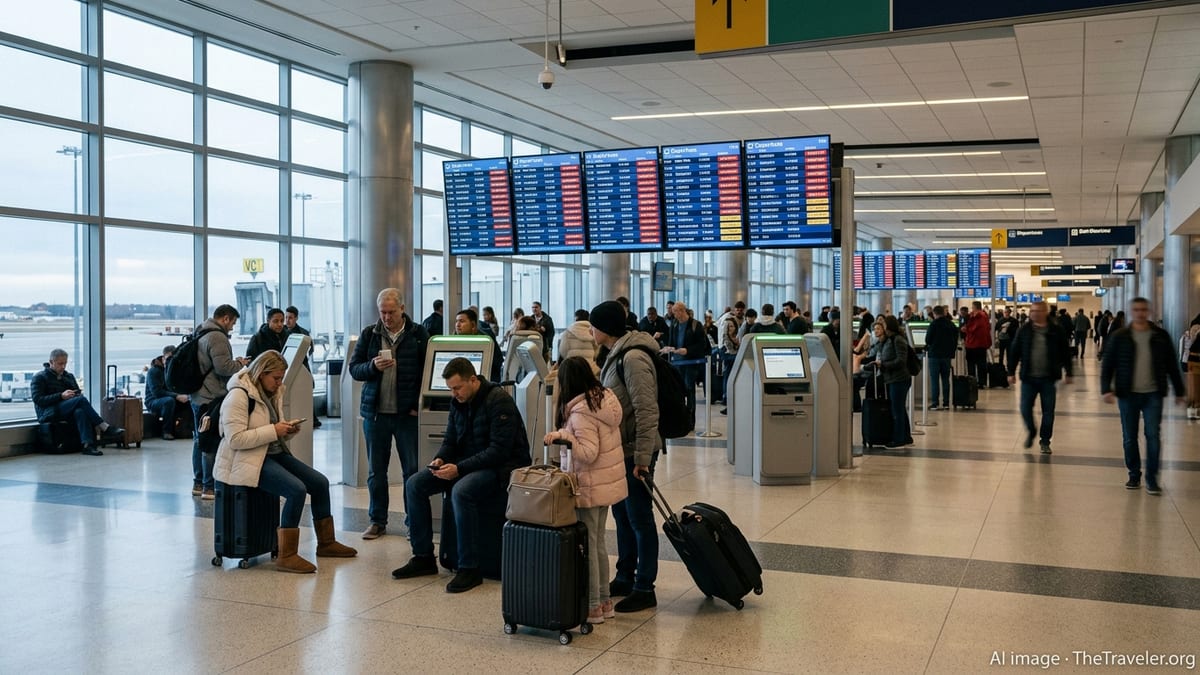
Regional and Transatlantic Links Hit Simultaneously
Flight-status dashboards for Boston Logan on Tuesday showed a cluster of cancellations tied to services operated by Republic’s regional network and by Air Canada, affecting both short-haul and long-haul connectivity out of New England’s busiest airport. Several of the canceled flights were scheduled to feed major connecting hubs, magnifying the impact for travelers with onward international itineraries.
Republic, which operates regional jets on behalf of large U.S. carriers, plays a central role in shuttling passengers between Boston and East Coast hubs such as New York. When even a relatively small number of those flights are removed from the schedule, options for same-day rebooking narrow quickly, particularly at peak morning and late-afternoon departure banks.
On the Canadian side, Air Canada’s canceled services have primarily affected the busy Boston–Toronto corridor, a key link for both business travelers and leisure passengers connecting onward to Western Canada, Europe and Asia. Delays on remaining departures have added further strain, as aircraft and crews cycle through an already tight schedule.
The ripple effect has not been limited to North America. Data from transatlantic departures showed knock-on schedule changes touching flights to Frankfurt, London and Amsterdam, where passengers typically connect to dozens of onward destinations across Europe, the Middle East and Africa. Longer check-in lines and shifting departure times were reported throughout the day as airlines worked within constrained capacity.
Logan Disruption Comes After a Difficult Winter
The latest wave of operational issues arrives on the heels of a challenging winter for Boston aviation. Significant snow and coastal storms in January and February triggered large-scale travel disruption, including hundreds of cancellations across multiple days when nor’easters swept through New England and Atlantic Canada. In some of those events, Logan recorded among the highest cancellation totals in the country, underscoring its exposure to severe winter weather.
Although today’s disturbance is smaller in scale, the pattern is familiar to many travelers who have passed through Boston in recent months. Weather systems affecting the wider Northeast and Eastern Canada, combined with tight aircraft and crew availability across North American carriers, have repeatedly turned local disruptions into network-wide challenges.
Operational complexity has also grown as regional airlines such as Republic have taken on more flying under capacity-purchase agreements. When irregular operations hit, the resulting web of code shares and partner itineraries can make it more complicated for passengers to find straightforward alternatives, especially on popular routes where seats are already limited.
Recent aviation statistics for Boston Logan highlight the airport’s dependence on robust regional and international connectivity. Canada remains one of Logan’s strongest foreign markets by passenger volume, while transatlantic links to major hubs like London and Frankfurt serve as crucial gateways for New England’s corporate and academic communities.
Key Routes to New York and Toronto Under Pressure
Among the most immediately affected travelers were those booked on high-frequency shuttles to New York–area airports and on cross-border services to Toronto. Regional flights operated by Republic underpin much of the Boston–New York schedule, carrying passengers on behalf of major U.S. brands that market the routes as near-hourly shuttles. When a block of such flights disappears, remaining departures quickly fill, leaving limited opportunities to reroute same-day.
On the Toronto side, publicly available information showed Air Canada canceling a portion of its Boston–Toronto rotations, with others experiencing delays. These flights are widely used by passengers connecting to onward transatlantic departures from Toronto Pearson, meaning a missed leg out of Boston can cascade into missed long-haul services later in the day.
Travelers caught in the disruption have been faced with a mix of options: same-day rebooking onto later Boston departures when available, rerouting through alternative hubs such as Montreal, Newark or Philadelphia, or shifting travel to the following day. Seat availability has varied widely by route and cabin, with premium cabins often booked days in advance during late March travel peaks.
Published experiences from recent weather-related disruptions at Logan suggest that even when the airport itself remains open, airline-specific cancellations can create localized “pinch points” at particular gates and check-in areas, especially for carriers that rely heavily on regional partners.
Transatlantic Connections to Europe Experience Knock-On Effects
While the majority of today’s cancellations involved shorter sectors, long-haul travel has not been immune. Disruptions on feeder flights into Boston, Toronto and New York have led to schedule adjustments and delays across several transatlantic services linking New England and Eastern Canada to major European hubs.
Connections through London, Frankfurt and Amsterdam are particularly sensitive to timing, as many long-haul departures are banked within tight evening windows to optimize onward morning arrivals across Europe. When incoming feeder flights from Boston or other North American cities arrive late or are canceled outright, airlines may be forced to consolidate passengers onto fewer departures or adjust schedules to protect longer-haul segments.
Recent storm systems affecting both sides of the Atlantic have already placed strain on these corridors. Earlier winter events saw airlines preemptively cancel flights to and from Boston in anticipation of severe weather, a strategy that can reduce day-of chaos but still leaves hundreds or thousands of passengers in need of rebooking.
Today’s issues illustrate how quickly localized cancellations can ripple across the broader North Atlantic network. A grounded regional jet in Boston or Toronto can ultimately mean missed connections in London or Frankfurt, even in the absence of headline-grabbing storms or airport closures.
What Travelers Are Being Advised to Do
Consumer advocates and travel experts frequently emphasize that passengers facing short-notice cancellations or significant delays should first consult their airline’s official app or website for real-time status, then verify whether they are entitled to rebooking assistance, meal vouchers or accommodation, depending on the cause and length of the disruption. Many North American carriers also encourage same-day changes via digital channels to reduce pressure on airport service desks.
For cross-border and transatlantic itineraries, publicly available guidance points travelers toward understanding the different passenger-rights regimes that may apply. Journeys touching European Union or United Kingdom airports, in particular, may fall under compensation and care rules that differ from those governing domestic U.S. or purely Canadian flights.
At Boston Logan, recent weather events have shown that arriving earlier than usual can be prudent when conditions are unsettled or large-scale schedule changes are in play. However, today’s pattern of targeted cancellations and delays highlights that extra lead time alone may not prevent disruption if specific flights are removed from the timetable or heavily delayed.
With spring travel demand building and airlines still working through the operational after-effects of a severe winter season across North America and Europe, passengers using Boston Logan, particularly on Republic-operated regional services and Air Canada routes, are being reminded by publicly available advisories to monitor their bookings closely, keep contact information updated with carriers and prepare for the possibility of last-minute changes on heavily used corridors.