

More news on this day
Travelers at Boston Logan International Airport faced fresh disruption today as publicly available data showed sixteen flights operated by Republic and Air Canada cancelled, alongside widespread delays on major routes linking Boston with New York, Toronto, Frankfurt, London, Amsterdam and other key hubs.
Get the latest news straight to your inbox!
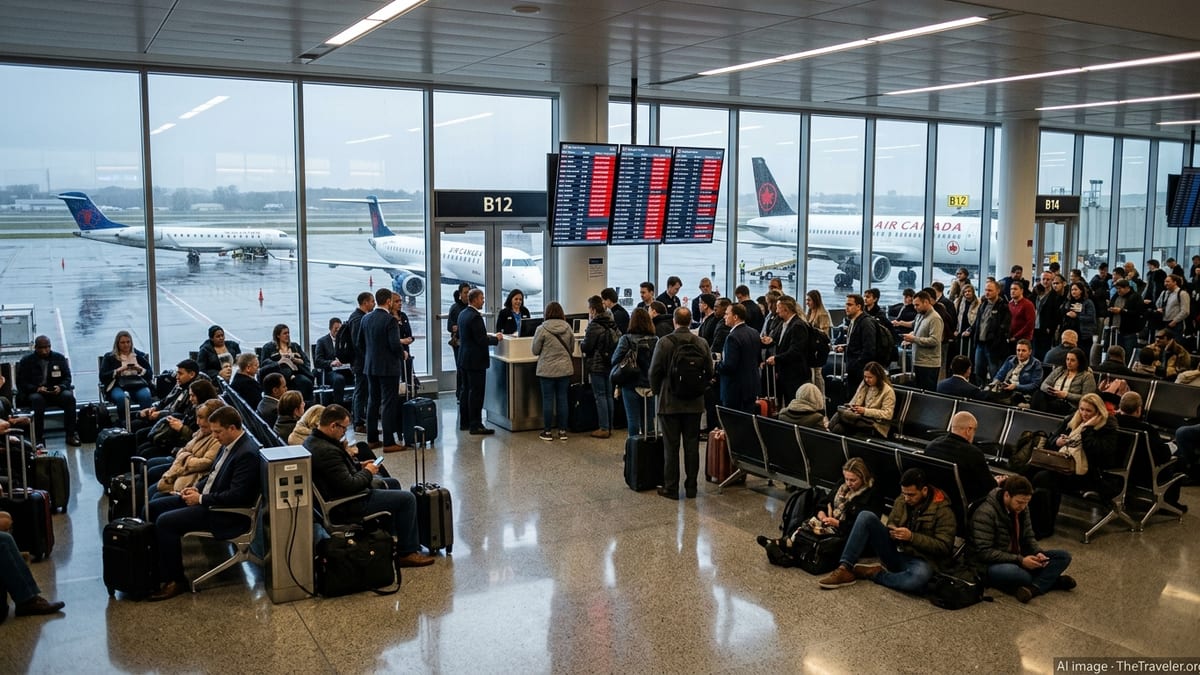
Targeted Cancellations Ripple Across Key Northeast and Transatlantic Routes
Operational data from airline and airport tracking platforms indicates that sixteen flights operated by regional carrier Republic and flag carrier Air Canada were cancelled at Boston Logan, concentrating the latest wave of disruption on some of the airport’s busiest corridors. The cancellations affected a mix of short shuttle segments to New York and medium-haul services into Canada, as well as onward connections to major European gateways.
The impact was most immediately felt on shuttle-style services between Boston and the New York area, where Republic operates under major airline brands on high-frequency schedules. Even a relatively small number of cancellations on these trunk routes can quickly displace hundreds of travelers and compress seat availability on the remaining departures throughout the day.
Air Canada’s cancellations at Boston primarily affected links to Toronto, a critical gateway for onward travel to the airline’s European network. With Toronto Pearson serving as a major connecting hub for Frankfurt, London, Amsterdam and other long-haul markets, disruption on the Boston segment can cascade, forcing rebookings across multiple sectors and increasing the risk of missed long-haul departures.
Tracking services showed that, beyond the outright cancellations, additional Republic and Air Canada services from Boston were running with extended delays. Knock-on congestion at gate areas and along security checkpoints added to the sense of uncertainty for passengers trying to make time-sensitive connections or evening departures to Europe.
Weather, Congestion and Network Pressures Combine
The latest disruption at Boston Logan comes against a backdrop of a turbulent winter and early spring for air travel in the northeastern United States and Atlantic Canada. In recent weeks, powerful winter systems have swept across New England and eastern Canada, with previous storms briefly shutting or severely curtailing operations at Boston and Toronto and prompting mass cancellations.
While today’s cancellations by Republic and Air Canada appear more targeted than the broad shutdowns associated with major blizzards, network data and recent coverage highlight how residual weather effects, crew positioning challenges and aircraft rotations continue to weigh on airline schedules. When storms or prior disruptions leave aircraft and crews out of place, carriers sometimes pare back frequencies on shorter sectors such as Boston to New York or Boston to Toronto to preserve reliability on longer, higher-yield routes.
Operational pressures are compounded by strong demand on transatlantic services at this time of year. Publicly available timetables show robust schedules from North American hubs to London, Frankfurt and Amsterdam, and carriers are often reluctant to cancel or consolidate those long-haul departures. Instead, they may trim feeder flights, including those from Boston, which can strand passengers at the origin point while the long-haul services depart with alternative feed from other cities.
Industry analysts note that regional partners such as Republic often operate at tight utilization levels, with quick turns and complex aircraft swaps. Any upstream delay, whether related to weather, maintenance checks or air traffic management, can mean later segments out of Boston are more vulnerable to last-minute cancellations.
Passenger Experience Strained by Long Delays and Missed Connections
For travelers at Boston Logan, the sixteen cancellations and associated delays translated into extended waits in terminal areas, rebooking lines and customer-service contact channels. Social media posts and traveler forums showed passengers contending with missed connections to evening departures toward Europe, especially on itineraries routing via Toronto to Frankfurt, London and Amsterdam.
Because many of these itineraries involve multiple carriers and tight connection windows, even modest departure delays on the Boston segment can cause passengers to misconnect at Toronto or New York. In such cases, rebooking may require shifting to next-day departures, securing scarce seats on alternative routings, or in some instances overnight accommodation near the hub airport.
Travelers on short shuttle sectors to New York also reported disruption, as cancellations removed frequency from a market where many passengers rely on same-day flexibility for business travel. With alternative flights filling quickly, some passengers turned to rail or intercity bus options as backup, especially for trips between Boston and New York where ground-transport capacity is more readily available than for cross-border or transatlantic journeys.
Extended delays within the terminals had visible knock-on effects on crowding at food outlets, seating areas and charging points. Aviation observers pointed out that while Boston Logan has invested in terminal upgrades in recent years, sudden clusters of irregular operations events still strain available space and amenities during peak periods.
Guidance for Affected Travelers at Boston Logan
Publicly available guidance from airlines, regulators and passenger-rights organizations underscores that travelers affected by cancellations or long delays should first verify their flight status using airline apps or official airport information boards before heading to the airport. On days like today, when schedules are changing frequently, same-day updates can differ significantly from information reflected in earlier confirmation emails.
For passengers booked on Republic-operated flights under major airline codes, assistance typically runs through the marketing carrier’s channels. That means travelers often need to use the mainline airline’s app, website or airport desks for rebooking options, even if the aircraft itself is flown by Republic. This can be especially important for preserving through-ticket protection on complex itineraries involving New York or other hubs beyond Boston.
For those on Air Canada itineraries routed through Toronto to Europe, passenger-rights information indicates that compensation or care provisions may differ depending on whether the disruption is categorized as within the airline’s control or linked to weather and air-traffic restrictions. Travelers are often advised to retain boarding passes, booking references and receipts for meals or lodging in case reimbursement claims become possible after the event.
Travel specialists also emphasize the value of proactively searching for alternative routings, including departures from nearby airports or connections through different hubs, while simultaneously engaging with airline support. When major gateways such as New York, Toronto, Frankfurt, London and Amsterdam remain busy but operational, seats on indirect routings can disappear quickly once widespread cancellations emerge at a feeder airport like Boston.
Boston Logan’s Role in a Volatile Travel Season
Boston Logan’s position as a key gateway for both domestic shuttles and transatlantic connections has left it particularly exposed to this winter’s volatile operating conditions. Earlier severe-weather episodes brought large-scale cancellations and temporary shutdowns at the airport, highlighting how quickly conditions in New England can affect wider national and international travel flows.
Today’s more focused pattern of sixteen cancellations by Republic and Air Canada, while smaller in absolute numbers than those seen during major storms, still demonstrates how sensitive the system is to targeted schedule cuts. When cancellations touch core business markets like New York and critical connecting hubs such as Toronto, the ripple extends across networks to European cities including Frankfurt, London and Amsterdam.
As the busy spring and summer travel seasons approach, airline planners are expected to keep adjusting schedules and aircraft allocation to balance strong demand with the lingering operational fragilities that have marked recent months. For travelers using Boston Logan, that means conditions can change rapidly, even on days without headline-grabbing weather, and close monitoring of flight status will remain essential.
While today’s disruption frustrated many passengers, the underlying pattern aligns with a broader trend of heightened operational complexity across North American and transatlantic networks. As carriers work to maintain profitability on long-haul routes and regional partners juggle intense utilization, airports like Boston Logan are likely to see further days where relatively small clusters of cancellations produce outsized effects on passenger journeys.