

More news on this day
Passengers traveling through Vancouver International Airport on March 5 and 6 faced mounting frustration as a combination of technical issues and winter weather contributed to at least eight flight cancellations and dozens of delays on Air Canada, WestJet and other carriers, disrupting links to major destinations including Edmonton, Winnipeg, Kelowna, Powell River and Regina.
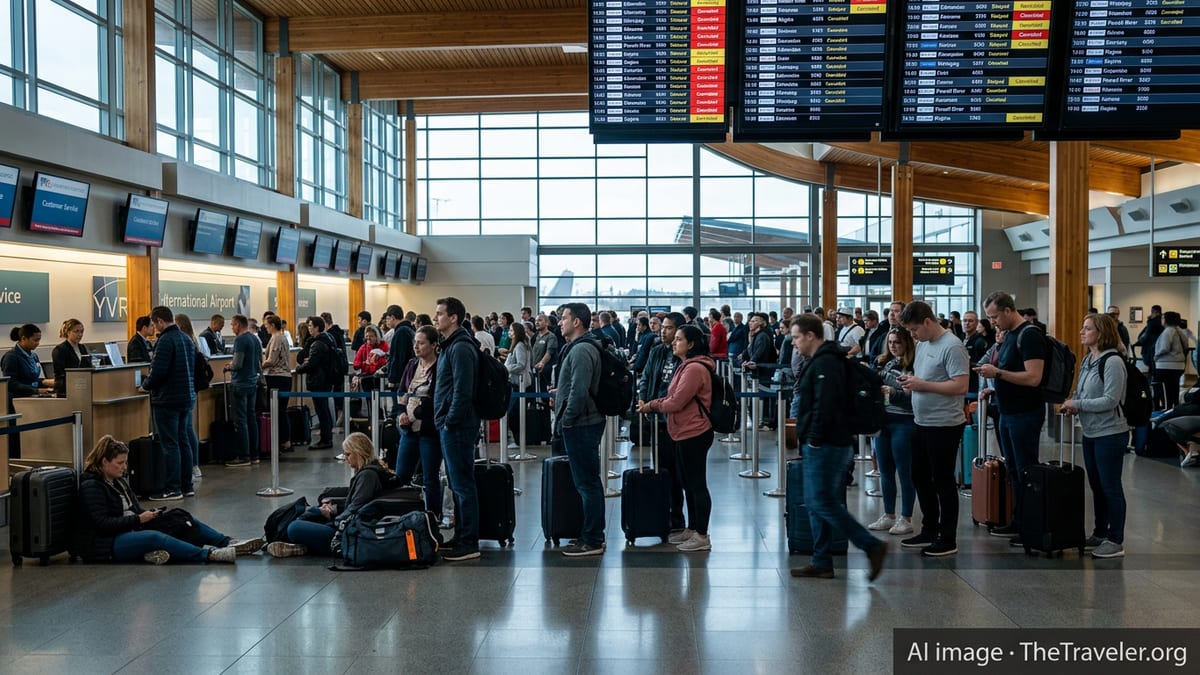
IT Glitch Triggers Early Morning Chaos
The disruption began in the early hours of March 5 after a planned overnight information technology update at Vancouver International Airport led to unexpected problems in key network systems. Check-in kiosks, boarding systems and some back-end operational tools were affected, slowing down passenger processing and contributing to growing queues at departure counters and security lines.
Airport officials said issues began shortly after 6:30 a.m. local time, just as the morning wave of domestic departures to Western Canadian cities was ramping up. With systems running below capacity, aircraft turnaround times lengthened and some early departures were held at gates, creating a knock-on effect across the day’s schedule.
By mid-morning, several regional and mainline services had shifted from minor delays to significant disruptions. Airlines warned that while the technical problems were concentrated at Vancouver, the effects would likely ripple out to downline airports as aircraft and crews arrived late.
Vancouver International Airport later reported that systems were progressively restored and operations had largely normalized by the evening, but not before a number of cancellations were added to the day’s board and delays carried over into March 6.
Air Canada and WestJet Among the Hardest Hit
Air Canada and WestJet, the two dominant carriers at Vancouver International Airport, bore much of the operational strain. At least eight departures and arrivals operated or marketed by these and partner airlines were cancelled across March 5 and the morning of March 6, including services on some of the airport’s busiest domestic routes.
Among the affected flights was Air Canada service AC2074 from Vancouver to Edmonton and its corresponding return AC2077 from Edmonton to Vancouver, both scheduled for March 6 and ultimately cancelled. The pairing typically helps maintain the shuttle-style connectivity between British Columbia and Alberta; losing both rotations further tightened capacity on an already busy corridor.
WestJet and other carriers also logged cancellations and lengthy delays on short-haul routes where frequency is high but aircraft utilization is tight. Regional affiliates and codeshare operators were forced to adjust schedules and swap equipment where possible, but spare capacity remained limited during peak periods.
While the majority of flights eventually departed, many did so well behind schedule. Travelers reported boarding, deplaning and reboarding as aircraft were reassigned and crews repositioned, with some passengers facing combined delays of several hours.
Key Domestic Links Disrupted Across Western Canada
The operational challenges at Vancouver had an outsized effect on domestic connectivity across Western and Central Canada. Flights linking Vancouver with Edmonton, Winnipeg, Kelowna, Powell River and Regina were among those most affected, reflecting the airport’s role as a primary hub for traffic moving along the Pacific and Prairie corridors.
On the Alberta front, cancellations and rolling delays on Vancouver–Edmonton services left business travelers and visiting families scrambling for alternatives. With limited remaining seats on later flights and higher demand linked to early March travel, some passengers reported being offered next-day departures or circuitous routings through Calgary.
To the east, Vancouver’s links to Winnipeg and Regina also felt the strain. Even where flights operated, late departures from British Columbia translated into missed connections for travelers heading onward to smaller Prairie communities. In some cases, passengers arriving late into Winnipeg or Regina found their regional feeder flights already departed, forcing overnight stays or ground transport substitutions.
Closer to home, routes to Kelowna and Powell River, both critical for connecting smaller British Columbia communities with the country’s wider air network, faced schedule knock-ons as aircraft rotations were reshuffled. Travelers on these shorter hops reported multiple gate changes and rolling departure times as airlines worked to keep at least a skeleton schedule operating.
Passengers Face Long Lines, Missed Connections and Mounting Costs
For travelers on the ground, the operational statistics translated into a day and a half of uncertainty. At Vancouver International Airport, long queues formed at airline service desks as passengers sought rebooking assistance, meal vouchers and hotel arrangements when overnight delays or missed connections disrupted their plans.
Families heading out for March holidays, business travelers on tight schedules and residents returning home all reported similar challenges: limited real-time information, rapidly changing departure times and difficulty getting through to airline call centers as demand for support surged. Some passengers resorted to checking flight data and aircraft movements on third-party tracking apps to anticipate further changes.
Additional costs also mounted. With many hotel rooms at and around the airport filling quickly, late-arriving travelers reported higher last-minute rates, while others opted for rental cars, intercity buses or shared rides to complete legs of their journey by road. In several cases, travelers arriving in cities like Edmonton or Kelowna late at night faced extra taxi or rideshare expenses when public transport options were limited.
Consumer advocates noted that passengers affected by cancellations or significant delays may have rights to compensation or reimbursement under Canada’s air passenger protection regulations, depending on whether the disruption was within the airline’s control. However, they also warned that navigating claims processes can take time and encouraged travelers to retain boarding passes, receipts and written notices from airlines.
Airport and Airlines Pledge Reviews as Peak Season Nears
In statements following the disruptions, Vancouver International Airport and several major carriers said they would review the sequence of events surrounding the planned IT update and its impact on operations. Airport officials emphasized that the core objective of the upgrade was to improve resilience and long-term efficiency, but acknowledged that contingency planning for the transition window would be examined.
Airlines indicated they are working to rebuild schedules, reposition aircraft and adjust crew rosters to restore reliability on key domestic routes, particularly those connecting Vancouver with Edmonton, Winnipeg, Kelowna, Powell River and Regina. Additional capacity on select flights over the coming days is expected to help clear some of the backlog of rebooked passengers.
The episode arrives as Vancouver International Airport prepares for busier late winter and spring travel periods, when holidaymakers, business traffic and visiting friends and relatives often converge. Industry analysts say the incident highlights how a single point of failure, such as an IT upgrade, can quickly cascade across a tightly timed domestic network.
For travelers planning upcoming trips through Vancouver, airlines and airport officials are advising close monitoring of flight status, early arrival at the terminal and flexible itineraries wherever possible, at least until schedules fully stabilize in the days ahead.