

More news on this day
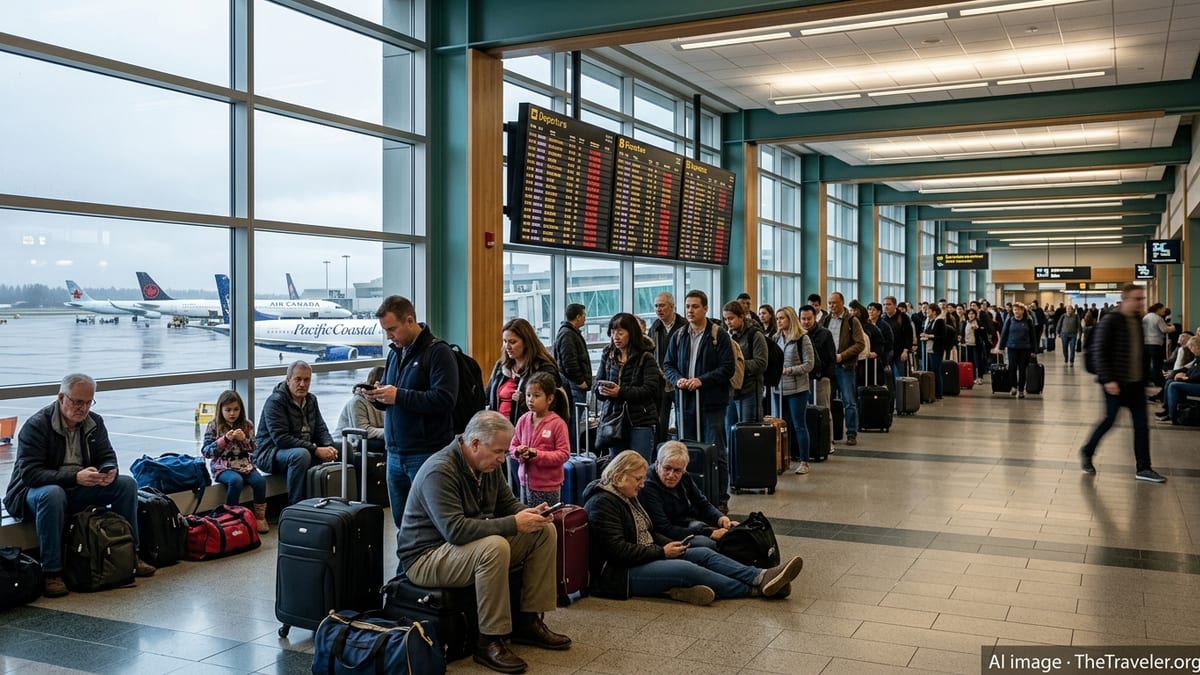
Travellers at Vancouver International Airport faced a difficult travel day as at least 10 flights operated by Pacific Coastal Airlines, Air Canada, Jazz, Icelandair and other carriers were cancelled, with many more departures and arrivals delayed across key domestic and international routes.
Get the latest news straight to your inbox!
Operations Disrupted Across Major Carriers
Publicly available flight tracking boards for Vancouver International Airport showed a cluster of cancellations and significant delays affecting multiple airlines, including regional and mainline services. At least 10 flights involving Pacific Coastal Airlines, Air Canada and its regional partner Jazz, along with Icelandair and other overseas carriers, were marked as cancelled over the course of the day.
The disruptions were concentrated on short-haul and medium-haul connections that link Vancouver with destinations across British Columbia, the Prairies and Eastern Canada, alongside selected transatlantic services. Reports indicate that the irregular operations created a knock-on effect, with late-arriving aircraft and crew reassignments contributing to rolling delays well beyond the initial schedule changes.
Information published by the airport and airlines showed departure and arrival boards shifting throughout the morning and afternoon as carriers consolidated services, rebooked passengers and, in some cases, adjusted aircraft types to cope with changing demand and operational limits.
Regional Routes to Penticton and Powell River Hit Hard
Regional travelers were among the most impacted, particularly on routes linking Vancouver with smaller British Columbia communities. Pacific Coastal Airlines, which provides vital connectivity between Vancouver International Airport and regional airports such as Penticton and Powell River, recorded cancellations and delays that left passengers facing extended waits and last-minute itinerary changes.
These routes serve as critical feeders to the wider domestic and international network, meaning disruption can quickly cascade across travel plans. Passengers booked onward from Penticton or Powell River via Vancouver to the rest of Canada and abroad were forced to seek alternative connections or overnight arrangements as schedules shifted.
Publicly available tariff and route documents underline how heavily these centers rely on a limited number of daily frequencies. When even one or two services are removed from the schedule, options for same-day rebooking become extremely constrained, particularly during busy travel periods or in shoulder seasons when spare capacity is already tight.
Edmonton, Regina and Toronto Connections Disrupted
Larger Canadian cities also experienced a share of the turbulence. According to airport departure and arrival data, flights linking Vancouver with Edmonton and Regina faced both cancellations and extended delays, affecting travelers on business, family visits and leisure trips. These routes, primarily operated by Air Canada and regional partners, form part of some of the busiest domestic corridors in Western Canada.
Connections to and from Toronto were similarly affected, with selected services delayed or removed from the schedule. Toronto flights are particularly important for long-haul itineraries connecting Europe, the United States and Asia with Western Canada. As a result, the disruption in Vancouver reverberated through multi-leg journeys, leaving some passengers with missed onward flights or same-day rebookings at less convenient times.
Published route information from Vancouver International Airport highlights the high weekly frequency of services to Toronto, Edmonton and Regina. On a day marked by operational challenges, even a relatively small number of cancellations within this dense schedule contributed to congested customer service lines, longer waits at rebooking desks and higher competition for remaining seats.
International Travelers Affected on Icelandair and Other Services
The wave of disruption was not limited to domestic passengers. International travelers, including those flying with Icelandair between Vancouver and European destinations via Reykjavik, also encountered schedule changes. Flight status boards showed at least one Icelandair service disrupted, adding uncertainty for passengers relying on tight transatlantic connections.
These long-haul and connecting itineraries are often carefully timed to match banked departures in Europe and North America. When a flight from Vancouver departs late or is cancelled outright, re-accommodating passengers can require complex re-routing via alternative hubs or overnight stays, particularly during periods when load factors on transatlantic routes are high.
Travel commentary and published coverage of recent Canadian aviation trends indicate that airlines have been operating with leaner buffers in both fleet and crew availability. Under such conditions, a localized scheduling problem or operational constraint at a major hub like Vancouver International Airport can rapidly expand into a broader network issue, particularly on days when weather or air traffic conditions are already strained in other parts of the country.
Stranded Passengers Seek Options as Guidance Emphasizes Preparation
The scene inside Vancouver International Airport reflected the extent of the disruption, with long queues at airline service counters and passengers gathered around information displays. Social media posts and traveler reports described confusion over changing departure times and repeated calls for updated information as airlines worked through mounting backlogs of rebooking requests.
Consumer guidance material from Canadian transportation and passenger advocacy groups emphasizes that travelers affected by cancellations or long delays should monitor their airline’s app or website frequently, as many rebookings are now processed digitally rather than at the airport counter. Passengers are also encouraged to review applicable tariffs and air passenger protection regulations to understand what assistance or compensation may be available in cases of lengthy disruption.
Travel experts often recommend building longer connection windows when routing through major hubs such as Vancouver, particularly during winter and peak holiday periods when operational stress is highest. As this latest episode of cancellations and delays illustrates, even a modest number of disrupted flights across carriers like Pacific Coastal Airlines, Air Canada, Jazz and Icelandair can quickly ripple across the network, leaving many travelers unexpectedly grounded.