

More news on this day
Thousands of air travelers have been left stranded or severely delayed as Turkish Airlines, El Al and Qatar Airways contend with extensive cancellations and more than 120 reported delays linked to regional tension, airspace restrictions and operational bottlenecks across Turkey, Israel, Qatar and key European hubs.
Get the latest news straight to your inbox!
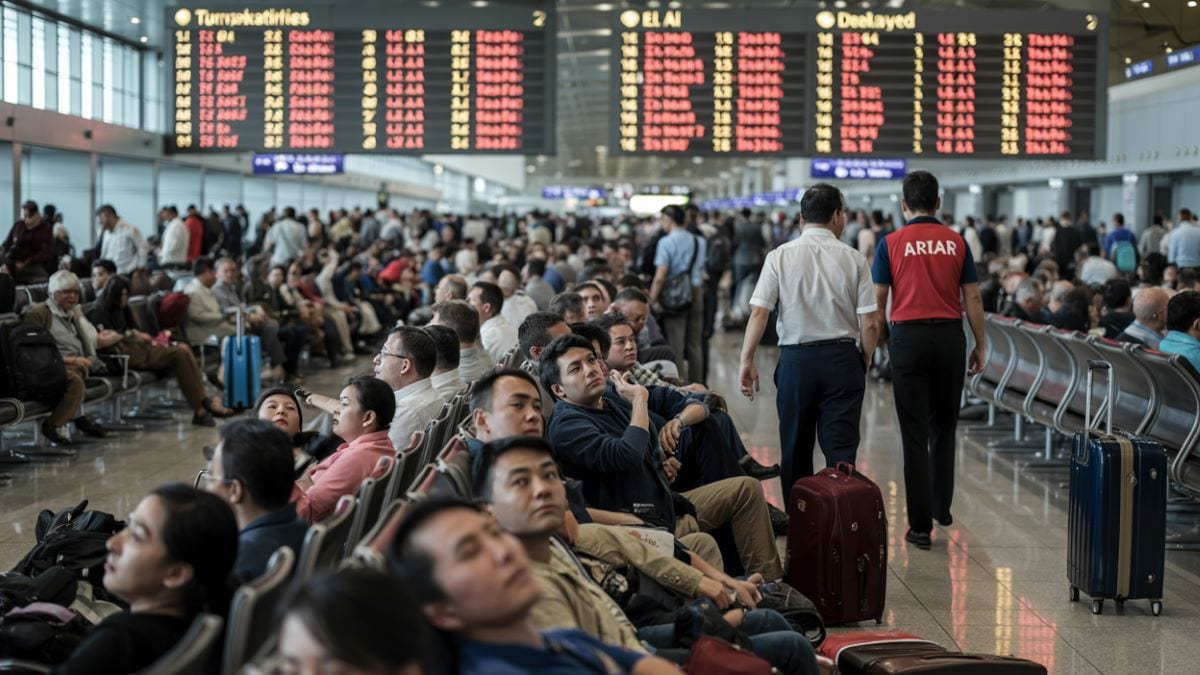
Image by Travel And Tour World
Regional Tension Shuts Corridors and Chokes Airline Schedules
Publicly available flight data and media coverage for late February and March 2026 indicate that airspace closures and missile strikes connected to the wider 2026 Iran conflict have rippled across the Middle East and beyond, with Qatar and Israel among the hardest hit. Qatar’s airspace was initially closed on 28 February, severely curbing movements at Doha’s Hamad International Airport and forcing Qatar Airways to suspend most scheduled services. At the same time, Israeli airspace has faced intermittent restrictions following Iranian missile launches, with outbound capacity from Tel Aviv reduced and airport operations adjusted under heightened security conditions.
In Turkey, Istanbul’s role as a major connecting hub has left Turkish Airlines particularly exposed to knock-on disruptions. Advisories circulated in early March describe waves of cancellations on routes touching conflict-affected airspace, as well as significant rolling delays that in some cases were visible in booking systems days in advance. Travelers connecting via Istanbul have reported missed onward flights, late-night rebookings and unscheduled overnight stays as the carrier attempts to work around congested corridors and shifting overflight permissions.
El Al, operating from Tel Aviv’s Ben Gurion Airport, has also been drawn into the turbulence. Coverage of recent incidents, including security scares involving checked luggage and missile-related infrastructure damage in Israel, shows how rapidly evolving risk assessments can force last-minute changes to aircraft rotations and flight loads. Those operational changes, layered on top of reduced slot capacity, are contributing to cancellations and delays on both transatlantic and European services.
Across the three carriers, industry trackers and passenger reports point to at least 120 departures and arrivals that have operated with substantial delay in recent weeks, alongside dozens of outright cancellations. While exact figures vary by day, the cumulative effect has been to clog rebooking channels and leave aircraft and crews out of position at multiple hubs.
Doha: From Global Connector to Bottleneck
Doha’s Hamad International Airport, normally one of the world’s busiest long-haul hubs, has seen some of the most acute disruption. Information released by Qatar’s civil aviation authorities in early March described a partial resumption of air navigation under restricted conditions, focused initially on evacuation and essential cargo operations while routine commercial services remained largely suspended. Travel advisories shared with agents in early and mid-March reiterated that Qatar Airways’ regular schedules would only resume once a full reopening of Qatari airspace is authorized.
During this period, Qatar Airways has shifted to what is effectively an interim network. Public schedules and enthusiast analyses show a patchwork of limited “relief” and repatriation flights from Doha to select cities such as London, Paris, Madrid and Frankfurt, supplemented by a slowly expanding list of reinstated routes. These services, frequently announced or adjusted with only days of lead time, have prioritized stranded travelers, medical cases and those with urgent needs, rather than providing broad commercial availability.
Passengers attempting to transit through Doha in March have described a confusing blend of flight statuses, with some itineraries still appearing as “scheduled” in booking systems even as airspace restrictions keep most regular traffic grounded. Reports from travelers indicate that rebooking options to key destinations, particularly London and other northern European cities, have been limited or sold out for stretches of several days, effectively trapping some passengers in third countries as they wait for viable connections.
As the month has progressed, Qatar Airways has filed schedules for additional services and aircraft types, including the gradual return of long-haul widebody operations on select corridors. However, most observers note that these changes remain fluid, and that the overall network is operating at a fraction of its pre-crisis capacity, leaving little slack to absorb new disruptions or accommodate last-minute rerouting requests.
Istanbul and Tel Aviv Grapple With Rolling Delays
In Istanbul, a mix of regional overflight constraints and congested ground operations has translated into a high volume of late departures and missed connections for Turkish Airlines. Forum posts and flight-tracking snapshots from early March highlight multiple services from the Gulf and Levant regions into Istanbul showing multi-hour delays even days before departure. Travelers on the Riyadh to Istanbul route, for example, have reported departures pushed back by five hours or more, leading to missed onward flights to Europe and North America.
When tight banks of connecting flights unravel, the impact cascades quickly. Turkish Airlines has, in many cases, provided hotel accommodation and meal vouchers for passengers forced into overnight stays, according to traveler accounts, but high passenger volumes at Istanbul Airport have strained customer service desks and call centers. Some travelers have described waiting several hours in queues or on the phone to secure new routings, particularly when alternative paths must avoid restricted airspace.
Tel Aviv’s Ben Gurion Airport has faced a different but related set of challenges. Following Iranian missile strikes in mid-March, publicly available reporting indicates that Israel temporarily reduced the number of passengers permitted on outbound flights, especially on long-haul services to North America and Europe. El Al and foreign carriers have had to adjust manifests, in some cases capping loads and shifting passengers to later departures. While many flights have continued to operate, the reduced capacity has led to a rolling backlog of travelers seeking seats, longer standby lists and sporadic last-minute cancellations.
These operational adjustments at Ben Gurion have reverberated through El Al’s wider network. Aircraft rotations have been compressed, turnarounds at foreign outstations have lengthened, and delays on one leg often propagate to subsequent flights. For passengers, this has meant longer journey times, unplanned layovers and, in some cases, the need to arrange new tickets with other carriers when rebooking windows close.
European Hubs Feel the Strain as Disruptions Spread
The shockwaves of Middle Eastern airspace closures and security incidents are now clearly visible in Europe. Brussels, in particular, has emerged as a pressure point, as travelers rerouted from Doha, Istanbul and Tel Aviv seek alternative connections through the Belgian capital and nearby hubs such as Amsterdam, Frankfurt and Paris. Airline schedule data for March show additional charter and ad hoc services operating into these airports, alongside reports of higher-than-normal loads on regular flights serving Turkey and the Gulf.
In Brussels, the combination of diverted passengers and standard late-winter traffic has translated into busy terminals, longer queues at security and border control, and limited same-day rebooking options. Travelers arriving from disrupted Middle Eastern itineraries often face overnight stays while waiting for available seats onward. Local media coverage has highlighted isolated instances of baggage congestion and longer handling times as ground teams deal with offloaded bags from missed connections and last-minute aircraft swaps.
Other European hubs have experienced similar symptoms. Frankfurt and Paris have seen surges in passengers from relief or repositioning flights originating in Doha or routed around closed airspace, compressing peak periods and narrowing the margin for schedule recovery after even minor operational snags. Amsterdam and London have also absorbed traffic flows diverted from suspended Qatar Airways connections, further tightening capacity on popular transatlantic and intra-European routes.
For airlines across the continent, these conditions complicate efforts to maintain punctuality targets. A delay on a single inbound service from the Middle East can disrupt an entire day’s rotation for a narrow-body aircraft operating multiple short-haul segments. As load factors remain high, the usual practice of protecting buffer seats for disrupted passengers becomes more difficult, prolonging the time it takes to clear backlogs caused by cancellations at distant hubs.
Travelers Face Prolonged Uncertainty and Limited Options
For passengers, the most challenging feature of the current situation is its unpredictability. Information circulated by airlines in early and mid-March frequently uses phrases such as “until further notice” when describing route suspensions and schedule reductions, reflecting the fact that any reopening of airspace or relaxation of security constraints is contingent on developments in the wider regional conflict. This open-ended horizon makes it difficult for travelers to plan, rebook or commit to alternative itineraries with confidence.
Reports from stranded passengers in Istanbul, Doha and en route via Brussels indicate a patchwork of outcomes. Some travelers have secured rebookings within a day or two, often after accepting alternative routings or different destination airports within the same region. Others have remained in limbo for much longer, constrained by visa rules, limited financial resources or inflexible travel dates, particularly in cases involving work, study or medical obligations.
Consumer advocacy groups and online travel communities are encouraging affected travelers to document expenses, keep detailed records of airline communications and familiarize themselves with applicable compensation and care regulations in the jurisdictions they transit. However, the complex cross-border nature of these disruptions means that rights can vary significantly depending on departure point, carrier and ticket type, leaving many passengers uncertain about what assistance they can reasonably expect.
With conflict-related airspace restrictions still in force across parts of the region as of late March 2026, most analysts anticipate that irregular operations at Turkish Airlines, El Al and Qatar Airways will persist in the near term. Travelers planning to pass through Istanbul, Doha, Tel Aviv, Brussels or neighboring hubs are being urged by publicly available advisories and airline communications to monitor itineraries closely, allow extra time for connections and prepare contingency plans in case schedules shift again at short notice.