

More news on this day
Passengers at Newark Liberty International Airport faced cascading disruptions on March 9 as United Airlines, El Al Israel Airlines and Spirit Airlines suspended a combined 14 flights, severing same-day links to major cities including Tel Aviv, Palm Beach, Marrakech, Frankfurt and Atlanta.
Route Map Disrupted Across Three Continents
The cancellations at Newark Liberty rippled across North America, Europe and the Middle East, temporarily cutting a series of nonstop and connecting options on what is typically one of the New York region’s busiest spring travel days. Services to Tel Aviv, Frankfurt and Marrakech were among the long haul routes affected, while domestic and near international links such as Atlanta and Palm Beach also saw schedule gaps.
United Airlines, the dominant carrier at Newark, scrubbed several departures, including transatlantic service to Frankfurt and a cluster of domestic and Caribbean flights used heavily by connecting passengers. El Al’s schedule adjustments further limited options for travelers heading to or from Israel, while Spirit’s cancellations ate into the ultra low cost capacity that many leisure travelers rely on for last minute trips.
By mid afternoon, airport displays showed multiple “canceled” and “delayed” notations clustered under United, El Al and Spirit flight numbers, with knock on effects for later departures as aircraft and crews were repositioned. Though the overall number of canceled flights was modest relative to total daily movements at Newark, the concentration on a handful of high demand routes left affected travelers with few easy alternatives.
Middle East Tensions Drive Tel Aviv Service Suspensions
A major driver of Monday’s disruption was the ongoing instability in the Middle East, which has led several global airlines, including United and El Al, to repeatedly adjust flight schedules to and from Tel Aviv. In recent days, carriers have widened travel waivers and extended suspensions on certain routes amid heightened security assessments and evolving airspace restrictions.
United has been operating Tel Aviv flights on a rolling basis, canceling and reinstating services as conditions warrant and as advisories from United States and Israeli authorities are updated. Travel industry analysts said Monday’s Newark cancellations appeared to be part of a broader pattern of tactical schedule cuts across the carrier’s U.S. to Middle East network while a new series of travel waivers is in effect.
El Al, which maintains a critical air bridge between Israel and the New York region, has also been recalibrating operations, prioritizing core departures while trimming frequencies and selectively suspending flights. The Newark schedule changes reduced options for passengers who prefer the New Jersey hub over New York’s John F. Kennedy International Airport, where some Tel Aviv capacity remains available on other carriers.
Weather and Operational Pressures Add to the Strain
Alongside geopolitical factors, operational pressures typical of late winter flying contributed to Monday’s Newark disruption. Airline operations teams cited a combination of residual crew imbalances from earlier weather events, tight aircraft utilization and continued high load factors across domestic and transatlantic networks.
In the northeast United States, even modest bouts of low visibility or gusty winds can trigger flow control measures that reduce the number of aircraft allowed to take off or land in a given hour. Airlines often respond by pre canceling a handful of departures at congested hubs such as Newark to protect the rest of the schedule and limit the risk of extended tarmac delays.
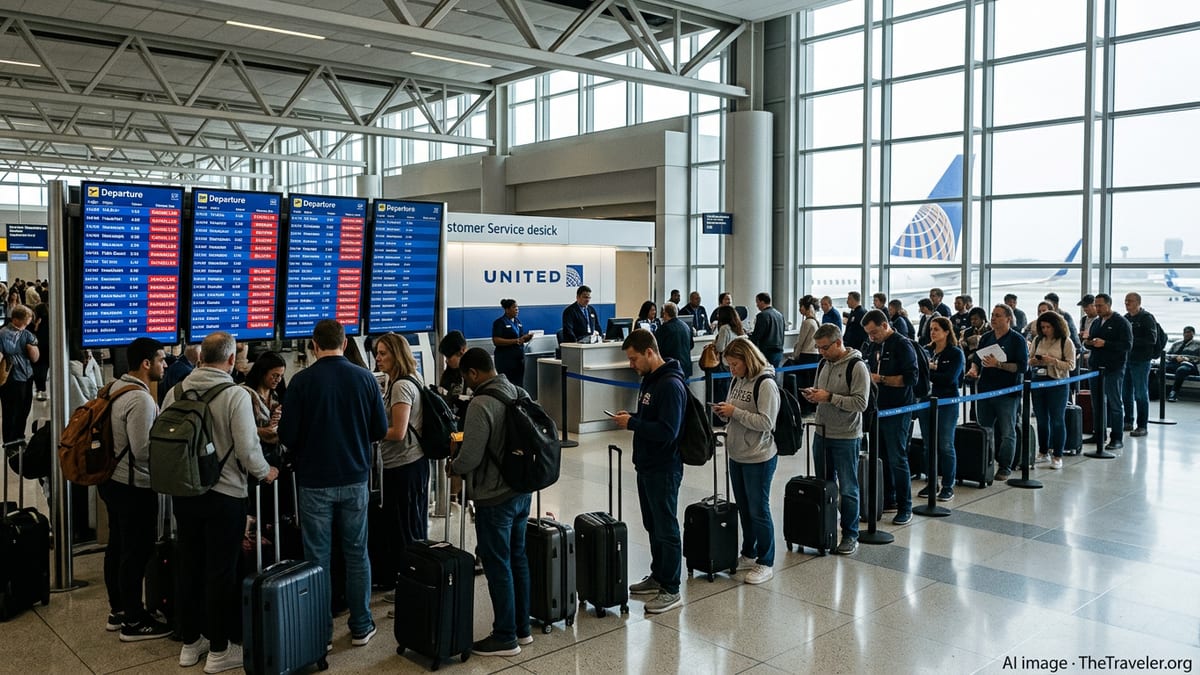
Because the affected Newark flights included long haul services to Frankfurt and Marrakech as well as dense leisure routes such as Palm Beach, the impact was felt disproportionately by vacationers and connecting passengers starting spring trips. Airport concourses saw growing lines at customer service counters as travelers sought rerouting options through other hubs or on later departures.
Rebooking Challenges for Leisure and Connecting Travelers
The concentration of cancellations among United, El Al and Spirit created particular difficulties for travelers on discount and basic economy fares, many of whom had limited built in flexibility. With 14 flights scrubbed across the three carriers, seats on remaining departures to overlapping destinations quickly sold out or were offered only in higher fare buckets.
Passengers headed to Tel Aviv, Marrakech or Frankfurt often faced the prospect of overnight delays or multi stop routings through secondary hubs, sometimes on partner airlines with different luggage and seat policies. Domestic travelers bound for Palm Beach or Atlanta encountered long waits on phone lines and app based chat channels as they tried to secure same day alternatives.
At Newark, airline representatives urged passengers to use digital tools where possible, including mobile rebooking options and automated travel credit processing, to alleviate pressure on in person customer service desks. However, for groups, families with special service needs and travelers on complex itineraries, many issues still required staff intervention at the airport.
What Impacted Passengers Can Do Next
For those affected by Monday’s cancellations, airlines reiterated that passengers booked on suspended flights are eligible for rebooking at no additional fare in comparable cabins, subject to availability, or for travel credits if they choose to postpone trips. Policies vary by carrier and by fare type, but most allow at least one change without change fees when disruptions are airline driven rather than passenger initiated.
Travel advisers recommended that Newark passengers whose flights were grounded first check their airline’s app or text notifications for automatically offered alternatives, then contact the carrier only if proposed options are unworkable. Those traveling to Tel Aviv and other cities affected by broader regional unrest were advised to monitor official advisories and verify that onward connections and accommodations remain operational before confirming new travel dates.
With airlines continuing to review schedules on a day by day basis, especially on routes touching the Middle East and North Africa, experts said further short notice changes at Newark and other major hubs remain possible in the coming days. Flyers bound for Tel Aviv, Marrakech, Frankfurt, Palm Beach, Atlanta or other key destinations are being urged to reconfirm itineraries closely ahead of departure and to build additional buffer time into critical travel plans.