

More news on this day
Travelers at Tampa International Airport faced mounting frustration today as at least nine flights operated by Delta Air Lines, American Airlines and Spirit Airlines were cancelled, with additional services delayed to major hubs including New York, Detroit, Toronto, London and Atlantic City.
Get the latest news straight to your inbox!
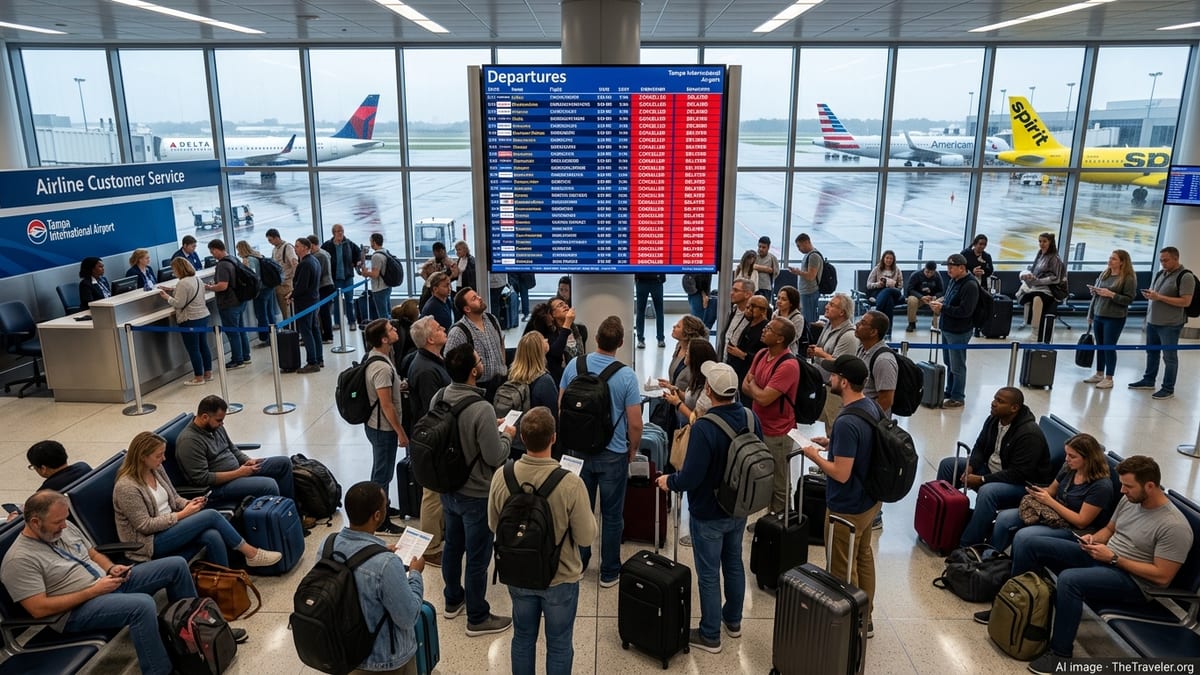
Cluster of Cancellations Snarls Tampa Departures
Publicly available flight-tracking boards and airport status tools show a tightening wave of disruption at Tampa International Airport, where a minimum of nine departures on Delta, American Airlines and Spirit Airlines were cancelled in quick succession. Dozens more services across the same carriers displayed rolling delays, affecting both domestic and international itineraries.
The cancellations were concentrated on high-demand routes linking Tampa with New York–area airports, Detroit, Toronto Pearson, London and Atlantic City, alongside several connecting services feeding those gateways. The pattern created a knock-on effect for travelers attempting to reach further destinations in Europe and across North America.
Operational information indicates that cancellations were not isolated to a single carrier or route, suggesting a combination of factors ranging from adverse weather along key corridors to ongoing staffing and aircraft repositioning challenges. The situation left many passengers in terminal queues attempting to secure alternative options, often with longer routings and overnight stays.
While the total number of impacted passengers is still being assessed, load factors on these trunk routes are typically strong, especially on services linking Florida with New York, Detroit and Toronto. That dynamic means even a limited number of cancellations can displace hundreds of travelers and quickly exhaust available seats on remaining flights.
Major Cities Among the Hardest Hit
The most visible impacts were on flights connecting Tampa with large northern markets. Cancellations on New York services disrupted onward travel from hubs such as John F. Kennedy International, LaGuardia and Newark, where passengers often connect to domestic spokes and transatlantic flights. Delays on surviving departures further complicated tight connection windows.
Detroit, a key connecting point for Delta customers, also saw disrupted links from Tampa, reducing options for travelers headed to the Midwest and onward to smaller regional cities. When flights into a major hub are reduced, subsequent banks of connections can depart with empty seats that would ordinarily be used to reaccommodate disrupted passengers.
On the international front, Tampa services feeding Toronto and London were among those affected, according to live schedule data and airline status pages. Travelers bound for Canada and the United Kingdom faced a combination of outright cancellations and significant delays, in some cases requiring rebooking through alternate U.S. gateways or waiting for the next available departure on the same route.
Secondary leisure markets were not spared. Atlantic City, a popular low-cost option for travelers shuttling between Florida and the Mid-Atlantic, experienced disruption on Spirit-operated flights, further limiting choices for price-sensitive passengers during an already busy spring travel period.
Airlines Scramble with Limited Rebooking Options
According to information shared on airline customer portals and mobile apps, Delta, American and Spirit activated standard disruption playbooks, including complimentary rebooking within limited date ranges and, in some cases, waivers on change fees and fare differences when alternate routes were available. The effectiveness of these measures, however, was constrained by full flights and the concentration of demand on a handful of northern and transatlantic corridors.
For many travelers, the most realistic alternatives involved accepting multi-stop routings, overnight layovers, or departures several days later. Some passengers opted to purchase tickets on other carriers or from nearby Florida airports, a trend that was mirrored in anecdotal reports across social media and traveler forums tracking the day’s disruptions.
Spirit’s point-to-point model and historically lean scheduling left relatively little slack in its Tampa network, limiting same-day recovery options for Atlantic City and other niche routes. Delta and American, with more extensive hub structures, offered additional connection possibilities, but those options were quickly saturated as seats were taken by rebooked passengers.
Travel experts monitoring the situation noted that large-scale, multi-carrier disruptions tend to expose how little spare capacity exists on popular routes during peak periods. When several airlines reduce lift out of a single airport on the same day, even robust rebooking policies struggle to keep pace with demand for alternative itineraries.
Operational and Weather Pressures Behind the Disruptions
Published coverage and operational advisories point to a mix of weather-related constraints along key flight paths and broader operational pressures across U.S. and Canadian airspace. Recent storms affecting major hubs, including airports in the Northeast and Great Lakes regions, have generated backlogs of aircraft and crew, with ripple effects persisting for days after the most severe conditions have passed.
These cascading disruptions can leave airlines short of available aircraft or crew in secondary markets such as Tampa, even when local weather is relatively calm. When inbound aircraft are heavily delayed or diverted, the outbound schedule can rapidly unravel, leading to a cluster of late-night or early-morning cancellations as carriers reset their operations.
Industry analysts also highlight ongoing staffing challenges, particularly among flight crews and maintenance personnel, as a contributing factor. While airlines have rebuilt schedules significantly compared with previous years, matching staffing levels precisely to fluctuating demand remains difficult, especially when weather or air traffic control initiatives compress normal operations into narrower time windows.
In this context, cancellations at Tampa International Airport are part of a wider pattern seen across several U.S. hubs in recent weeks, where a combination of winter weather at northern airports, high seasonal demand, and tightly tuned schedules has resulted in abrupt disruptions for passengers across multiple airlines.
What Travelers Can Expect in the Coming Days
Forecasts for key northern gateways indicate the possibility of additional weather-related constraints, which could prolong knock-on effects for flights into and out of Tampa. If conditions stabilize and aircraft and crews can be repositioned efficiently, the immediate wave of cancellations may ease, but residual delays and isolated disruptions are likely to continue as schedules are normalized.
Publicly available airline guidance continues to emphasize the importance of monitoring flight status frequently on official channels and opting into notifications through mobile apps and text alerts. Travelers with flexible plans may benefit from adjusting departure dates or times to less congested periods, particularly on routes to New York, Detroit, Toronto, London and other high-demand hubs.
Industry observers suggest that passengers departing Tampa in the short term build in additional buffer time for connections, especially when itineraries rely on a single daily departure to an overseas destination or smaller regional airport. Where possible, selecting earlier flights in the day can provide more options for same-day reaccommodation if schedules deteriorate.
For now, the experience of travelers stranded or delayed at Tampa International Airport underscores the broader volatility still present in commercial aviation. Even routine travel days can quickly become complicated when multiple airlines, key hubs and weather systems intersect, leaving passengers to navigate a patchwork of cancellations, delays and last-minute rebookings.