

More news on this day
Travellers at Calgary International Airport faced another day of upheaval on March 9 as a cluster of Air Canada and WestJet Encore cancellations, alongside dozens of delays, rippled across the domestic network and left passengers bound for major cities including Toronto, Vancouver, Fort McMurray, Brandon and Hamilton scrambling for alternatives.
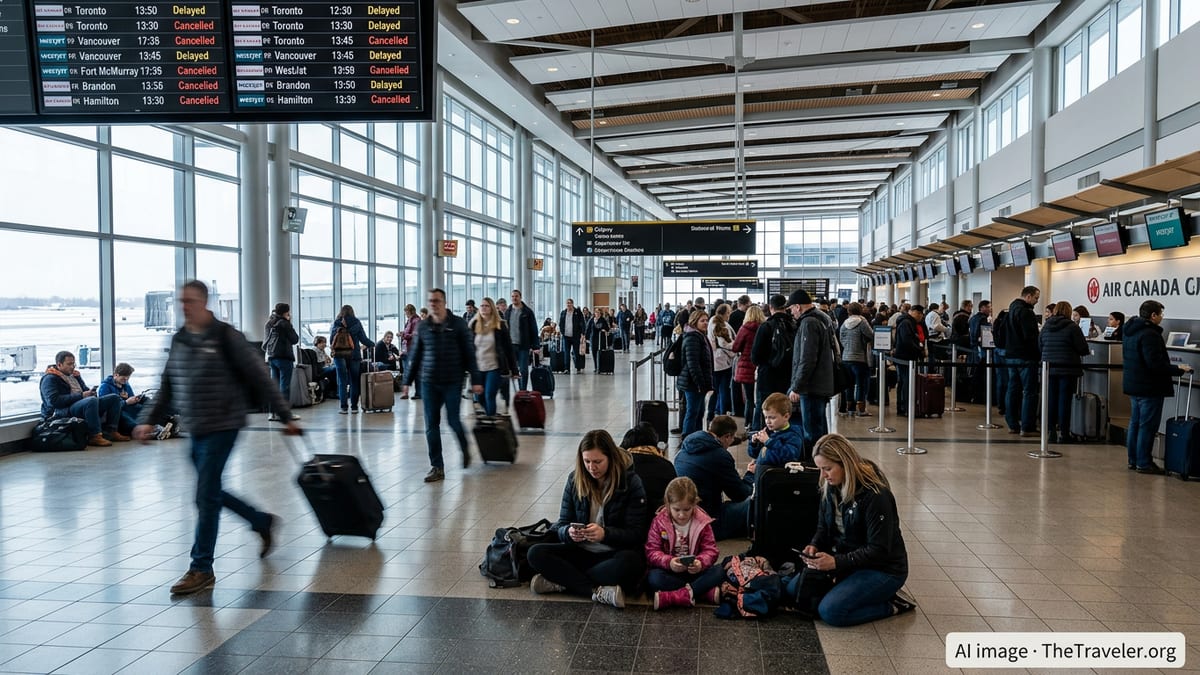
Cluster of Cancellations Hits Key Domestic Routes
Operational data and industry trackers on Monday pointed to at least five cancellations tied to Air Canada and WestJet Encore services touching Calgary, compounding wider disruption that saw more than 30 flights scrubbed and close to 50 delayed at the airport. While a range of carriers were affected, the concentration of cancelled services on the country’s two largest airlines underscored the fragility of Canada’s domestic network at the tail end of the winter season.
Among the cancelled services were Air Canada and WestJet Encore flights linking Calgary with Toronto and Vancouver, two of the country’s busiest corridors. Regional routes into and out of Fort McMurray and Brandon were also affected, as were secondary markets around the Greater Toronto and Hamilton Area, leaving travellers headed to work rotations, family events and connecting international flights facing long waits in terminal halls.
Passengers reported learning of cancellations only hours before departure in some cases, triggering last minute scrambles to rebook, switch carriers or abandon trips altogether. With load factors already high on remaining flights into major hubs, many travellers found that same day alternatives were sold out or prohibitively expensive.
Airport departure boards showed rolling delays across the afternoon and evening peaks, with knock on impacts as aircraft and crew rotated through Calgary from other weather and congestion affected cities. For many travellers, each delay update raised fresh uncertainty over whether their flights would eventually depart at all.
Travellers Voice Frustration Over Communication and Care
Inside Calgary International’s departure lounges, frustration mounted as queues formed at airline counters and customer service desks. Travellers described long waits to speak with agents, limited proactive updates on gate screens and mobile apps, and confusion over their rights to meals, hotel rooms and rebooking options when flights were cancelled for operational reasons.
Some passengers arriving from smaller communities such as Brandon and Fort McMurray found their onward connections to Toronto or Vancouver delayed or cancelled, stranding them overnight in Calgary. Others connecting from international flights reported missing onward domestic sectors and being told that the earliest rebooking options were one or even two days later, depending on the route.
Families travelling with children, seniors and business travellers on tight schedules were among those hardest hit, particularly on high demand city pairs between Calgary and Toronto or Vancouver. Many voiced concerns that the cost of last minute hotels, airport meals and missed work would not be fully compensated, even where regulations appear to require airlines to shoulder part of the burden.
While both Air Canada and WestJet Encore directed travellers to digital tools for self service rebooking, slow loading apps and limited seat availability meant that many people still needed face to face assistance. As the day wore on, tensions occasionally flared in lineups as weary passengers tried to secure scarce seats on remaining departures to central and western Canadian hubs.
Wider Pattern of Strain in Canada’s Domestic Network
The turbulence at Calgary comes amid a broader period of strain for Canadian carriers and airports, with a series of recent days marked by elevated levels of cancellations and delays nationwide. Industry analysts note that winter weather, tight aircraft utilization, crew scheduling challenges and a patchwork of fuel supply and maintenance constraints have all contributed to an operating environment where small disruptions can quickly cascade.
Recent data show that WestJet Encore’s regional network in particular has been vulnerable to concentrated clusters of cancellations and late departures, as the carrier juggles fleet and crew resources across western Canada. Air Canada, meanwhile, continues to work through the ripple effects of earlier schedule adjustments and resource constraints on its domestic operations.
Calgary International’s role as a key hub linking western resource communities such as Fort McMurray with major centres like Toronto and Vancouver amplifies the impact of any irregular operations. When multiple flights into or out of the hub are cancelled on the same day, workers on rotational schedules, students returning to campuses and leisure travellers alike can find themselves facing multi day detours or forced stopovers.
Travel advocates say that recurring disruption across the network is eroding passenger confidence in regional and domestic connectivity, particularly in smaller markets that depend heavily on a limited number of daily flights from Calgary to reach the rest of the country.
Guidance for Affected Travellers at Calgary International
With Air Canada and WestJet Encore both facing cancellations and widespread delays, travel experts urged passengers at Calgary International to move quickly to secure alternatives when irregular operations hit. Those whose flights are cancelled outright are generally advised to join the customer service queue while simultaneously using airline apps and websites to search for rebooking options, increasing the chances of finding a workable solution before remaining seats disappear.
For travellers facing long delays or overnight disruptions on routes to cities such as Toronto, Vancouver, Hamilton, Fort McMurray and Brandon, keeping documentation of expenses for meals, ground transport and accommodation is critical. Receipts may be required when later submitting claims under Canada’s air passenger protection rules or through travel insurance policies that cover trip interruption.
Passenger advocates also recommend checking whether disruptions are attributed to factors within an airline’s control or to extraordinary circumstances such as severe weather. The classification can influence eligibility for compensation, meal vouchers or hotel coverage, and travellers are encouraged to ask airline agents to clearly indicate the reason listed for the disruption on their booking records.
At the terminal level, airport staff have been directing impacted travellers toward quieter seating areas, charging stations and family facilities as they wait out delays. While airports do not control airline schedules, they can provide updates on security checkpoint wait times, baggage handling status and general terminal operations that help passengers plan long waits more comfortably.
Ongoing Uncertainty Raises Questions Ahead of Spring Travel
The latest round of cancellations and delays at Calgary International has fueled concern about how well Canada’s airlines and airports will cope with the approaching spring break and early summer travel surge. With demand expected to remain strong on key domestic routes linking Calgary to Toronto, Vancouver and resource communities, even modest operational hiccups could again ripple through the network.
Travel industry observers say that both Air Canada and WestJet Encore are under growing pressure to demonstrate more resilient schedules, clearer communication during irregular operations and consistent application of passenger protection obligations. Repeated episodes of stranded travellers and last minute cancellations risk driving customers to competing carriers on overlapping routes where alternatives exist.
For now, travellers with upcoming departures through Calgary are being encouraged to build additional buffer time into their itineraries, avoid tight connections, and monitor their flight status closely in the 24 hours before departure. While Monday’s disruption may ultimately be remembered as one difficult travel day among many in the Canadian winter, for those stranded in the terminal its impact was far more immediate and personal, measured in missed events, lost workdays and nights unexpectedly spent in airport hotels.