

More news on this day
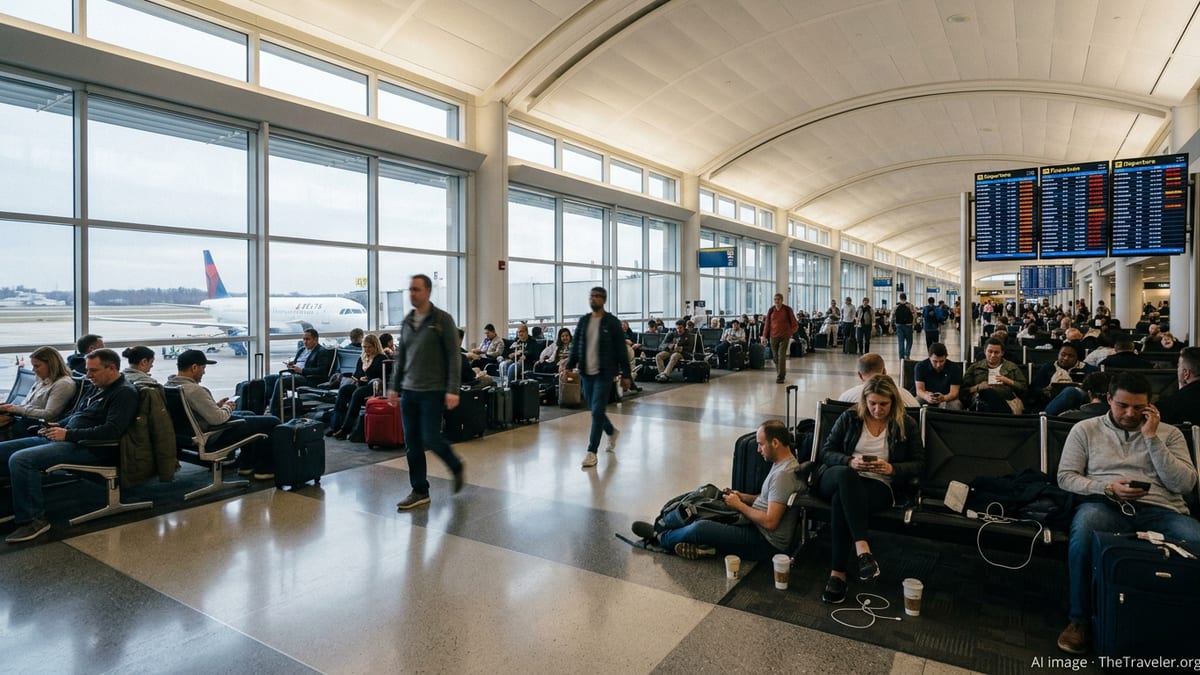
Travelers across the United States and Canada are facing mounting disruptions after a fresh round of flight cancellations and delays linked to PSA Airlines, Jazz, Delta and other carriers affected schedules at Washington’s Reagan National Airport and on connected routes to Toronto, Detroit, Augusta, Des Moines and several additional cities.
Get the latest news straight to your inbox!
Regional Carriers at the Center of New Disruptions
Recent operational data and airline tracking reports indicate that regional operators remain disproportionately affected by cancellations, with PSA Airlines and Jazz among the carriers experiencing notable schedule troubles. PSA, which provides American Eagle services, and Jazz, a major regional partner in Canada, play key roles in feeding larger networks through major hubs in Washington, Toronto and other cities. When these regional flights are curtailed, the impact quickly cascades through national and international itineraries.
In the latest round of disruptions, PSA Airlines has recorded a significant share of cancellations within the broader American network, while Delta and its regional partners have also seen elevated cancellation and delay rates on select days. Publicly available summaries of operations show that regional jets serving shorter routes are especially vulnerable when schedules tighten or weather and airspace constraints reduce capacity.
Although mainline operations for the largest carriers continue to move the bulk of passengers, any reduction in regional frequency at congested airports such as Reagan National can trigger knock-on delays across the day. Travelers booked on seemingly unrelated routes may still be affected as aircraft and crew are repositioned to recover schedules.
The recent patterns mirror broader trends in the U.S. and Canadian markets, where regional airlines have faced tighter staffing margins, complex weather exposure and airspace management changes. Even modest disruptions at the start of the day have been translating into longer queues at departure gates and extended waits for rebooking.
Reagan National’s Constrained Airspace Magnifies Cancellations
Ronald Reagan Washington National Airport operates within one of the most tightly managed airspace environments in North America, with slot controls and route limitations that leave little room to absorb additional disruption. When carriers such as PSA Airlines or Delta reduce frequencies or cancel flights, there are limited replacement options because each takeoff and landing opportunity is highly regulated.
Recent public discussions of air traffic capacity highlight Reagan National, Detroit, and several other major hubs as airports where any reduction in available slots or staffing can have an outsized effect on schedules. Airline tracking and flight status data over recent weeks indicate elevated levels of both cancellations and late departures affecting short-haul services into and out of Washington.
These constraints mean that a cancelled or heavily delayed regional flight may not simply be reassigned later in the day. In some cases, passengers must be rerouted through entirely different hubs or rebooked for the following day, contributing to crowded customer-service lines and congested departure halls at Reagan National.
For travelers, the result is a more fragile network where even localized issues can ripple across the broader system. Routes connecting Washington to secondary cities such as Augusta and Des Moines are particularly sensitive, as they often rely on a limited number of daily frequencies and smaller aircraft.
Ripple Effects on Toronto, Detroit, Augusta and Des Moines
Disruptions at Reagan National are being felt most clearly on connecting routes through key hubs like Toronto Pearson and Detroit Metropolitan Wayne County Airport. Public airport and airline information shows that Toronto remains a crucial international link for many U.S. travelers, while Detroit serves as a major connecting point for Delta and other carriers.
When regional partners such as Jazz in Canada or Delta’s regional affiliates reduce flying, short-haul links into these hubs can see compressed schedules, higher load factors and reduced flexibility for rebooking. Travelers originating in Washington and connecting onward to Canadian or Midwestern destinations may find fewer same-day options when an early flight is cancelled.
Smaller cities including Augusta and Des Moines can be hit especially hard. Many of these markets are served only a few times a day, often by regional jets. A single cancellation may remove half or more of the available daily capacity, forcing passengers into lengthy detours through other hubs or overnight stays. Recent air service updates support the role of Des Moines and Detroit as important spokes in broader networks that connect through Washington and other large hubs.
As the disruptions accumulate, airlines are increasingly reliant on complex rebooking patterns that may route Washington-based travelers through multiple intermediate airports before reaching their final destinations. This contributes to longer travel days and growing uncertainty for passengers trying to make time-sensitive connections.
Weather, Capacity Limits and Network Complexity
Weather remains a recurring contributor to irregular operations, particularly during late winter and early spring when storm systems can sweep across multiple regions in quick succession. When storms affect key hubs like Atlanta, Detroit, or Toronto at the same time that Reagan National is dealing with capacity constraints, it becomes difficult for airlines to keep their tightly timed networks on schedule.
Reports from traveler communities and publicly available operational summaries indicate that carriers have at times chosen to preemptively cancel regional flights to preserve their mainline operations. While this strategy can help maintain long-haul connectivity, it places additional strain on shorter regional routes, including those into and out of Reagan National.
Network complexity is another factor. Many regional flights operate as feeders for several different brands under capacity-purchase agreements, meaning a single aircraft type and crew base may support American, Delta or other mainline partners at different times. When disruptions hit one portion of the network, it can have follow-on effects across multiple brands and routes, including Washington, Toronto, Detroit, Augusta and Des Moines.
Capacity management initiatives, such as federal efforts to rebalance traffic at congested airports, can also limit the number of backup options available. With slot flexibility already tight at Reagan National, airlines have fewer opportunities to add recovery flights after a major disruption, prolonging the impact for days.
What Travelers Can Expect in the Days Ahead
Looking ahead, publicly available airline and airport information suggests that schedules will remain under pressure while carriers work through backlogs created by recent disruptions. Travelers through Reagan National, as well as those connecting via Toronto, Detroit, Augusta, Des Moines and other secondary cities, may continue to experience irregular operations, particularly during peak travel periods and adverse weather.
Industry analysts and aviation observers note that airlines have become more cautious in how they rebuild schedules following disruption events, often favoring reliability on core trunk routes over fully restoring all regional frequencies. That approach can leave thinner markets more vulnerable to rolling delays and last-minute changes.
Passengers are likely to see continued emphasis on earlier notifications of cancellations and more frequent use of digital tools for rebooking. However, with constrained capacity and limited spare aircraft at slot-controlled airports, alternative same-day options may still be scarce when multiple regional flights are suspended at once.
For now, travelers planning journeys that touch Washington’s Reagan National Airport, particularly those involving connections to or from Toronto, Detroit, Augusta or Des Moines, face a period of heightened uncertainty. Close monitoring of flight status and flexible contingency plans remain essential as airlines navigate another challenging phase for regional air service.