

More news on this day
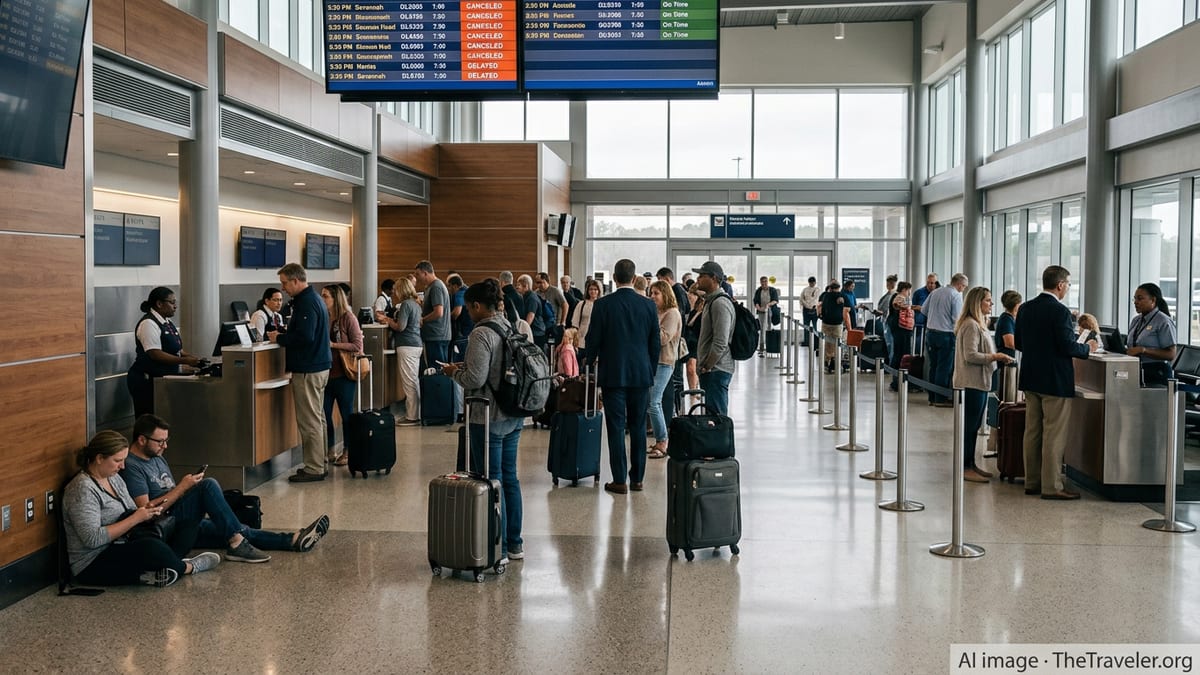
Travelers at Savannah/Hilton Head International Airport faced fresh disruption on Sunday as at least six departures and arrivals operated by Delta Air Lines, PSA Airlines and Mesa Airlines were canceled, disrupting key connections to Atlanta, Charlotte, Nashville, Boston, Baltimore and other major cities at the close of a busy travel weekend.
Network Disruptions Hit Major Southeastern Gateway
The wave of cancellations at Savannah/Hilton Head International Airport comes as U.S. airlines continue to work through lingering operational strain following days of weather and system-related disruption centered on Atlanta and other major hubs. Delta, PSA Airlines and Mesa, all key operators at Savannah, scrubbed a combined six flights from Sunday’s schedule, affecting hundreds of passengers who rely on the airport’s regional links to larger connecting cities.
Delta, the dominant carrier at Savannah, canceled multiple rotations on its core shuttle route to Atlanta, reducing feed into one of the world’s busiest hubs just as carriers were attempting to normalize weekend operations. PSA Airlines, which flies on behalf of American Airlines, and Mesa Airlines, which operates regional services for United Airlines, also removed flights to Charlotte and Washington-area and Northeast gateways from the board, cutting options for travelers seeking alternative connections.
While the total number of disrupted flights at Savannah is modest compared with major hubs, aviation analysts note that even a small cluster of cancellations at a regional airport can have outsized ripple effects. With many passengers already rebooked from earlier disruptions elsewhere in the network, Sunday’s canceled services left fewer available seats and complicated recovery efforts for stranded travelers across multiple airlines.
Airport officials did not immediately issue a broad public statement on the cancellations, but staff at the terminal reported steady lines at airline counters as passengers sought rebooking, refund information and overnight accommodation. Throughout the day, arrivals and departures boards showed a patchwork of on-time flights, delays and cancellations as carriers adjusted their operations in real time.
Key Routes to Atlanta, Charlotte and Beyond Affected
The canceled flights hit several of Savannah’s most important domestic links. Routes to Atlanta and Charlotte, both crucial connection points for Southeast and East Coast travel, were among those impacted, alongside services that typically carry passengers onward to cities such as Nashville, Boston and Baltimore through hub connections.
For Delta, suspensions on the Savannah to Atlanta corridor constrained one of the primary pathways for local travelers heading to destinations throughout the Midwest, West Coast and international markets. At the same time, the loss of PSA-operated American Eagle flights to Charlotte reduced access to American’s sprawling East Coast network, complicating same-day rebooking options for passengers bound for Boston, Baltimore and secondary cities in the Northeast.
Mesa’s role as a United Express operator meant some travelers aiming to connect via Washington-area hubs or larger United stations in the Midwest also saw their journeys upended. With mainline and regional partners across multiple alliances already stretched, alternatives such as same-day reroutes through secondary hubs were limited, particularly for travelers on tightly timed itineraries.
By late afternoon, some passengers reported being shifted to next-day departures or rerouted on multi-stop itineraries involving longer layovers and additional connections. Others opted to abandon their trips altogether, requesting refunds or travel credits rather than risk further uncertainty at the tail end of the weekend.
Passengers Confront Long Lines and Limited Options
Inside the compact Savannah terminal, the atmosphere remained orderly but tense as word of the cancellations spread. Families returning from coastal vacations, business travelers aiming to position for Monday meetings and students heading back to campuses all found themselves competing for scarce seats on remaining flights.
With call centers facing high volumes and mobile apps at times slow to refresh, many travelers chose to queue in person at ticket counters to seek assistance. Airline employees attempted to triage the situation by prioritizing those with imminent connections, unaccompanied minors and passengers with limited mobility, but some customers reported waits of an hour or more before being able to speak with an agent.
Hotel availability in and around Savannah tightened as the afternoon progressed, with some visitors turning to nearby cities within driving distance for more reasonably priced rooms. Rental car desks saw increased demand from passengers opting to complete their journeys by road to Atlanta, Jacksonville or Charleston rather than gamble on same-day flight availability.
Veteran travelers at the airport advised others to document expenses, keep boarding passes and reservation confirmations, and monitor airline communications closely for updated compensation and rebooking options. Many also encouraged patience with frontline staff, pointing out that gate agents and customer service teams were managing a fast-moving situation with limited control over broader network decisions.
Operational Strain Follows Broader System Pressures
The cancellations at Savannah reflect the cascading nature of modern airline operations. Weather and airspace issues earlier in the week, particularly around Atlanta and the Northeast, left crews and aircraft out of position across several networks. As carriers attempted to reset their schedules, smaller airports like Savannah often absorbed last-minute cuts when equipment and staffing were reassigned to protect higher-volume routes.
Industry observers say regional affiliates such as PSA and Mesa are especially vulnerable during recovery periods. Operating tight schedules with limited spare aircraft and crews, these carriers have less flexibility to absorb disruptions, making route suspensions more likely when mainline partners prioritize core trunk routes and long-haul services.
Delta, American and United have all emphasized their focus on improving resilience heading into the spring and summer travel seasons, citing investments in crew staffing, technology and maintenance. However, aviation experts caution that complex hub-and-spoke systems can still falter when multiple stress factors, from fast-changing weather to air traffic control constraints, converge over a short period.
For Savannah, which has seen steady passenger growth in recent years driven by tourism and inbound business travel, even a single disruptive day underscores the importance of diversified connectivity. With multiple carriers and alliances serving the airport, travelers often have choices, but on high-demand weekends those alternatives can quickly disappear once cancellations begin to stack up.
What Travelers at Savannah Should Do Next
Passenger advocates recommend that travelers affected by Sunday’s cancellations at Savannah/Hilton Head International Airport act quickly to secure alternative options. Those with upcoming departures in the next 24 to 48 hours are urged to verify their flight status frequently and consider arriving earlier than usual, as counter lines may remain longer while airlines work through the backlog.
Experts advise using multiple channels at once, including airline mobile apps, websites and phone support, while also queuing at the airport if already on site. In many cases, rebooking can be completed digitally, but travelers with complex itineraries, separate tickets or special service needs may still benefit from working directly with an agent at the counter.
Passengers whose flights have been canceled outright should check each carrier’s current policies on rebooking, vouchers and hotel support, which can vary depending on the cause of disruption and the length of delay. Keeping receipts for meals, ground transport and accommodation can be helpful if airlines later offer reimbursement or credits as part of their recovery efforts.
As airlines adjust their schedules and crew allocations in the coming days, operational reliability at Savannah is expected to gradually improve. Nonetheless, travel planners suggest building extra time into connections, considering early-morning departures where possible and remaining flexible on routings, especially for trips that rely on tight same-day links through Atlanta, Charlotte and other major hubs.