

More news on this day
Travelers passing through Cancun International Airport are facing a fresh wave of disruption, as publicly available tracking data on Monday indicates at least 24 flight cancellations and more than 200 delays affecting services operated by Frontier, JetBlue, Delta, WestJet, Air Canada and other carriers, with knock-on impacts reported at major airports in New York, Salt Lake City, St. Louis, Atlanta, Montreal and additional North American hubs.
Get the latest news straight to your inbox!
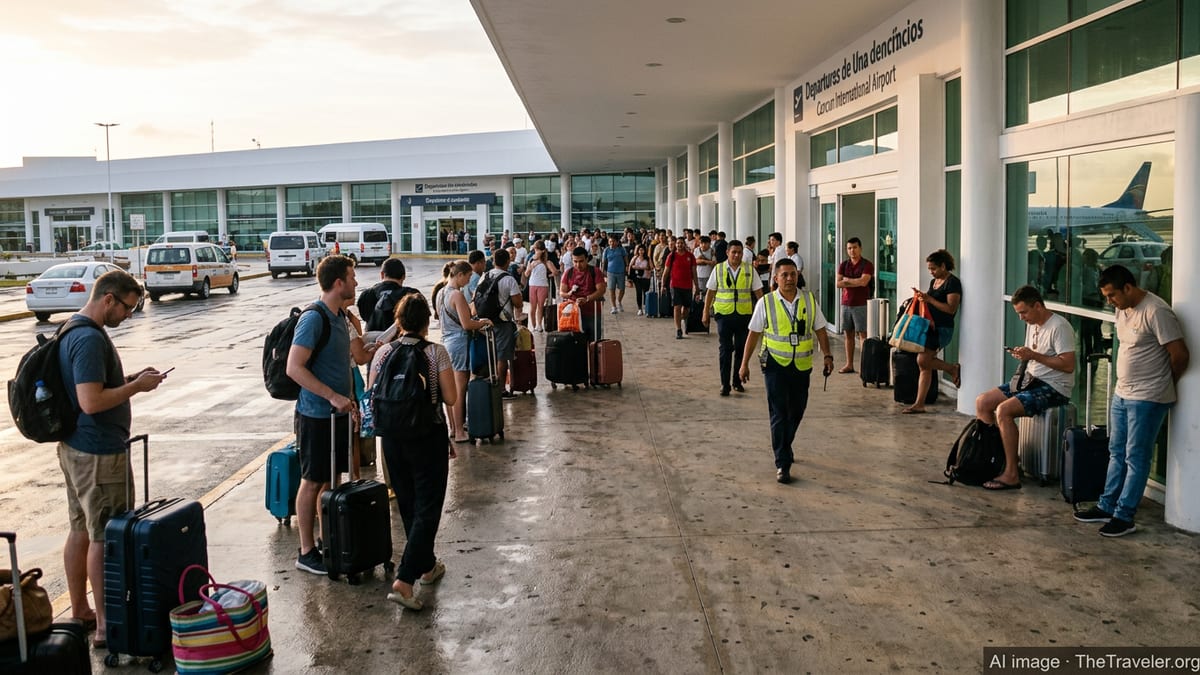
Operational Strains at a Key Caribbean Gateway
The latest disruption underscores the vulnerability of one of Latin America’s busiest tourist gateways at a time when passenger volumes remain high and the airport continues long-term expansion and remodeling work. Cancun International handles millions of leisure travelers annually, and any concentrated set of cancellations or delays can quickly cascade across airline networks serving the United States and Canada.
According to live flight-status boards and aggregated aviation data, the current wave of disruptions spans both U.S. low-cost carriers and major North American network airlines. Frontier and JetBlue flights to cities such as New York, St. Louis and other eastern and midwestern gateways show extended ground holds, while Delta, WestJet and Air Canada services connect Cancun to large hubs in Atlanta, Salt Lake City and Montreal that are also reporting late arrivals and departures.
Industry analysts note that even a few dozen cancellations at a resort-focused airport can translate into thousands of displaced passengers given the predominance of narrowbody aircraft operating near capacity during the winter and early spring leisure season. When combined with more than 200 delayed departures and arrivals, the operational strain can stretch airline resources, ground handling and customer service operations in multiple countries.
Publicly available information on recent schedule performance around Cancun also reflects broader challenges facing carriers as they balance high demand with tight fleets and crew availability. Delays in one direction, particularly on routes linking to weather-prone hubs in North America, may leave aircraft and crews out of position for subsequent segments, compounding the risk of cancellation.
Weather, Congestion and Network Knock-On Effects
Recent months have seen several significant weather systems sweep across North America, including severe winter storms that affected large portions of the United States and Canada and led to widespread disruptions in late January. While the immediate causes of each individual delay or cancellation vary, these patterns highlight how quickly adverse conditions in northern hubs can reverberate through southbound leisure routes to destinations like Cancun.
Airports in New York and Montreal, in particular, are susceptible to snow, ice and low-visibility conditions during the winter season, which can force airlines to reduce schedules, impose ground delay programs or slow the rate of arrivals and departures. When those restrictions intersect with tightly timed turnarounds for flights to and from Cancun, carriers may be compelled to delay departures, hold aircraft on the ground or, in some cases, cancel services entirely to preserve broader network stability.
Congestion-related issues can also play a role. Busy hubs such as Atlanta and Salt Lake City manage dense banks of connecting traffic throughout the day. If a Cancun-bound aircraft arrives late because of upstream delays, it may miss its planned departure slot, creating a domino effect that ripples across connecting itineraries. Reports indicate that some of the current delays involve aircraft waiting for new departure windows or replacement crews as airlines work to stay within duty-time regulations.
In St. Louis and other secondary U.S. markets, fewer daily frequencies to Cancun can magnify the impact of a single cancellation. With limited alternative flights on the same route, passengers may face overnight stays or rerouting through other hubs, adding further strain to airline and airport operations already managing weather and congestion pressures elsewhere.
Wide-Ranging Impact on Travelers in the U.S. and Canada
The disruptions at Cancun International are being felt most acutely by travelers originating or connecting through major North American gateways. Published coverage and real-time travel reports describe a patchwork of delays affecting flights between Cancun and airports in the New York area, where both low-cost and full-service carriers compete for vacation travelers heading to and from the Caribbean.
In Atlanta and Salt Lake City, two key hubs for Delta, delayed inbound aircraft from Cancun can disrupt carefully coordinated banks of connections to domestic and transcontinental routes. Travelers connecting onward to cities across the United States may encounter missed connections, rebooked itineraries and longer total journey times even if their initial departure from Cancun appears only modestly delayed on paper.
Canadian passengers are also experiencing knock-on effects. Montreal, a major gateway for Quebec travelers heading to Mexican beach destinations, has seen fluctuations in on-time performance for services operated by Air Canada and WestJet on Cancun routes during periods of intense winter weather and wider operational stress. When multiple flights within a short window are delayed or cancelled, available seats on alternative departures can rapidly sell out.
For families returning from vacations and travelers with fixed commitments, including work obligations or school schedules, these disruptions can carry significant personal and financial consequences. Additional hotel nights, rearranged ground transport and last-minute ticket changes all add to the cost of an already expensive peak-season trip.
How Airlines and Passengers Are Responding
Airlines serving Cancun are adjusting schedules, swapping aircraft and rerouting passengers to manage the spike in delays and cancellations. Publicly available updates from carrier status tools and airport departure boards show rolling timetable changes throughout the day, as operations teams attempt to restore regular patterns while complying with safety and crew duty regulations.
In some cases, carriers are prioritizing flights with higher passenger loads or critical connectivity over lower-demand services, which can result in route-specific cancellations. This approach may help stabilize broader network performance but can leave certain city pairs, such as smaller U.S. markets or select Canadian gateways, with limited immediate options for stranded travelers.
Passenger advocacy resources advise travelers affected by the current disruptions to monitor airline apps and airport displays frequently, as departure times can shift multiple times before boarding. Guidance also suggests understanding each carrier’s policies on rebooking, meal vouchers and accommodation during irregular operations, which can differ depending on whether the cause is categorized as weather-related, air traffic control constraints or an airline-controlled operational issue.
Reports from frequent travelers indicate that those who proactively seek earlier rerouting options through alternative hubs, or who are flexible about returning to nearby airports rather than their original destination, may find seats more quickly when a Cancun flight is significantly delayed or cancelled. However, this strategy can require longer travel days and additional surface transport arrangements once back in North America.
What Travelers Through Cancun Should Expect Next
With Cancun International Airport continuing to handle strong leisure demand and ongoing infrastructure improvements, observers expect episodic disruption to remain a risk during peak travel periods, particularly when adverse weather or operational constraints hit key North American hubs. While the current tally of 24 cancellations and more than 200 delays is notable, it follows a broader pattern of periodic irregular operations seen across the continent’s air travel system in recent seasons.
Industry commentary suggests that as airlines refine schedules, add crew capacity and adjust winter and spring timetables, some of the strain on popular resort routes could ease. Nevertheless, the combination of full flights, limited slack in aircraft rotations and volatile weather underscores that high on-time reliability cannot be taken for granted, especially on cross-border leisure routes.
Travelers with upcoming trips through Cancun are being encouraged by travel advisors and online planning resources to build additional time into itineraries, avoid tight same-day connections on separate tickets and ensure that accommodation and ground transport plans can absorb potential changes. Opting for flights earlier in the day, when networks are less affected by cumulative delays, is also frequently suggested as a practical risk-reduction measure.
For now, the disruption serves as another reminder of how interconnected North American air travel has become. A cluster of cancellations and delays at a sun-soaked Caribbean gateway like Cancun can quickly send shockwaves through departure boards in New York, Salt Lake City, St. Louis, Atlanta, Montreal and many other cities hundreds or thousands of miles away.