

More news on this day
Mexico’s Caribbean coast is bracing for what scientists warn could be one of the most intense sargassum seasons on record in 2026, raising fresh concerns for Cancun, Cozumel and the cruise lines that depend on postcard-perfect beaches to keep tourism booming.
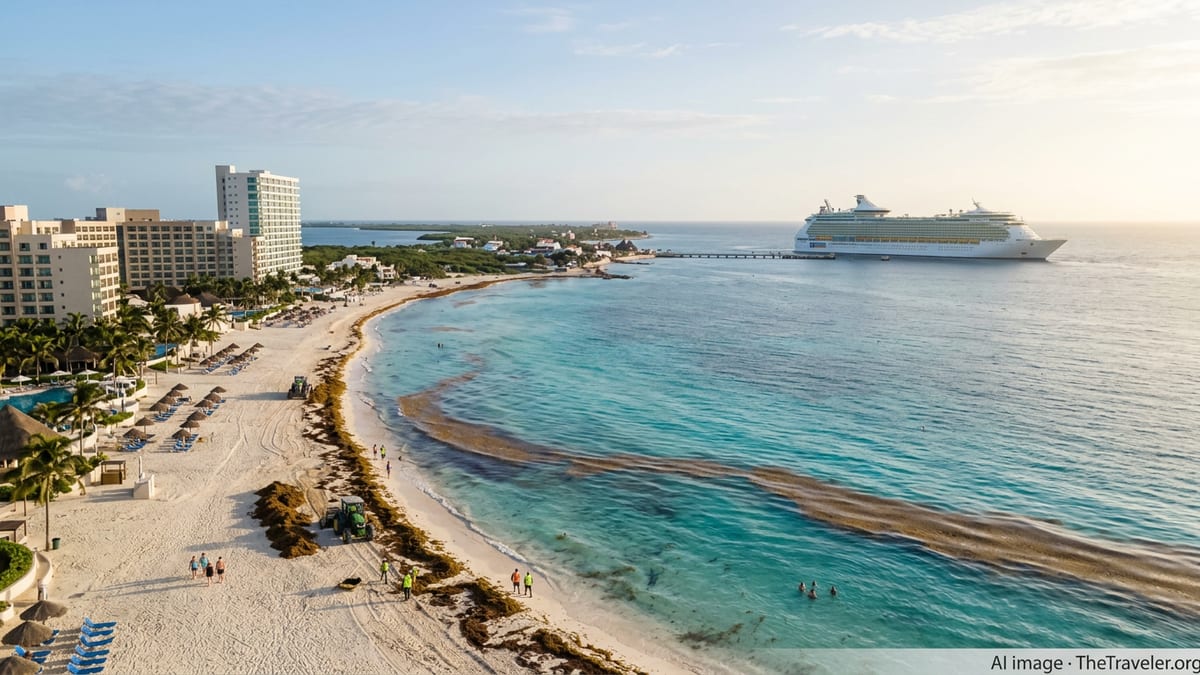
Record 2026 Bloom Raises the Stakes for Mexico’s Caribbean
New satellite analyses and regional monitoring networks are flagging an unusually dense sargassum belt in the Atlantic heading toward the Caribbean this spring, with experts warning that 2026 could rival or surpass the worst years on record. Mexico’s Quintana Roo coast, including Cancun, the Riviera Maya and Cozumel, sits directly in the path of these drifting mats of brown seaweed, which can blanket shorelines, discolor turquoise waters and create pungent odors when they rot on the sand.
Local media in Quintana Roo report that environmental specialists and space agencies began alerting authorities in early March that this year’s influx is likely to be “particularly intense,” following a 2025 season already described as historic for its volume. In practical terms, that means popular beaches that were mostly clear in winter may see conditions change rapidly from week to week as the main sargassum season ramps up from late March through summer.
In Cancun’s hotel zone, where resorts line a narrow sandbar facing the open Caribbean, sargassum has become a recurring challenge since the mid-2010s. Hoteliers now factor cleanup costs and shifting guest expectations into their seasonal planning, while travelers increasingly ask about seaweed conditions before locking in flights and nonrefundable packages.
On nearby Cozumel, long a favorite for divers and cruise passengers, the problem is more localized. The island’s west coast, where most cruise piers and beach clubs are located, is naturally shielded from the heaviest landings by currents. But operators say they can no longer assume calm, clear water every day, especially during peak sargassum months.
Government and Navy Mobilize, but Forecasting Gaps Remain
Mexican authorities are moving early in 2026 to blunt the impact on tourism. The Mexican Navy, which has coordinated the federal sargassum response in recent years, has announced that its fleet of specialized collection vessels and coastal barriers is being deployed along key stretches of the Riviera Maya. State and municipal governments are hiring additional crews and, in some cases, calling for volunteers to help clear beaches at dawn before tourists arrive.
Despite the stepped-up preparations, forecasting remains a weak link. While regional and international institutions continue to track the broader “Great Atlantic Sargassum Belt,” travelers have noted that some of Mexico’s official, beach-by-beach forecasts have become patchier or less frequent in 2026. That leaves resorts, tour operators and visitors relying on a patchwork of local monitoring networks, webcams, community reports and private tracking apps to gauge real-time conditions.
Tourism officials stress that clean-up operations are designed to keep main swimming beaches open even during heavy landings, but they acknowledge that there are limits. Persistent influxes can overwhelm daily efforts, particularly after storms or strong east winds, when fresh seaweed arrives faster than crews can remove it.
Environmental groups, meanwhile, are urging caution as new anti-sargassum infrastructure is rolled out. Offshore barriers and collection systems can help keep seaweed from smothering tourist beaches, but coastal biologists warn that poorly placed installations may interfere with turtle nesting, currents and nearshore habitats if not carefully managed.
Cancun, Riviera Maya and Cozumel: Uneven Impacts for 2026 Travelers
The 2026 outlook is not uniform across Mexico’s Caribbean, and that matters for travelers choosing between Cancun, the mainland Riviera Maya and Cozumel. Historical patterns and last year’s monitoring suggest that open-ocean, east-facing stretches such as southern Cancun and parts of Playa del Carmen and Tulum tend to receive the brunt of landings when the belt is strong.
By contrast, more sheltered areas north of central Cancun, along parts of Isla Mujeres, and on the leeward west coast of Cozumel often report lighter accumulations or more frequent clear-water windows, even in heavy years. That geographic nuance is increasingly shaping how tour operators and travel advisers counsel clients booking 2026 spring and summer trips.
On Cozumel, hotel and cruise business remains robust. Island hoteliers projected winter occupancy above 90 percent heading into 2026, after a slower summer that many linked partly to sargassum along Caribbean shorelines. Local tourism leaders argue that Cozumel still offers some of the region’s most reliable clear-water conditions because many popular beaches face the channel rather than the open Atlantic.
For Cancun and the mainland Riviera Maya, sargassum has become a more visible factor in guest satisfaction scores. Resorts are investing in beach-cleaning machinery, offshore barriers and alternative amenities such as expanded pool complexes and cenote excursions to keep visitors engaged on days when the ocean is less inviting. The message from the sector for 2026 is that the destination remains open and busy, but that travelers should be prepared for a more variable beach experience than a decade ago.
Royal Caribbean Itineraries Face New Sargassum and Weather Variables
While cruise lines have not cited sargassum as a primary reason for itinerary changes, Royal Caribbean’s operations in the western Caribbean are increasingly influenced by the same environmental forces reshaping Mexico’s beach tourism. Cozumel, Costa Maya and other nearby ports are among the line’s busiest stops, and schedules for 2025 and 2026 continue to feature the region prominently.
At the same time, recent months have seen Royal Caribbean adjust multiple cruises that originally called in Cozumel, sometimes replacing the Mexican port with Nassau or adding extra sea days. Official statements attribute those decisions to a mix of weather systems, port logistics, ship speeds and broader deployment strategies, while independent analysts note that capacity is also being steered to new private destinations and upcoming beach club projects.
What sargassum adds in 2026 is another layer of uncertainty. Heavy seaweed does not typically close ports outright, but it can affect the appeal of near-pier beaches and some shore excursions, particularly those marketed around swimming and shoreline relaxation. Some cruisers have already reported that excursions were rerouted to west-coast Cozumel beaches with natural protection, or shifted to cenotes and inland attractions when seaweed piled up along exposed stretches.
Royal Caribbean has simultaneously begun highlighting environmental initiatives along its Mexico routes. In Costa Maya, the company announced a new sargassum cleanup effort using skimmer boats designed to intercept seaweed before it reaches shore, touting both tourism and ecological benefits. Industry observers say similar partnerships could expand to other ports if 2026 landings prove as heavy as early forecasts suggest.
What 2026 Travelers and Cruisers Need to Know Now
For visitors planning Cancun, Riviera Maya or Cozumel trips in 2026, the key takeaway is flexibility. Sargassum is highly dynamic, and conditions can swing from pristine to heavily affected within days. Experts advise checking recent on-the-ground reports shortly before departure, choosing properties with strong cleanup operations, and considering itineraries that include alternative swimming options such as cenotes, pools or excursions to more sheltered beaches.
Cruise passengers booked on Royal Caribbean routes with Cozumel or other Mexican Caribbean ports should be prepared for last-minute adjustments. Contracts allow lines to change ports for a variety of reasons, including weather and operational needs, and that practice is unlikely to ease as climate-related variability grows. Travelers who prioritize specific ports are encouraged to monitor pre-cruise communications closely and to book flexible, refundable independent excursions when possible.
Across the region, scientists and tourism officials emphasize that sargassum is a serious but manageable challenge rather than a blanket reason to avoid Mexico’s Caribbean in 2026. Clear, low-impact days still outnumber the worst episodes for much of the year, and many visitors never encounter more than a thin line of seaweed on the tide. The difference now is that informed planning and realistic expectations have become essential for securing the classic turquoise panoramas that have long defined Cancun, Cozumel and the western Caribbean cruise experience.