

More news on this day
As millions of travelers prepare to flock to Cancun and the wider Mexican Caribbean for Easter holidays in late March 2026, regional authorities are rolling out an intensified security and protection strategy that will place more than 7,000 officers across airports, highways, resorts and beaches to keep tourism flowing smoothly during one of the busiest periods of the year.
Get the latest news straight to your inbox!
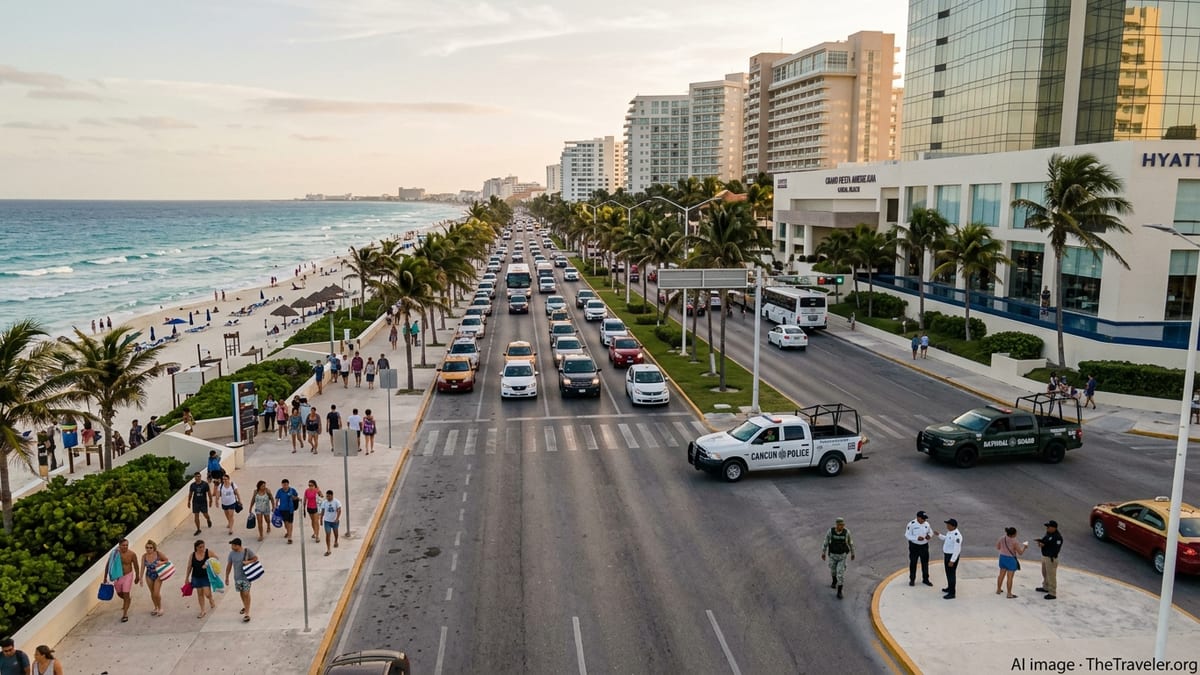
Massive Security Operation Ahead of Peak Holiday Traffic
Publicly available information from state and federal agencies indicates that a coordinated security surge is being prepared for Easter 2026 across Quintana Roo, the state that includes Cancun, the Riviera Maya, Cozumel and Tulum. The plan centers on deploying over 7,000 personnel drawn from local police, state security forces, the National Guard and auxiliary support teams to cover tourism hotspots and key transport corridors.
The reinforced presence is timed to coincide with the Semana Santa vacation window, which in 2026 runs through late March and is traditionally one of the most important domestic and international travel periods in Mexico. Recent local media coverage in Quintana Roo highlights expectations of heavy visitor volumes on Cancun’s beaches, with weekend peaks that can see tens of thousands of bathers in the city alone during major holiday stretches.
Security planners are focusing particularly on the Cancun Hotel Zone, the growing network of all-inclusive resorts south toward Playa del Carmen, and arrival points such as Cancun International Airport. The airport remains the primary gateway for international visitors to the Mexican Caribbean and continues to expand its route map for 2026, signaling that strong demand is expected through the Easter period and into the summer season.
Operational summaries shared in Mexican press reports suggest that the security surge will not be limited to visible patrols. Behind the scenes, command centers are being readied to coordinate real-time information on traffic flows, incidents and emergency response across the state’s main tourism routes.
From Beaches to Highways: Where Tourists Will See More Patrols
The security build-up is designed to be highly visible in frontline tourism areas. Travelers arriving during Easter week can expect to see more patrol vehicles, uniformed officers and mixed security units in and around Cancun’s Hotel Zone, downtown plazas and popular public beaches such as Playa Delfines and Playa Tortugas.
Local reports also point to expanded coverage in neighboring destinations that collectively form the Mexican Caribbean tourism corridor. Playa del Carmen, Tulum, Puerto Morelos, Isla Mujeres and Cozumel are slated to receive additional personnel, particularly in waterfront districts, archeological sites and ferry terminals that experience strong holiday crowds.
On the road network, the security strategy includes checkpoints and mobile patrols along the main federal highways connecting Cancun with the Riviera Maya and the state’s southern municipalities. According to recent transport and tourism briefings, the intention is to reduce risky driving behavior, support accident response and discourage opportunistic crime targeting visitors traveling between resorts, airports and excursion sites.
Complementing the uniformed presence, civil protection teams in Quintana Roo are increasing staff numbers for the Easter period. Earlier this month, local coverage highlighted how these units expand from their regular rosters to larger seasonal teams during Semana Santa, with a specific focus on beach safety, crowd management and rapid response to incidents such as rip currents or minor injuries.
Security Push Follows Recent Alerts and Crime Trends
The Easter 2026 operation unfolds against a backdrop of heightened global attention on security conditions in parts of Mexico. In February 2026, the U.S. Mission in Mexico issued security alerts describing broad ongoing operations and short-term disruptions in several states, including Quintana Roo, though subsequent public updates indicated that conditions in Cancun and major resort areas had stabilized.
At the same time, Mexican federal and state statistics have pointed to notable shifts in crime patterns across Quintana Roo in recent years. Public data presented by national security officials in early 2026 cited a marked reduction in high-impact crimes such as homicides across the state compared with 2024, even as concerns about issues like disappearances and localized incidents continue to generate domestic debate.
Tourism industry observers note that security surges during critical travel periods have become a standard part of the Mexican Caribbean’s risk management strategy. The Easter 2026 deployment aims to reassure travelers who have followed news of isolated violent events in some coastal cities, while underscoring the message that major resort corridors remain under intensive surveillance and coordination.
Local business and tourism groups are watching how the operation unfolds, particularly in terms of visitor perception. Early indications from travel forums and social media monitoring suggest that many prospective visitors remain focused on beach conditions, flight availability and hotel prices, while taking comfort in news of reinforced patrols during their stay.
Infrastructure, Technology and Coordination Across the Mexican Caribbean
The Easter security surge builds on a broader investment push in Quintana Roo’s tourism infrastructure. In recent months, authorities have delivered new patrol vehicles for urban and tourist-area policing in Cancun, including sport-utility vehicles, pickup trucks and off-road units intended to reach beaches, hotel access roads and less accessible stretches of coastline.
These assets complement surveillance systems, road cameras and integrated monitoring platforms that have been gradually rolled out in the state’s main population centers. Public information on these programs describes efforts to link municipal and state control rooms with federal agencies so that any serious incident affecting visitors can be identified and addressed quickly, particularly during high-season periods like Easter and spring break.
Coordination is especially important in a region where tourism flows cross multiple jurisdictions. The Mexican Caribbean spans several municipalities and relies heavily on ferry services, intercity buses, shuttles and rental cars to move guests between islands, beach towns and archeological attractions. The 2026 Easter plan brings together transport regulators, civil protection units, health services and various security institutions to manage this complex network under a single seasonal strategy.
Observers of the region’s tourism development note that the emphasis on visible patrols is paired with quieter measures such as information campaigns for visitors, staff training in hotels and the reinforcement of consular communication channels for international tourists. While these elements draw fewer headlines than patrol convoys, they are seen as key components of a broader safety ecosystem.
What Easter Travelers to Cancun Should Expect
For travelers heading to Cancun and the Mexican Caribbean in March 2026, the security surge will be most noticeable in the form of more uniformed personnel in airports, hotels and public spaces. Reports indicate that screening measures at key access points may be slightly more thorough than during low season, but officials have signaled in public briefings that they aim to keep disruptions to a minimum for holidaymakers.
Visitors are likely to encounter guidance from hotel staff and tourism information centers regarding recommended transportation providers, safe routes and local emergency contact numbers. Many large resorts in the Hotel Zone and along the Riviera Maya already maintain close links with security and civil protection units, and this cooperation typically intensifies around Semana Santa.
Travel industry analysts suggest that, for most visitors, the heightened presence should translate into a sense of reassurance rather than restriction. Crowded beaches, nightlife areas and excursion departure points will remain busy, but with more patrols circulating nearby and additional personnel on standby in case of medical or safety incidents.
Prospective visitors are still advised to monitor their home country’s travel guidance and stay informed about local conditions before departure. However, the scale of the 2026 Easter deployment, combined with ongoing efforts to reduce high-impact crime across Quintana Roo, signals a clear intent to keep the region firmly positioned as one of the most important international beach destinations for the spring holiday season.