

More news on this day
Spring break travelers heading to Mexico’s beach hotspots are facing a fast-changing landscape, as shifting U.S. security alerts and back-to-back winter storms trigger hundreds of flight cancellations and force last-minute changes from Cancun to Cabo San Lucas.
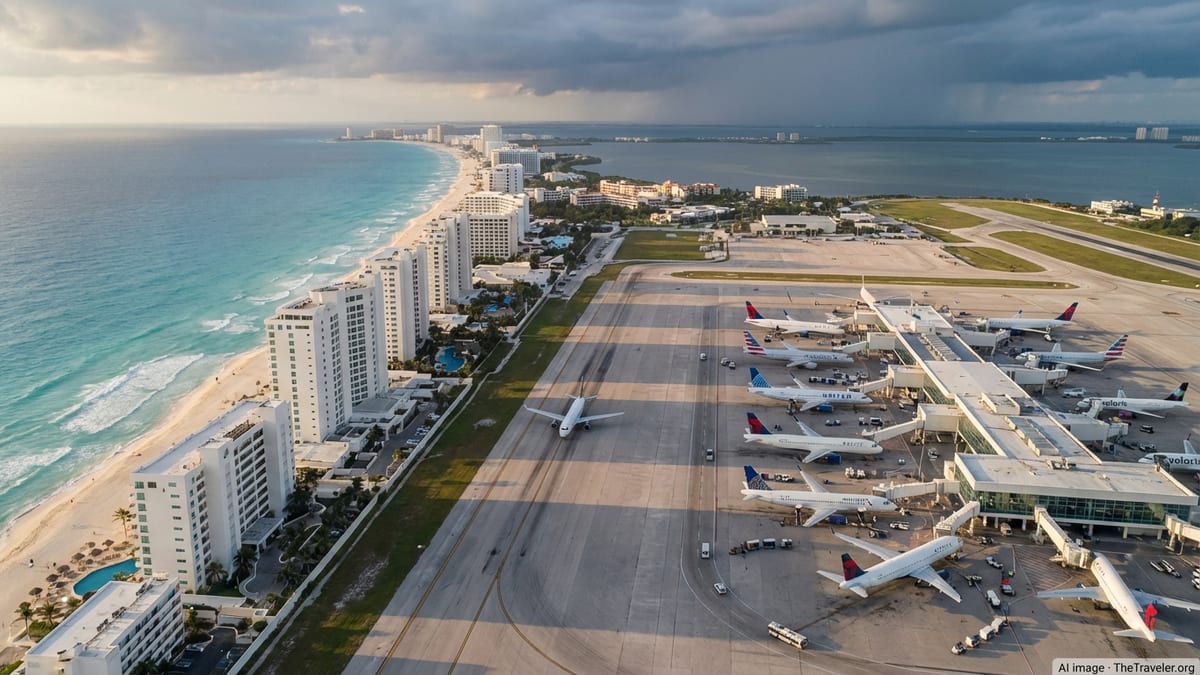
Security Alerts Spark Confusion Across Mexican Resorts
Mexico’s tourism industry is entering peak spring break season under an unusual cloud of uncertainty, after a nationwide security alert tied to a major law enforcement operation briefly swept in popular vacation states and upended travel plans. The U.S. Embassy urged Americans to shelter in place in parts of the country following the February 22 killing of cartel leader Nemesio Oseguera Cervantes, igniting concern among travelers booked to both the Caribbean and Pacific coasts.
Although the most serious unrest and roadblocks were concentrated in western states such as Jalisco and Baja California, the blanket nature of the initial alert rippled across social media and booking platforms, prompting some would-be visitors to cancel or rebook their trips. Mexico’s government and tourism boards moved quickly to emphasize that major resort corridors, including Cancun, the Riviera Maya and Los Cabos, remained physically untouched by the worst of the violence and continued operating under heightened but routine security.
The rapid evolution of official guidance left many travelers scrambling to interpret the difference between country-level warnings and on-the-ground realities in specific destinations. Travel advisors report a surge in calls from clients asking whether to reroute from Puerto Vallarta to Cabo, from Cabo to Cancun, or to postpone Mexico altogether as they tried to read the latest advisories.
Cancun Returns to “Vacation as Normal” After Brief Alert
For Cancun and the wider Quintana Roo region, the security scare proved short-lived but disruptive. After roughly 48 hours of uncertainty, the U.S. Embassy lifted its shelter-in-place directive for the state early in the week, and local officials quickly declared that the Caribbean coast had resumed what they described as vacation as normal. Hotel zones in Cancun, Playa del Carmen and Tulum reported stable operations, with beaches, attractions and nightlife open under standard security protocols.
Travel industry analysts note that, while no major incidents were reported in the resort strip itself, the diplomatic language and viral headlines were enough to trigger a wave of reactive cancellations, particularly among families and first-time visitors. Some tour operators say bookings to Cancun and the Riviera Maya softened in the immediate aftermath, even as airlines and airport authorities stressed that flights were continuing without security-related disruption.
Hoteliers in the Mexican Caribbean are now focusing on reassuring guests with clearer communication about local conditions, including details on tourist police patrols, hotel security and contingency plans. Many properties are proactively reaching out to upcoming arrivals with real-time updates, aiming to prevent a second wave of cancellations fueled more by perception than by the situation on the ground.
Cabo and the Pacific Coast Manage Ongoing Security Nerves
On the Pacific side, Los Cabos has largely avoided the direct flight suspensions seen in western hubs such as Puerto Vallarta and Guadalajara, where operations were significantly disrupted in the immediate fallout from the cartel leader’s death. Even so, the association of western Mexico with the security incident has made some Cabo-bound visitors uneasy, especially those connecting through inland airports that have experienced sporadic cancellations and delays.
Local tourism officials in Baja California Sur have emphasized that Los Cabos continues to welcome visitors, with resort corridors, marinas and beach clubs open and functioning normally. Airlines serving Los Cabos from the United States have maintained their schedules so far, although some carriers are still offering flexible change policies for passengers uncomfortable with transiting through impacted cities.
Travel advisors say a growing number of spring break groups are now weighing a shift from Pacific cities closer to the unrest, such as Puerto Vallarta, toward destinations perceived as more insulated, including Cabo and Cancun. That rebalancing is happening in real time, adding volatility to already tight spring inventories and making it harder for late bookers to find nonstop seats and beachfront rooms at preferred dates.
U.S. Winter Storms Cascade Into Mexican Beach Airports
Layered on top of security jitters, a series of powerful U.S. winter storms is wreaking havoc on air travel to Mexico’s main resort gateways just as March break traffic ramps up. Blizzard conditions across the Northeast and severe weather elsewhere have led to thousands of cancellations across the U.S. network, with ripple effects hitting northbound and southbound leisure routes.
Cancun International Airport, Mexico’s busiest tourist hub, has seen dozens of flights scrubbed in recent days as airlines struggle with grounded aircraft and weather-related shutdowns at key U.S. hubs. Airport operator reports show more than 50 Cancun-bound flights canceled over a recent two-day stretch, primarily from cities such as New York, Newark, Boston, Baltimore and Fort Lauderdale, and additional cancellations and delays tied to new storms later in the week.
Operational data from Mexican aviation authorities on Saturday highlighted the broader impact, with nearly 150 combined cancellations and delays across major airports in Cancun, Mexico City, Guadalajara, Monterrey and Tijuana. Low cost carriers and full service airlines alike have been affected, leaving hundreds of passengers sleeping in terminals or rerouting through secondary hubs as carriers work to clear backlogs.
Industry observers warn that the pattern is likely to continue as long as winter systems churn across North America, given how heavily Mexican resort airports rely on high-frequency connections to U.S. cities that are currently among the hardest hit by storms.
Spring Break Travelers Pivot to Flexibility and Backup Plans
With security alerts shifting and winter weather repeatedly scrambling flight schedules, spring break travelers are making more defensive choices than in previous seasons. Travel agencies report a sharp uptick in demand for flexible airfares, cancelable hotel rates and travel insurance policies that cover both security-related disruptions and weather delays.
Families and college groups are increasingly building backup plans into their itineraries, such as allowing extra buffer days at the start or end of a trip, or choosing itineraries that can be rerouted from Cancun to Cabo or vice versa if one gateway experiences heavier disruption. Others are opting for nonstop flights from major U.S. hubs to reduce the risk of missed connections at weather-prone airports.
Airlines serving Mexico have responded by publishing rolling travel waivers, allowing passengers on affected routes to change dates or switch to alternate Mexican destinations without hefty penalties. While those policies have helped some travelers salvage their vacations, they have also contributed to a fluid booking environment in which seats open and disappear rapidly as passengers reshuffle plans.
For Mexico’s tourism industry, the challenge now is to navigate a crucial spring break window in which the fundamental draw of sun, sand and value remains strong, but the path to the beach has become more complicated. With both security narratives and storm forecasts changing by the day, the message from industry insiders is clear: check advisories closely, stay flexible, and expect your route from Cancun to Cabo to keep shifting right up to departure.