

More news on this day
Spring and early summer travel to Cancun in 2026 are being hit by a combination of flight disruption and unsettled weather, as airlines report mounting delays and travelers face a more complicated risk picture for Mexico’s busiest beach destination.
Get the latest news straight to your inbox!
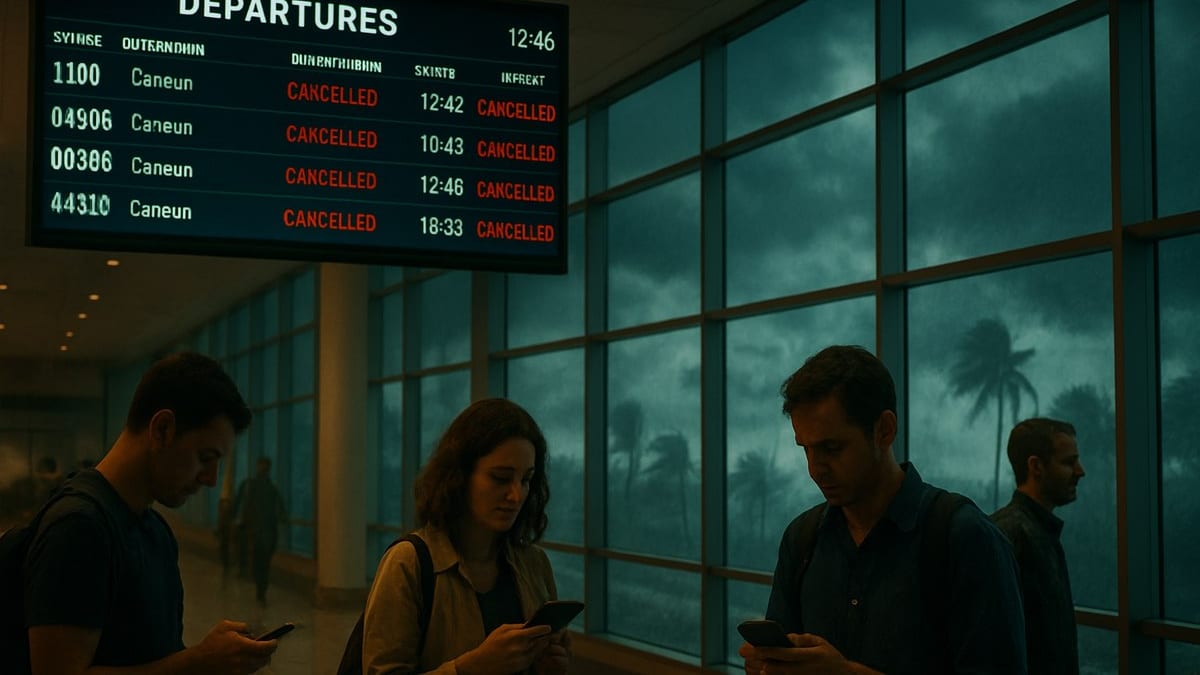
Wave of Flight Delays Hits Cancun International Airport
Recent operational data and industry coverage point to a difficult start to April at Cancun International Airport, with airlines struggling to keep services running on time. On April 1, 2026, aviation reports described a cascade of problems across major Mexican hubs, including Cancún, where more than 60 departures and arrivals were delayed and several flights were cancelled in a single day. The disruption affected a mix of domestic and international carriers, from low cost operators to full service airlines.
Reports indicate that congestion in Mexico’s wider air traffic network has amplified the impact in Cancun. When weather or operational issues slow traffic in Mexico City, Monterrey or Guadalajara, knock-on delays often reach the Caribbean coast hours later. Travelers heading for beach resorts frequently encounter last minute gate changes, rolling departure times and missed connections as airlines attempt to recover schedules.
Flight tracking snapshots for early April show that, while most services into Cancun are still operating, on time performance has been under pressure during peak periods. Industry analysts note that popular North American routes into the resort city remain heavily booked, which can make it harder for stranded passengers to find same day alternatives when a flight is significantly delayed or cancelled.
Publicly available airport statistics from late 2025 already highlighted how tight operations had become before this latest wave of disruption. With thousands of monthly departures and high seasonal loads, even minor weather disturbances or staffing issues can quickly translate into long lines at security, backed up immigration queues and extended waits for baggage.
Stormy Skies: Seasonal Weather Adds New Uncertainty
While hurricane season in the western Caribbean does not formally begin until June, forecasters are flagging a more unsettled pattern for 2026 that could affect travel to Cancun well before the peak months of August and September. Long range outlooks published by commercial weather services in early April point to above average sea surface temperatures in parts of the Atlantic and Caribbean, conditions that can support stronger or more frequent tropical systems later in the year.
For now, short term forecasts for Cancun show the classic shoulder season mix of sun, humidity and passing storms. Daily predictions into mid April indicate isolated thunderstorms and brief downpours rather than prolonged washouts, which typically translate into temporary, localized delays rather than widespread shutdowns. However, aviation specialists caution that tropical convection over the Yucatán and Gulf of Mexico can develop quickly, forcing last minute changes to flight paths and departure windows.
Historical records underline how exposed the region can be when conditions align for a major storm. Past hurricanes that struck the Yucatán Peninsula brought days of airport closures, large scale evacuations and severe damage to hotels and infrastructure. Although there has not been a storm of that magnitude in Cancun for many years, the rising number of flights and larger resort complexes mean that any significant system today could disrupt far more travelers than in previous decades.
Travel industry commentary ahead of the 2026 Atlantic season is therefore emphasizing flexibility. Advisers are encouraging visitors bound for Cancun between June and November to monitor tropical outlooks in the week before departure and to review the weather clauses in their airline tickets and hotel bookings, since policies differ on how disruptions caused by storms are handled.
Evolving Security Context and Travel Advisories
Alongside operational and weather risks, travelers heading to Cancun in 2026 are navigating an evolving security advisory environment for Mexico as a whole. In late February, the United States diplomatic mission in Mexico issued a series of security alerts tied to nationwide operations, during which government staff in multiple states, including Quintana Roo, were temporarily instructed to shelter in place.
Follow up alerts and publicly shared summaries from the same mission in the days that followed indicated that the situation in Quintana Roo, which includes Cancun and the Riviera Maya, had returned to normal and that restrictions specific to the state were lifted. Broader country level travel guidance from the United States continues to place Mexico at a mid level advisory, with Cancun’s state categorized in the “exercise increased caution” band rather than the most severe level reserved for areas with higher security concerns.
Travel and risk consultancies that track Mexico are drawing a distinction between long running security issues in some interior and border regions and the environment in major tourist corridors such as Cancun. Their assessments generally describe crime risks in and around the hotel zone as lower than in many other parts of the country, while noting that incidents can and do occur and that visitors should stay aware of their surroundings, especially at night or when traveling away from resort areas.
The brief, high profile alerts in February nevertheless added a layer of uncertainty for travelers who were already monitoring storms and flight disruption. Tour operators and airlines have reported an uptick in customer inquiries about both safety and logistics, as travelers weigh whether to adjust spring and summer plans or proceed with additional precautions, such as enrolling in government traveler notification programs.
What Travelers Should Expect at Cancun Airport in 2026
For passengers arriving at or departing from Cancun International Airport in the coming months, the main practical impact of the current situation is likely to be more time spent waiting. When storm cells form near the Yucatán or along key approach routes, air traffic controllers may space out arrivals and departures for safety, which in turn lengthens queues on the ground and creates a backlog at immigration and customs halls.
Airline schedule data for early 2026 show that Cancun is served by dozens of carriers from more than a hundred destinations worldwide, leaving little slack in peak travel windows. On busy Saturdays and Sundays, a short ground stop caused by thunderstorms or heavy rain can quickly compound into multi hour delays for subsequent flights, particularly on heavily trafficked routes from North America and Europe.
Industry reports also highlight the continuing challenge of coordinating ground transportation when flights come in bunches after weather holds. Buses, taxis and prearranged shuttles can become scarce, and resort check in desks may be overwhelmed as delayed arrivals show up late into the night. Some hotels have begun advising guests to share their updated flight details and estimated arrival times in advance when storms are in the forecast.
Analysts expect that, as the 2026 hurricane season approaches, airlines serving Cancun will continue to refine their contingency plans, including pre emptive schedule adjustments and more flexible rebooking options when storms threaten. However, with travel demand to the Mexican Caribbean still strong, significant weather systems or wider air traffic disruptions are likely to continue causing measurable ripple effects across the network.
Planning Ahead for Trips to Cancun This Year
Travel publications and consumer advocates covering the 2026 spring break and early summer period are broadly aligned on key recommendations for Cancun bound visitors. They emphasize that, while the resort city remains open and busy, travelers should treat flight delays and intermittent storm related disruption as a realistic possibility rather than a remote risk, particularly from June onward when the tropical season ramps up.
Practical suggestions include scheduling arrivals earlier in the day whenever possible, since afternoon and evening thunderstorms are more common in the region and can cause rolling delays. Passengers are also being encouraged to leave generous connection times if they are changing planes within Mexico, and to keep essential items such as medications and a change of clothes in carry on bags in case checked luggage arrives later.
Insurance providers and consumer groups note a growing interest in travel policies that explicitly cover weather related delays, missed connections and extended hotel stays. Travelers are being advised to read policy details carefully, as some products only apply when airlines cancel flights outright, while others provide benefits for long delays or documented disruptions caused by storms.
Despite the recent turbulence in schedules and the watchful eye on 2026’s storm outlook, tourism forecasts still anticipate strong visitor numbers in Cancun throughout the year. For many travelers, the combination of clear communication from airlines and hotels, flexible booking options and close attention to forecasts will be key to enjoying the destination while minimizing the impact of flight delays and storm related interruptions.