

More news on this day
Early 2026 is testing Cancun’s status as a reliable winter escape, as severe North American storms, temporary security alerts and record passenger volumes converge to disrupt flights and complicate travel plans across the Mexican Caribbean gateway.
Get the latest news straight to your inbox!
Winter Storms Ripple South From North America
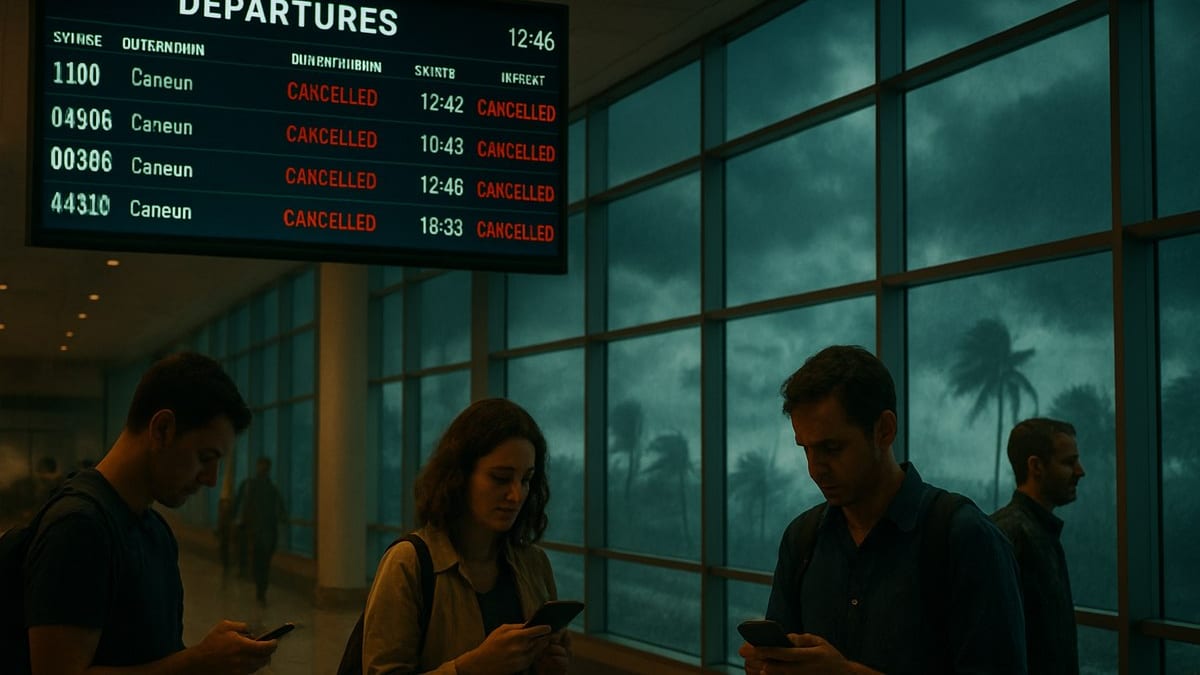
January’s powerful North American winter system, widely covered as one of the most disruptive in recent years, sent shockwaves through air travel networks that reach deep into Mexico’s Caribbean coast. Although the storm’s core impacts were concentrated in the United States and Canada, Cancun International Airport saw dozens of arrivals and departures delayed or canceled as airlines struggled to reposition aircraft and crews.
Local aviation coverage from late January 2026 indicates that at least 46 flights connected to Cancun were affected in a single day, including both inbound and outbound services. Many of these disruptions traced back to hub airports in the northern United States, where runway closures and widespread cancellations cascaded through airline schedules and left Cancun-bound travelers stranded far from the beach.
Broader reporting on the multiday winter system describes it as responsible for tens of thousands of cancellations across North America between January 23 and January 27. Those large scale shutdowns meant that even flights operating under clear skies in Quintana Roo were vulnerable to last minute changes, missed connections and aircraft shortages, underscoring how tightly Cancun’s tourism lifeline is tied to weather conditions thousands of kilometers away.
Travel analysts note that these storm driven disruptions arrived just as winter sun demand for Mexico peaked, magnifying the impact on leisure travelers and placing additional pressure on already stretched airline and airport resources at the start of the year.
March Brings New Waves of Delays and Cancellations
As winter faded, operational turbulence for Cancun flyers did not immediately ease. March 2026 brought a fresh round of disruptions, with multiple monitoring outlets documenting spikes in delays and cancellations at Cancun and other major Mexican airports.
One aviation focused report in mid March highlighted a day in which Cancun International Airport recorded more than 40 delayed flights and close to 10 outright cancellations, reflecting a mix of staffing challenges and wider network congestion. In the same period, separate coverage of nationwide performance pointed to over 200 delays and two dozen cancellations across hubs including Cancun, Guadalajara, León and Tijuana, leaving hundreds of passengers facing missed connections and extended airport waits.
These issues coincided with the ramp up to the spring break travel window, a period when Cancun typically handles some of its highest seasonal demand. Publicly available data and local tourism commentary confirm that Quintana Roo entered 2026 after breaking records for daily flight operations and international arrivals, making any operational strain particularly visible to visitors navigating crowded terminals and longer lines.
While many flights have continued to operate as scheduled, the pattern of recurring disruption in January and March has prompted travel commentators to warn that reliability in and out of Cancun may remain volatile through the peak spring period, especially when weather or staffing problems hit large North American hubs.
Travel Warnings and Security Alerts Add to Traveler Confusion
Storm related flight problems in early 2026 have unfolded alongside a shifting advisory landscape that has occasionally included Quintana Roo, adding a layer of confusion for travelers trying to interpret what the warnings mean for vacations in Cancun.
The overarching United States travel advisory for Mexico continues to list Quintana Roo, including Cancun, under a Level 2 classification, which encourages visitors to exercise increased caution rather than avoid travel outright. Public information indicates that this rating, last updated in August 2025, remained unchanged as of early March 2026, even as new messages were circulated around spring break.
On March 2, 2026, a dedicated message to United States citizens addressed seasonal travel to Mexico and highlighted common risks such as excessive alcohol use, petty crime and unsafe transportation choices in resort corridors. Around the same time, a separate series of security alerts referenced temporary shelter in place guidance for United States government personnel in multiple Mexican states, including Quintana Roo, during security operations linked to high profile law enforcement actions.
Subsequent public updates clarified that conditions in Quintana Roo, including Cancun and neighboring destinations such as Playa del Carmen and Tulum, had returned to normal within days, while the broader Level 2 advisory remained in place. Travel experts emphasize that these advisories and alerts are designed primarily for risk awareness and contingency planning, but the timing, overlapping language and storm driven flight trouble have collectively contributed to a sense of heightened uncertainty around Cancun trips in early 2026.
Storm Season, Climate Pressures and Coastal Operations
Beyond immediate flight disruptions, Cancun’s storm vulnerability is part of a longer running story that ties climate trends, coastal erosion and tourism infrastructure together. Historical records for major hurricanes impacting Quintana Roo, including Gilbert, Wilma and Delta, show how powerful systems have repeatedly damaged hotels, power lines and beaches in and around Cancun, at times shuttering large sections of the tourism economy for months.
Climate focused reporting and scientific assessments have pointed to an expectation of more intense tropical systems in the western Caribbean as sea surface temperatures rise. For Cancun and the wider Riviera Maya, this raises concerns not only about direct wind and surge damage but also about the resilience of airports, highways and energy networks that support mass tourism during peak seasons.
Recent environmental coverage has also highlighted the growing challenges posed by sargassum seaweed and accelerated beach erosion along the Quintana Roo coast. While these phenomena rarely shut down flights, they influence hotel operations, coastal protection measures and the overall visitor experience, reinforcing how closely tourism is tied to weather and ocean conditions.
In response, public and private stakeholders in the region have pursued initiatives such as reef protection projects, shoreline stabilization and expanded monitoring of sargassum and storm patterns. For travelers, the practical takeaway is that storm related disruptions may increasingly combine short term flight chaos with longer term changes to the coastal environment that first drew global attention to Cancun.
What Travelers Should Expect for the Remainder of 2026
Looking ahead through the rest of 2026, publicly available tourism forecasts still project strong demand for Cancun and the Mexican Caribbean, supported by new air routes and continued popularity among North American vacationers. Airlines have scheduled additional capacity into Quintana Roo’s airports, and hotel occupancy figures from early in the year suggest that the destination remains firmly on the global tourism map despite recent turbulence.
At the same time, the combination of storm sensitive flight networks, evolving security messaging and infrastructure pressure from record traffic means that travelers can expect a more fluid operating environment than in years past. Industry observers recommend close monitoring of airline notifications, flexible itineraries where possible and allowing extra time for connections through United States and Canadian hubs during periods of active weather.
Travel professionals and risk analysts also point out that advisory levels and security alerts can change quickly in response to events anywhere in Mexico. For Cancun bound visitors, regular checks of official advisory pages and reputable news outlets are advised in the weeks and days before departure, not only for safety context but also because rapid changes in security posture can occasionally affect airport access or staffing.
Ultimately, the picture emerging from early 2026 is of a destination that remains highly sought after yet increasingly exposed to external shocks, whether from distant snowstorms, regional security operations or the slow but steady advance of climate related coastal risks. For many travelers, Cancun will continue to deliver the warm weather escape they expect, but doing so this year may require more preparation, flexibility and attention to changing conditions than in the past.