

More news on this day
Late-season winter storms sweeping across the United States and Canada in March and early April 2026 are disrupting flight networks into Cancun, prompting travel warnings for visitors who rely on tightly timed connections through northern hubs.
Get the latest news straight to your inbox!
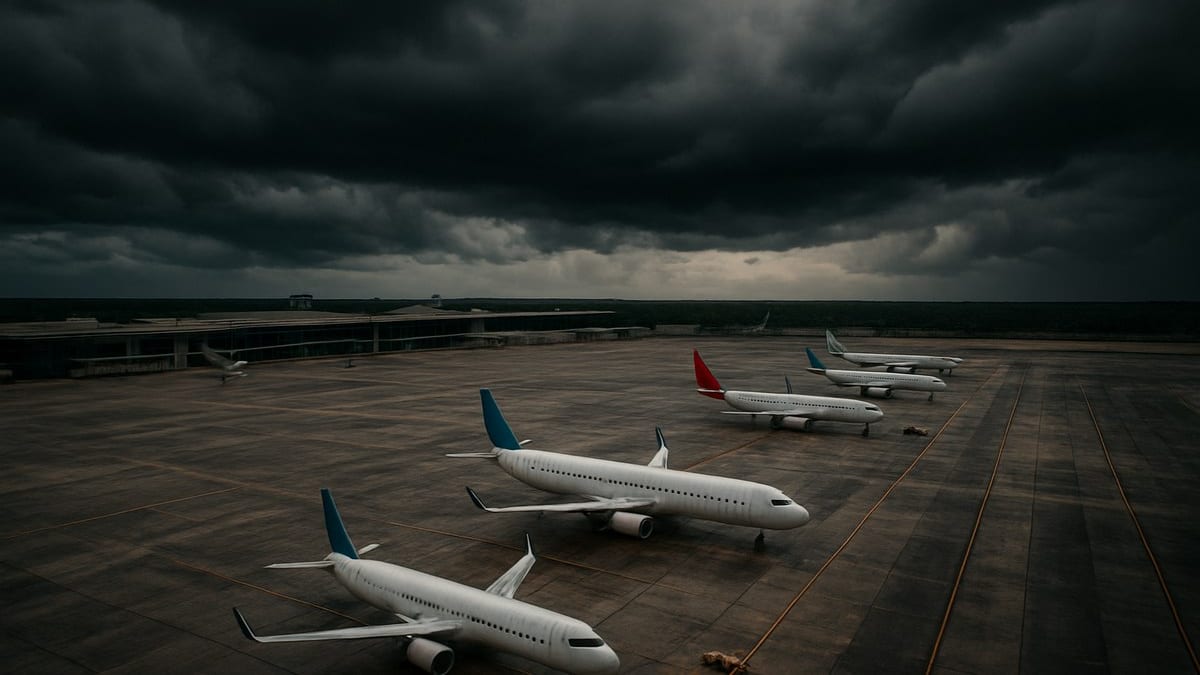
Storm Systems Ripple Through North American Hubs
A series of strong winter weather systems over the Midwest, Northeast and large parts of Canada in recent weeks has sharply reduced the reliability of flights feeding Cancun International Airport. Blizzard conditions and ground delay programs at major hubs such as Chicago, New York and Toronto have led to cascading schedule disruptions that extend deep into leisure markets on Mexico’s Caribbean coast.
Published coverage of the March 2026 blizzard, widely referred to as Winter Storm Iona, shows thousands of flights delayed or canceled across the central United States as snow, ice and high winds hit major connecting airports. The impact has continued into April, with additional storms and low-visibility events prompting fresh rounds of delays and cancellations at key hubs that handle large volumes of Cancun-bound traffic.
Observers of airline operations note that Cancun is particularly exposed when northern hubs slow down because most international leisure flights depend on aircraft and crews rotating through the same storm-affected airports. When those planes are held on the ground or arrive hours late, later southbound departures are either rescheduled or removed from the timetable altogether.
Travel-industry monitoring suggests that these rolling disruptions are no longer isolated events but part of a broader late-season pattern across the 2025 to 2026 winter, with each new storm briefly choking off air corridors that link North America to Mexican beach resorts.
Evidence of Growing Disruptions at Cancun Airport
Operational data reviewed by travel outlets indicate that Cancun International Airport has already seen a measurable spike in delays and cancellations tied to the northern storms. One report on Mexican aviation trends, published on April 1, detailed 60 delays and three cancellations at Cancun in a single day, as part of a wider disruption that also affected Mexico City, Guadalajara, Monterrey and other major airports.
Separate analysis from TheTraveler.org on April 6 highlighted a cluster of delayed departures from Cancun operated by low cost and leisure-focused carriers including VivaAerobus and WestJet. Those delays were concentrated on westbound and northbound routes that rely heavily on aircraft arriving from the United States and Canada, underscoring how quickly conditions in distant hubs can affect operations on Mexico’s Caribbean coast.
At the same time, Canadian travel coverage dated April 8 pointed to more than 400 flight disruptions across Toronto, Montreal, Vancouver and Calgary during the latest round of snow and ice. Many of those airports feed Cancun directly or via connections, increasing the likelihood of missed links, forced overnight stays and aircraft being out of position for southbound runs to Quintana Roo.
Publicly available tracking boards and aviation analytics suggest that while most scheduled flights into Cancun are still operating, the probability of significant delay on selected routes has risen. This is especially apparent on weekends and during peak spring break travel periods, when schedules are already near capacity and there is little slack to absorb weather-related disruptions.
What the Travel Warning Means for Current and Upcoming Visitors
The emerging travel warning for Cancun in April 2026 does not relate to local weather along the Riviera Maya, which remains largely favorable, but to volatility in the wider North American flight network. For travelers, the main risk lies in outbound and return journeys that rely on one or more connections through winter-affected airports in the United States or Canada.
Publicly available information from airline travel advisory pages and industry bulletins shows a patchwork of recent weather waivers across key hubs, including the Midwest, Northeast and several Canadian provinces. While these waivers primarily apply to origin and transit cities directly under storm alerts, they indirectly shape Cancun traffic by allowing passengers to rebook or reroute, sometimes freeing aircraft for alternative deployments and at other times reducing available capacity.
For visitors already in Cancun, the current pattern means that return flights can be delayed with limited advance notice if aircraft fail to arrive from storm-hit hubs. Travelers with tight onward connections, such as same-day domestic links after landing in the United States or Canada, face a higher risk of misconnecting and may need to plan for overnight stays or alternative routings.
For those still planning April trips, the warning translates into a need for greater schedule flexibility. Industry commentators are advising travelers to build longer layovers, avoid the last flight of the day on critical segments whenever possible, and monitor both their airline’s advisory page and airport status information in the 24 to 48 hours before departure.
Airline and Airport Responses Across the Region
Airlines serving Cancun are adjusting operations as conditions evolve. Recent travel advisories from large North American carriers show an expanded use of weather waivers and flexible rebooking policies on routes touching storm-affected cities, allowing passengers to move travel dates without standard change fees when specific criteria are met.
In Canada, coverage from travel and aviation outlets describes widespread delays and cancellations at Toronto Pearson, Montreal Trudeau, Vancouver and Calgary as late-season snow and freezing rain pass through. These disruptions have prompted schedule thinning, proactive cancellations and aircraft repositioning that together reduce the number of available seats to and from sun destinations, including Cancun, on selected days.
In the United States, operational updates from the Federal Aviation Administration describe the use of ground delay programs and temporary ground stops at major hubs during recent storm events. These traffic management tools slow the rate of arrivals and departures for safety reasons and can dramatically extend flight times or force airlines to cancel rotations when crews approach their duty limits.
Within Mexico, airport and airline data suggest that infrastructure at Cancun International itself has remained generally stable, with disruptions driven more by late inbound aircraft and network-level decisions than by local operational problems. However, when multiple carriers adjust their schedules at once, the cumulative effect can still be visible on terminal departure boards, with banks of flights posting revised departure times.
Practical Steps for Travelers Heading to Cancun in April
Given the evolving situation, travel experts recommend a series of practical measures for anyone flying to or from Cancun in April 2026. The most important is to maintain constant awareness of flight status, using airline apps and airport information channels from the day before departure until boarding begins, since schedules can change rapidly as storms shift.
Flexible booking choices are emerging as another key strategy. Publicly available fare and policy information indicates that many carriers now offer products that allow same day changes or fee free date adjustments when weather waivers are in effect. Selecting tickets with these options, even at a modest premium, can reduce the financial impact if a connection through a northern hub becomes impossible.
Travel insurers and consumer groups also highlight the value of coverage that explicitly addresses weather related delays, missed connections and additional accommodation costs. Policies differ significantly, so travelers are encouraged to review terms that apply to cancellations and long delays on connecting flights, particularly when those legs involve storm sensitive airports.
Finally, observers note that passengers with upcoming April trips to Cancun can reduce their exposure to disruption by considering early morning departures, longer connection windows and, where possible, nonstop routes that bypass the most frequently affected hubs. While no itinerary can be entirely immune to late season winter storms, informed planning can significantly improve the chances of reaching or leaving Cancun close to the planned schedule.