

More news on this day
Recent flight disruptions, shifting weather patterns and evolving travel advisories are reshaping how U.S. travelers plan trips to Cancun in 2026, prompting renewed focus on timing, insurance and backup plans.
Get the latest news straight to your inbox!
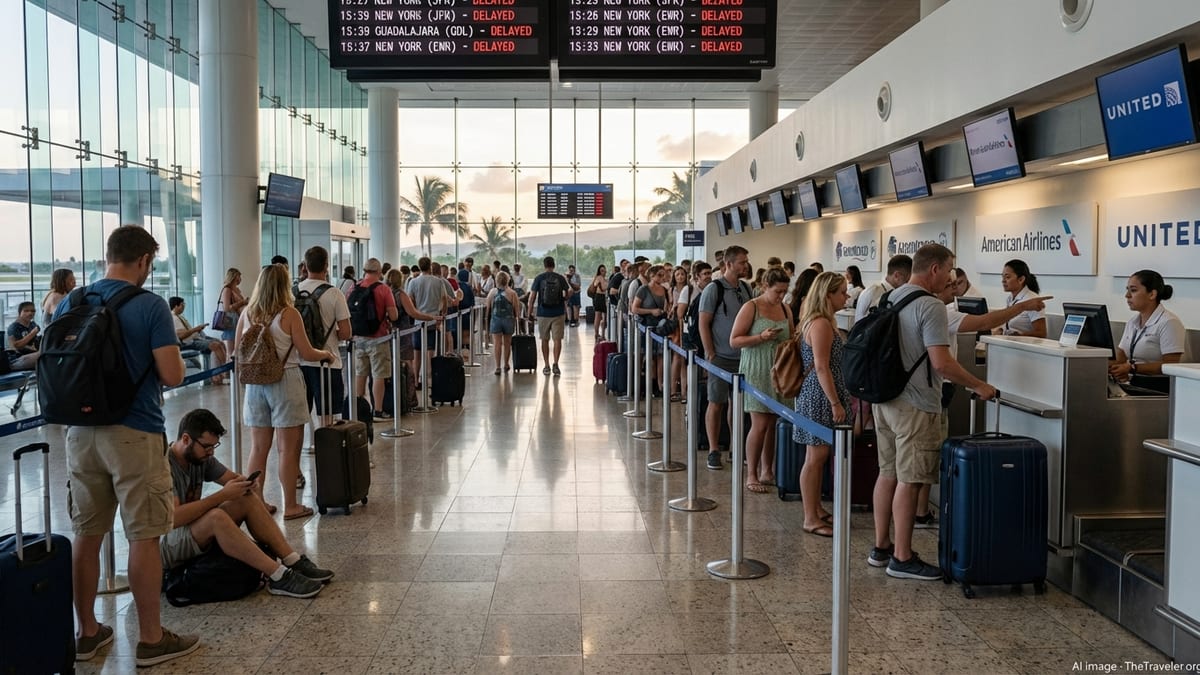
Flight Disruptions Put Cancun Connections Under Pressure
Data from recent weeks shows Cancun International Airport facing repeated waves of delays and cancellations that ripple across major U.S. hubs. Publicly available reports from late March 2026 describe more than 40 flight disruptions at Cancun in a single day, including cancellations on routes to and from Boston, Miami, Toronto and other North American gateways. These incidents follow a broader pattern of operational strain across Mexico’s busiest airports as schedules remain tight and demand from U.S. travelers stays strong.
Earlier in the year, winter weather triggered significant problems for Cancun-bound passengers. Local coverage from January 2026 documented dozens of flights affected by a North American storm system, with more than 100 cancellations on services linking Cancun with the United States and Canada over several days. Those disruptions underscored how quickly issues in distant hubs such as Chicago, Atlanta, Houston or Toronto can cascade down to resort destinations, even when skies remain clear in the Mexican Caribbean.
Observers note that airlines are operating with leaner buffers in aircraft and crew availability compared with the years before the pandemic, increasing the chance that a single weather event or technical problem will ripple through entire networks. When storms, airspace constraints or staffing shortages hit U.S. hubs, Cancun’s heavy dependence on inbound traffic from those cities can leave travelers facing long queues, rolling delays and last-minute cancellations.
For 2026, this combination of dense schedules, strong demand and complex cross-border connections suggests that U.S. travelers heading to Cancun should expect occasional operational turbulence, especially during holiday peaks, spring break, and the core summer and hurricane seasons.
Weather and Hurricane Outlooks Heighten Seasonal Risk
Weather volatility is another complication for Cancun-bound travelers in 2026. Recent hurricane season outlooks from U.S. meteorological agencies point to an above-normal Atlantic hurricane season, building on a string of active years fueled by unusually warm sea surface temperatures. Forecasts for 2025 already called for 13 to 19 named storms, with up to 10 hurricanes and several major systems, and long-range commentary suggests that warm waters may continue to support stronger storms into 2026.
The wider Caribbean, Gulf of Mexico and western Atlantic have seen intense storms in recent seasons, from major hurricanes impacting the Gulf Coast and southeastern United States to slow-moving tropical systems that inundated islands with torrential rain. While not every season brings a direct impact to Cancun, the region’s geography places it squarely within the corridor of concern for late-summer and early autumn travel. Peak risk typically runs from mid-August through October, though named storms can appear earlier or later.
Travelers are also contending with increasingly disruptive winter weather patterns. In January 2026, a sweeping North American winter storm led to dozens of cancellations and delays on Cancun routes originating in the United States and Canada. Reports indicate that these events, combined with strong holiday demand, left hundreds of tourists stranded or facing extended rerouting through secondary hubs.
For U.S. travelers planning 2026 trips, this means that timing matters more than ever. Summer and early fall itineraries intersect with the most active stretch of hurricane season, while winter getaways can be affected by snow and ice far from Mexico. Factoring in these seasonal patterns when selecting dates, routing options and connection times can significantly reduce the odds of major disruption.
Travel Advisories and Safety Context for Quintana Roo
While flight disruptions and weather risks draw headlines, the broader travel warning picture for Cancun remains nuanced. The U.S. State Department currently lists Mexico under a countrywide advisory broken down by state, and Quintana Roo, which includes Cancun, Playa del Carmen, Cozumel and Tulum, remains at Level 2, meaning travelers are urged to exercise increased caution. Publicly available information updated through early 2026 indicates that this level has been stable, with no escalation specific to Cancun.
Recent summaries of advisory changes highlight that some Mexican states have seen higher alert levels due to crime or security operations, but Quintana Roo has largely avoided the most severe classifications. Local tourism and hotel groups have emphasized sustained investment in security measures around the hotel zone and major resort areas. Reports from 2025 and early 2026 describe incremental improvements in incident reporting, patrols and emergency response infrastructure, even as authorities continue to recommend limiting unnecessary nighttime travel away from resort corridors.
Security alerts in February 2026 related to broader operations in other Mexican states briefly mentioned Cancun among several locations where U.S. government personnel were advised to exercise caution or adjust movements. Subsequent updates indicated that conditions in Quintana Roo had returned to normal, underscoring how national-level events can temporarily influence guidance even when the direct impact on resort areas is limited.
For travelers, the practical takeaway is that Cancun continues to welcome large numbers of visitors from the United States, but trips should be planned with an understanding of the Level 2 advisory context. Monitoring official advisory pages before departure and remaining aware of local conditions on arrival can help visitors make informed decisions about excursions, nightlife and travel beyond the main tourist zones.
How U.S. Travelers Can Prepare for 2026 Trips
Given the recent pattern of storms, flight disruptions and evolving advisories, travel experts are emphasizing preparation rather than panic for Cancun vacations in 2026. One key recommendation from consumer travel coverage is to treat travel insurance as essential rather than optional, particularly during hurricane season or peak winter months. Policies that cover weather-related cancellations, missed connections, extra hotel nights and medical care can provide a financial backstop when flights are disrupted or itineraries need to be changed at short notice.
Flexible booking strategies are also gaining importance. Many airlines and hotels now offer fare classes or rates that allow changes for a fee or at a modest premium. Opting for these more flexible options can give travelers room to shift travel dates around storm forecasts or airline schedule changes. When possible, choosing nonstop flights from major U.S. hubs to Cancun can reduce the number of points where a disruption can derail the entire journey.
Travel planning sources advise building extra time into itineraries, especially for trips that connect with cruises, weddings or other fixed events. Arriving in Cancun at least a full day before a key occasion can create a buffer if a winter storm or airline operational issue delays departure. Keeping important items such as medication, a change of clothes and essential documents in carry-on luggage remains a basic but often overlooked safeguard when delays lead to unexpected overnight stays.
On the ground in Cancun, staying prepared includes keeping phones charged, downloading airline apps to receive real-time updates, and checking airport and airline announcements when weather systems approach. Travelers can also familiarize themselves with the Guest Assist app promoted by Quintana Roo authorities, which provides information on emergencies, consular contacts and support resources for visitors.
Balancing Demand, Risk and Opportunity in the Year Ahead
Despite the challenges of storms and flight disruptions, demand for Cancun from the United States continues to run high. Recent tourism and aviation analyses highlight Cancun as one of the busiest international leisure gateways for U.S. travelers, with millions of passenger arrivals recorded annually and capacity still expanding from key cities across the country. Airlines continue to add or restore routes from secondary markets, betting that sun-seeking travelers will keep filling seats.
At the same time, 2026 is shaping up as another year in which climate-related volatility and operational strain test airline and airport resilience. As carriers adjust schedules, update fleets and refine contingency plans, travelers are likely to see a mix of improved communication tools and lingering vulnerabilities, particularly during peak seasons. Weather outlooks pointing to active hurricane conditions and erratic winter storms suggest that disruptions will remain a recurring feature rather than an exception.
For U.S. travelers, the emerging message is less about avoiding Cancun altogether and more about traveling on informed terms. By understanding the seasonal risk windows, tracking advisories for Quintana Roo, and investing in flexibility and insurance, visitors can capture the benefits of one of the region’s most popular beach destinations while minimizing exposure to the delays and complications that have marked recent months.
As 2026 unfolds, ongoing monitoring of airline performance, weather forecasts and advisory updates will be critical for anyone planning a trip to Cancun. Those willing to plan ahead, stay flexible and respond quickly to changing information are likely to navigate this evolving travel landscape with far less disruption.