

More news on this day
Travelers moving between Montana’s oil-patch town of Sidney and the regional hub of Billings faced an unexpected setback this week, as Cape Air scrubbed 10 flights serving Sidney–Richland Regional Airport, snarling connections and underscoring the vulnerability of rural air links that many residents rely on for work, medical care and family travel.
Get the latest news straight to your inbox!
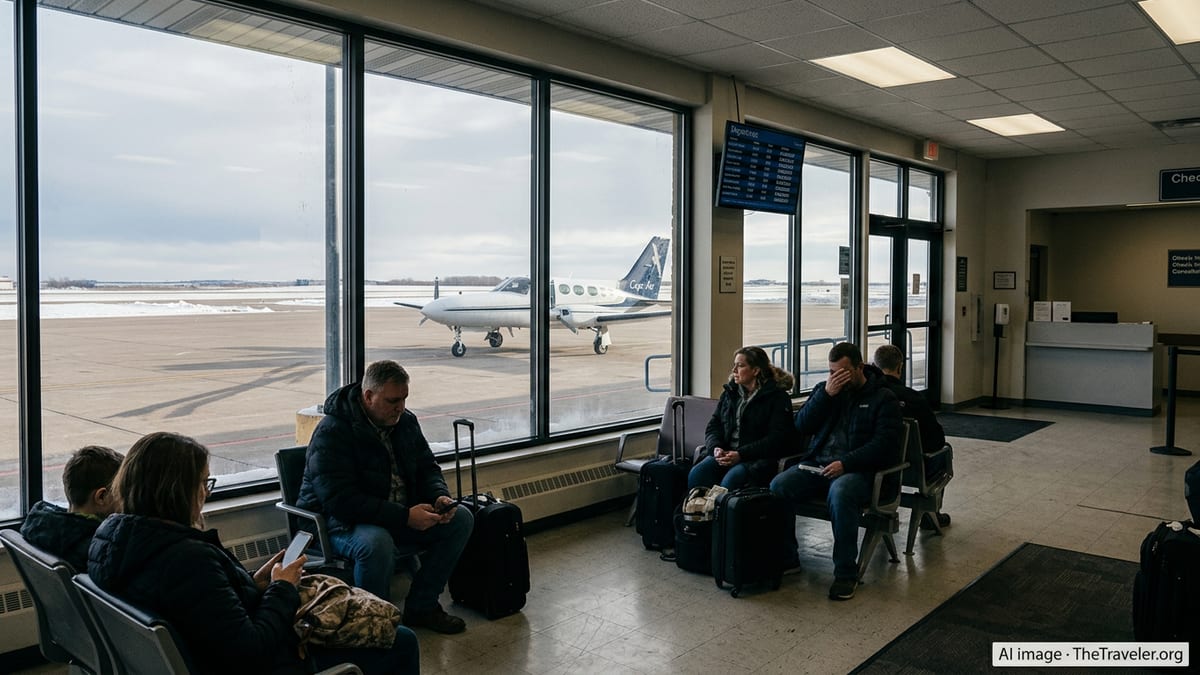
Wave of Cancellations Hits Essential Route
The cluster of 10 cancellations affected multiple frequencies on the heavily used Sidney to Billings corridor, where Cape Air typically operates up to five round-trip flights per day with nine-seat Cessna 402 aircraft. Regulars on the route reported abruptly halted travel plans and a scramble to rebook at an airport that sees just a fraction of the traffic of Montana’s larger gateways.
While regional aviation often contends with winter weather and operational constraints, the scale of the disruption on such a thinly served route quickly magnified its impact. With only one scheduled carrier at Sidney–Richland, each lost departure or arrival removes a significant share of daily capacity and leaves passengers with few same-day alternatives.
Some travelers were able to shift to later Cape Air flights or drive the roughly 275 miles between Sidney and Billings, but for those with tight medical appointments or onward connections from Billings Logan International Airport, the cancellations meant missed opportunities and added expense.
Local officials and airport staff spent much of the day assisting passengers with rebooking options, printed itineraries and on-the-spot advice about ground transport, underscoring the hands-on role small airports often play when scheduled air service falters.
Stranded Passengers Face Tough Choices
For many passengers, the ripple effects of the cancellations went far beyond a delayed departure board. Travelers connecting in Billings to national carriers found themselves weighing whether to cancel entire itineraries or shoulder the cost of rebooking longer-haul flights that departed without them.
With no competing airline and a limited rental car pool at Sidney–Richland Regional Airport, some travelers reported long waits for vehicles and rising one-way rates. Others turned to friends, family or employers to arrange last-minute rides across eastern Montana, a drive that can stretch to five hours depending on conditions.
Business travelers in the region’s energy sector, who frequently rely on Cape Air’s schedule to squeeze meetings into a single workday, were among those most acutely affected. Missed site visits and rescheduled negotiations added to the broader economic cost of the disruption, which is difficult to quantify but widely felt in a community where time away from the field carries real consequences.
Residents who use Billings as a gateway for specialized medical care also faced hard decisions. For some, same-day appointments at clinics and hospitals were no longer feasible, and rescheduling meant waiting weeks for the next opening, illustrating how air reliability in rural areas can overlap directly with access to health services.
Cape Air Cites Operational Pressures on Rural Network
Cape Air has not released a detailed public breakdown of the causes behind each of the 10 cancellations, but the carrier, like many regional operators, continues to navigate a tight labor market for pilots and mechanics, along with maintenance demands on an aging fleet. Even a single aircraft taken out of rotation for unscheduled work can dramatically constrain capacity in a network built around small communities.
The airline’s Montana routes operate under the federal Essential Air Service program, which subsidizes flights linking remote towns such as Sidney, Glasgow, Glendive, Havre and Wolf Point with Billings. That framework is designed to preserve connectivity that market forces alone might not support, but it does not insulate passengers from day-to-day operational challenges.
Industry analysts note that small fleets serving far-flung airports have little redundancy when things go wrong. A combination of weather, crew availability or maintenance timing on a single day can lead to a cascade of cancellations, especially when multiple communities feed into a single regional hub.
For airlines like Cape Air, balancing reliability with the economics of flying nine-seat aircraft into low-density markets remains a constant challenge. The recent cancellations at Sidney–Richland highlight how quickly that balance can tip, with consequences that reverberate well beyond the terminal.
Local Response Highlights Importance of Air Link
In Sidney, community leaders and airport staff were quick to emphasize how vital the Billings connection is for the region’s residents and businesses. The route does more than move tourists and occasional visitors; it serves as a lifeline for commerce, health care, education and family ties spread across a vast rural landscape.
Airport staff worked through the disruption to help travelers weigh options, from standby seats on limited remaining flights to coordinating with local hotels for those forced into an overnight stay. Informal networks also sprang into action, with neighbors and employers arranging carpools and shared rides to Billings.
For Richland County officials, the episode is a reminder of why they have consistently supported participation in the Essential Air Service program, seeing scheduled flights as core infrastructure rather than a discretionary amenity. They argue that reliable air links make the community more attractive to medical providers, educators and small businesses that might otherwise bypass the region.
The cancellations are likely to fuel renewed conversations about long term investment in regional aviation, from upgrades to navigation and deicing equipment to potential fleet modernization that could improve resilience during peak disruption periods.
Travel Advice for Passengers on the Sidney–Billings Route
In the wake of the cancellations, travel advisers recommend that passengers on the Sidney to Billings route build extra time into itineraries, especially when connecting onward from Billings to major hubs. Booking earlier flights in the day, when available, can provide a buffer if a departure is disrupted and increase the chances of finding a same-day alternative.
Travelers are also encouraged to sign up for airline notifications so they receive immediate alerts about schedule changes and gate information. For those heading to time sensitive appointments or events, confirming details with both the airline and any onward providers can help avoid compounding problems if weather or operational issues arise.
Residents who frequently use the route may benefit from keeping flexible back up plans in mind, such as identifying carpool partners or monitoring rental car availability during peak travel periods. While driving between Sidney and Billings is not ideal for every traveler, having clear fall back options can reduce stress when flights are disrupted.
Despite the frustration triggered by the 10 cancellations, many in eastern Montana stress that having scheduled air service at all remains a critical advantage for the region. The challenge now, they say, is ensuring that service is dependable enough that residents can continue to trust the Sidney–Billings corridor as their primary bridge to the wider world.