

More news on this day
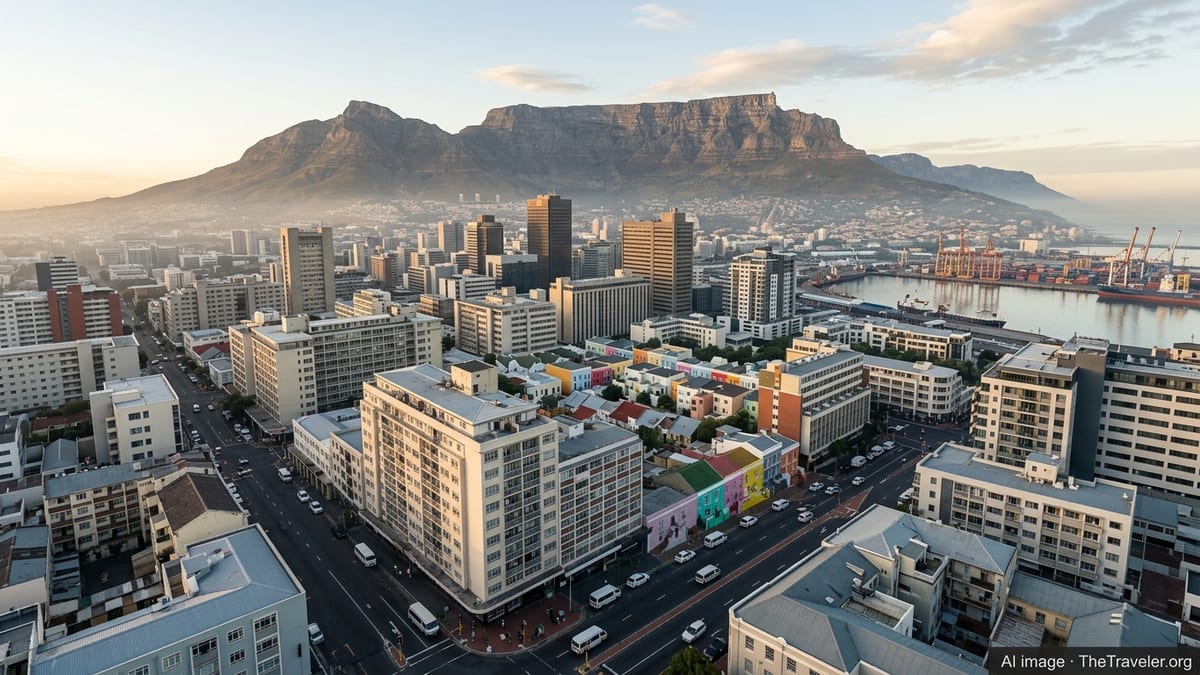
Cape Town has been named the world’s sixth best city for 2026 in a new international ranking, reinforcing its global reputation for natural beauty and urban vibrancy even as concerns grow about how affordable life in the city has become for many residents.
Get the latest news straight to your inbox!
A Global Accolade Rooted in Beauty and Lifestyle
The latest ranking places Cape Town sixth among the world’s leading cities for 2026, reflecting criteria that typically include quality of life, culture, food and drink, nightlife, community spirit and visitor appeal. Similar indices in recent years have praised the city’s mountain-to-ocean scenery, outdoor lifestyle, and increasingly confident cultural and culinary scenes, helping cement its status as Africa’s flagship urban destination.
Previous annual surveys by international city and travel publications have consistently positioned Cape Town near the top of global lists, often citing its blend of beaches, wine country, mountain trails and historic neighbourhoods. One widely covered 2025 survey ranked Cape Town as the world’s best city, a jump from second place the year before, underscoring the strength of its brand as an aspirational place to live and visit.
The 2026 recognition builds on these earlier accolades and signals that Cape Town continues to resonate with both international travellers and global city-watchers. Survey data and commentary have highlighted a strong sense of local pride, with residents frequently rating the city highly for happiness, leisure opportunities and cultural dynamism.
For tourism marketers and city boosters, the sixth-place ranking adds fresh momentum to efforts to position Cape Town as a year-round destination able to compete with leading cities in Europe, the Americas and Asia. It also aligns with broader data showing a recovery in international arrivals to South Africa and growing interest in Cape Town as a hub for events, remote work and lifestyle migration.
Tourism Boom and Urban Growth
Published analysis of tourism trends indicates that South Africa welcomed close to nine million international visitors in 2024, with Cape Town capturing a significant share of that growth as airlines restored routes and new markets opened. Local tourism research reports show hotel and guesthouse occupancy rising through 2024 and early 2025, supporting jobs across hospitality, transport, retail and entertainment.
City reports and industry briefings describe a wave of investment in inner-city regeneration, waterfront developments and mixed-use precincts that combine residential space with offices, hotels, restaurants and cultural venues. Cape Town has also been recognised in global city studies for its relative safety, healthcare infrastructure and expanding tech and creative sectors, factors that contribute to its strong performance in international rankings.
Alongside traditional holidaymakers, Cape Town has become a magnet for remote workers and so-called digital nomads attracted by coastal living, a favourable exchange rate and well-developed internet connectivity. International analyses of digital nomad destinations note South Africa’s appeal for long-stay visitors who can earn foreign incomes while spending locally, further boosting demand for accommodation, food services and leisure experiences.
Travel industry coverage in early 2026 has also highlighted Cape Town’s positioning as an affordable luxury destination for international visitors, with comparative studies showing that hotel stays, dining and activities can cost significantly less than in many European or North American cities of similar standing. For many overseas travellers, this convergence of global status and perceived value is a powerful draw.
Affordability Pressures for Local Residents
The same forces that elevate Cape Town in global rankings are contributing to mounting affordability challenges for people who live and work in the city. Rental market analyses for 2024 and 2025 show Cape Town’s average monthly rents rising faster than national inflation and outpacing other major South African metros. Some recent data point to double-digit rental inflation at the height of 2024, with average apartment rents surpassing those in Gauteng by a notable margin.
Reports from housing market researchers and financial services firms indicate that property prices in Cape Town have climbed sharply over the past five years, with average sale prices for homes moving from around 1.6 million rand in 2020 to more than 2.1 million rand by 2025. Industry surveys suggest that affordability concerns are now a key reason tenants relocate away from the Western Cape, as middle-income households struggle to keep pace with escalating housing costs.
Coverage by South African news outlets has detailed how the growth of short-term rentals, especially via platforms like Airbnb, has reduced the availability of long-term rental stock in desirable neighbourhoods close to the city centre and coastline. One recent analysis of the central business district’s spatial framework reported that a large majority of residential units there were being used as hotel-managed or short-stay accommodation, intensifying competition for remaining homes.
Academic and policy commentary describes a complex mix of factors driving Cape Town’s affordability squeeze, including strong internal migration from other provinces, constrained land availability near economic centres, and the city’s success as an international lifestyle destination. Online debates and community discussions increasingly frame the situation as a housing and cost-of-living crisis that risks pushing lower and middle-income residents to the periphery.
Housing Policy Responses and Community Debates
Publicly available planning documents and government reports show that Cape Town has been expanding its definition and programmes for affordable housing, targeting households earning below roughly 32,000 rand per month. Between the mid-1990s and 2025, the city is reported to have delivered more than 200,000 affordable units, with around 12,401 houses handed over in the five years leading up to early 2026.
Officials have signalled a strategic shift toward integrating affordable and social housing into well-located urban areas, aiming to correct historic patterns that placed low-cost housing far from jobs and services. Integrated annual reports and spatial frameworks refer to efforts to unlock municipal land, support mixed-income developments and partner with private and non-profit developers to boost supply near transport corridors and employment hubs.
At the same time, analysts note that budgets for housing remain under strain relative to demand, and that complex regulatory environments and infrastructure constraints can slow the pace of delivery. Policy briefings and research papers from late 2025 and early 2026 point to the need for coordinated action between city authorities, provincial and national government, and the private sector to scale up new units while managing the impacts of tourism and investment-led development.
Within civil society and resident groups, debates continue over the best tools to relieve pressure on the housing market. Proposals circulating in public forums include stricter rules or levies on second homes and short-term rentals, vacancy taxes on underused properties, and incentives for landlords to prioritise long-term leases at accessible rates. Supporters argue that such measures could help keep central neighbourhoods socially mixed, while critics caution against policies that might dampen investment or tourism revenue.
A City Balancing Global Appeal with Local Realities
The 2026 ranking of Cape Town as the world’s sixth best city captures only part of a more complicated story. On one side is a city whose natural setting, cultural offerings and improving infrastructure have propelled it into the top tier of global destinations. Strong visitor numbers, expanding air connectivity and international recognition as an affordable luxury option all speak to a success story that many cities would envy.
On the other side are residents facing rising rents, long commutes from distant suburbs and limited prospects of entering the formal property market. Studies of housing affordability show that when standard measures are applied, the average Cape Town household can afford far less space than current market prices allow, particularly in and around the city centre. For many, the lived experience of a “world-class city” is tempered by financial strain.
Urban analysts suggest that Cape Town’s challenge in the years ahead will be to sustain its global momentum while broadening the benefits of growth. That includes scaling up well-located affordable housing, managing the footprint of short-term rentals, improving transport links from outlying areas and ensuring that rising property values do not come at the cost of social cohesion.
As the 2026 accolade circulates through travel media and social networks, Cape Town’s international image is likely to shine even brighter. Whether the city can convert that recognition into a more inclusive and affordable urban reality will be a key test of its leadership and planning in the decade ahead.