

More news on this day
A rise in serious gastric illnesses, including salmonella and shigella infections, among British tourists returning from Cape Verde is intensifying scrutiny of the archipelago’s resorts, healthcare facilities and tour operators, raising questions about how the winter-sun favourite can protect visitors while safeguarding its vital tourism economy.
Get the latest news straight to your inbox!
Rising Case Numbers Trigger Official Warnings
Recent data from UK public health bodies highlight a marked increase in gastrointestinal infections in people who have travelled to Cape Verde, particularly since late 2025. Published information from the UK Health Security Agency describes clusters of shigella and salmonella cases in travellers, many of whom stayed in the popular resort areas of Sal and Boa Vista.
Publicly available summaries of health surveillance reports indicate that, since October 2025, more than 150 confirmed infections with shigella or salmonella have been linked to travel to Cape Verde, with shigella sonnei accounting for the majority of cases. Health officials describe the trend as part of a recurrent pattern of gastrointestinal disease associated with the islands, with the underlying sources of contamination still under investigation.
Updated Foreign, Commonwealth and Development Office travel advice for Cape Verde, issued in March 2026, now highlights the ongoing investigations into shigella and salmonella infections in returning travellers. The notice reiterates that while most visits are trouble-free, visitors should be aware of the heightened risk of gastric illness and take particular care with food, water and personal hygiene.
Regional and international disease monitoring reports from European and US public health agencies have also picked up the signal. Weekly communicable disease threat assessments describe dozens of laboratory-confirmed shigella cases across Europe linked by travel history or genome sequencing to Cape Verde, underlining that this is not solely a UK problem but part of a wider travel-health issue.
Deaths and High-Profile Lawsuits Intensify Scrutiny
Concerns have sharpened as legal actions and media coverage trace a series of severe illnesses and deaths among British holidaymakers back to stays in Cape Verde. Coverage by UK news outlets in early 2026 refers to at least six British tourists who died after suffering acute gastric illness either during or shortly after their holidays, four of them between August and November 2025.
Specialist law firms in the United Kingdom report representing hundreds of clients who claim to have fallen ill at large all-inclusive resorts in Cape Verde since 2022. One firm has publicly stated that more than 800 British holidaymakers have launched High Court action over severe gastric illnesses, with allegations including infections such as salmonella, shigella, E. coli and cryptosporidium linked to several high-end hotels.
Separate legal proceedings reported in national newspapers describe claims worth several million pounds against a major tour operator relating to outbreaks at a flagship resort on the island of Sal. Claim documents cited in that reporting allege that guests on all-inclusive packages ate and drank almost exclusively at the hotel before becoming ill, and argue that hygiene and pool maintenance standards were insufficient to prevent the spread of infection.
The legal cases are contested and no final court judgment has yet established liability. However, the combination of litigation, inquests and media attention is fuelling wider questions about food safety, water quality, crowding and infection control in some of Cape Verde’s busiest tourist complexes, especially where visitors rely heavily on buffet dining and shared facilities.
Impact on Cape Verde’s Tourism Image
Cape Verde has built its international reputation on year-round sunshine, relatively short flight times from Europe and a perception of stability compared with some other destinations in West Africa. Tourism is a critical pillar of the national economy, providing substantial employment and foreign currency earnings for the island state.
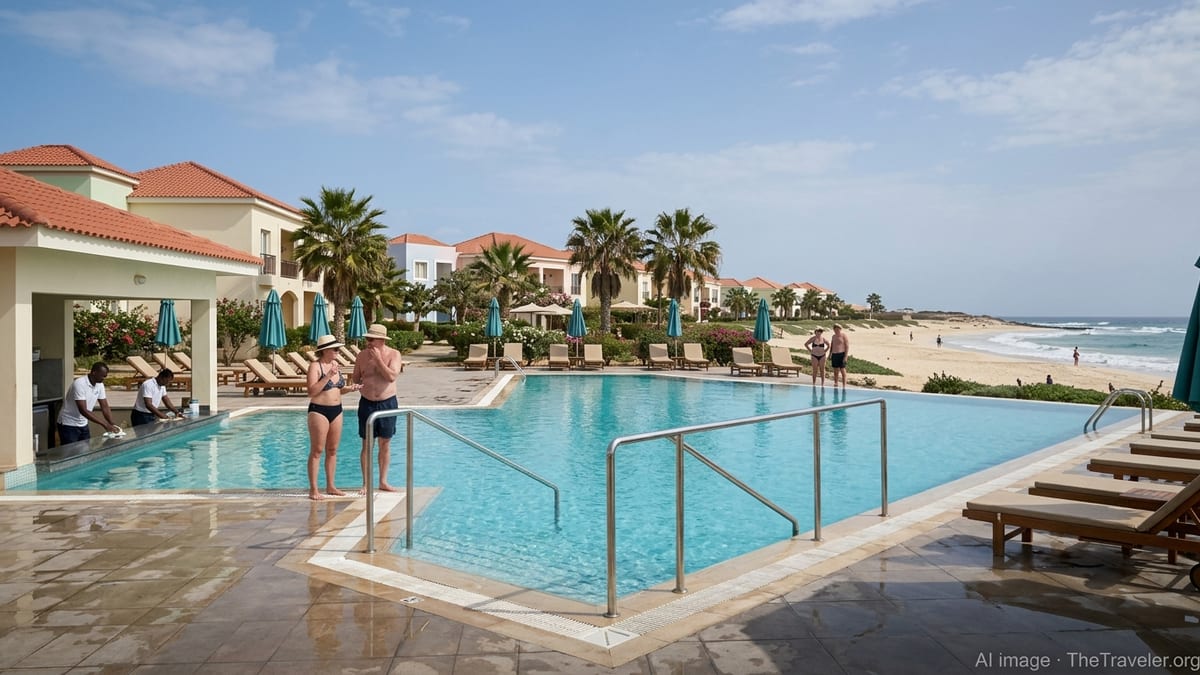
The wave of negative headlines about stomach bugs, hospitalisations and legal disputes is therefore particularly sensitive. British media coverage in late 2025 and early 2026 often juxtaposes images of palm-fringed beaches with accounts of holidaymakers confined to their rooms or receiving emergency care after violent gastric illness, creating a stark contrast with the marketing of the islands as carefree, all-inclusive escapes.
Travel industry analysis suggests that, so far, there is limited evidence of a mass collapse in demand, but booking patterns may be shifting. Some travel commentators report that prospective visitors are asking more detailed questions about hygiene standards at specific resorts, availability of medical care on Sal and Boa Vista, and the flexibility of package terms if outbreaks continue.
At the same time, discussions on travel forums and social platforms reveal a divided public response. Some recent visitors describe uneventful holidays and dismiss the coverage as sensational or driven by law firms seeking claimants, while others say they are postponing trips or choosing alternative destinations until investigations into the outbreaks are clearer and trust in safety measures is restored.
Healthcare Capacity and Infrastructure Under the Microscope
The gastrointestinal outbreaks have also focused attention on the capacity of Cape Verde’s health system to cope with sudden surges in sick tourists alongside domestic patients. UK travel advice notes that healthcare across the islands is basic and limited, particularly outside the capital, with many facilities lacking advanced diagnostic equipment and relying on medical evacuation for complex cases.
Media reports on some of the recent deaths describe families raising concerns about the timeliness and quality of care available at local clinics and hospitals, as well as communication challenges between medical staff, tour representatives and relatives back in the UK. In some accounts, relatives say they only learned the full extent of a loved one’s deterioration after they had already been transferred or repatriated.
International disease reports suggest that the problem is not unique to Cape Verde, as many small island states struggle to match rapidly expanding tourism infrastructure with parallel investments in sanitation, laboratory capacity and hospital care. However, the concentration of large all-inclusive resorts on a few islands can amplify pressure on local services when outbreaks hit, particularly if hundreds of guests experience symptoms over a short period.
Health experts cited in news coverage argue that strengthening surveillance, improving access to clean water, reviewing food handling practices and preparing contingency plans for mass illness events are essential steps for destinations that rely heavily on tourism. For Cape Verde, where tourism numbers have grown quickly in recent years, the current scrutiny may accelerate discussions about how to better align resort development with public health resilience.
How Tourists and Operators Are Responding
In the absence of definitive findings about the exact sources of contamination behind recent outbreaks, attention has turned to practical steps that travellers and companies can take. Advice from UK health agencies and travel medicine specialists emphasises hand hygiene, cautious food and water choices, and seeking pre-travel health guidance several weeks before departure, especially for young children, older adults and those with underlying conditions.
Some tour operators have updated their customer information pages to highlight the ongoing investigations and to reiterate that travellers should have comprehensive medical insurance, given the limited nature of local healthcare. Consumer organisations are encouraging holidaymakers to document any illnesses, keep receipts for medical expenses and report suspected food poisoning promptly to both travel companies and national health authorities.
For the hospitality sector in Cape Verde, the current situation presents both a reputational risk and an opportunity. Resorts that can demonstrate robust hygiene protocols, transparent communication about water safety and rapid support for unwell guests may be better placed to reassure anxious travellers. Industry observers note that clear public messaging about improvements, independent audits or certifications, and cooperation with international health agencies could help rebuild confidence over time.
Ultimately, the way Cape Verde’s tourism stakeholders handle the aftermath of these salmonella and shigella scares is likely to influence how quickly trust returns. With the peak holiday season approaching and legal actions progressing in foreign courts, the islands face growing pressure to show that lessons are being learned and that protecting visitors’ health is being treated as a central pillar of their tourism strategy, not an afterthought.