

More news on this day
Capri is rolling out one of the most ambitious tourism overhauls in Italy for the 2026 season, introducing a package of new regulations that aim to rein in overtourism, safeguard the island’s fragile environment and historic streetscapes, and secure a more liveable future for residents while reshaping the visitor experience.
Get the latest news straight to your inbox!
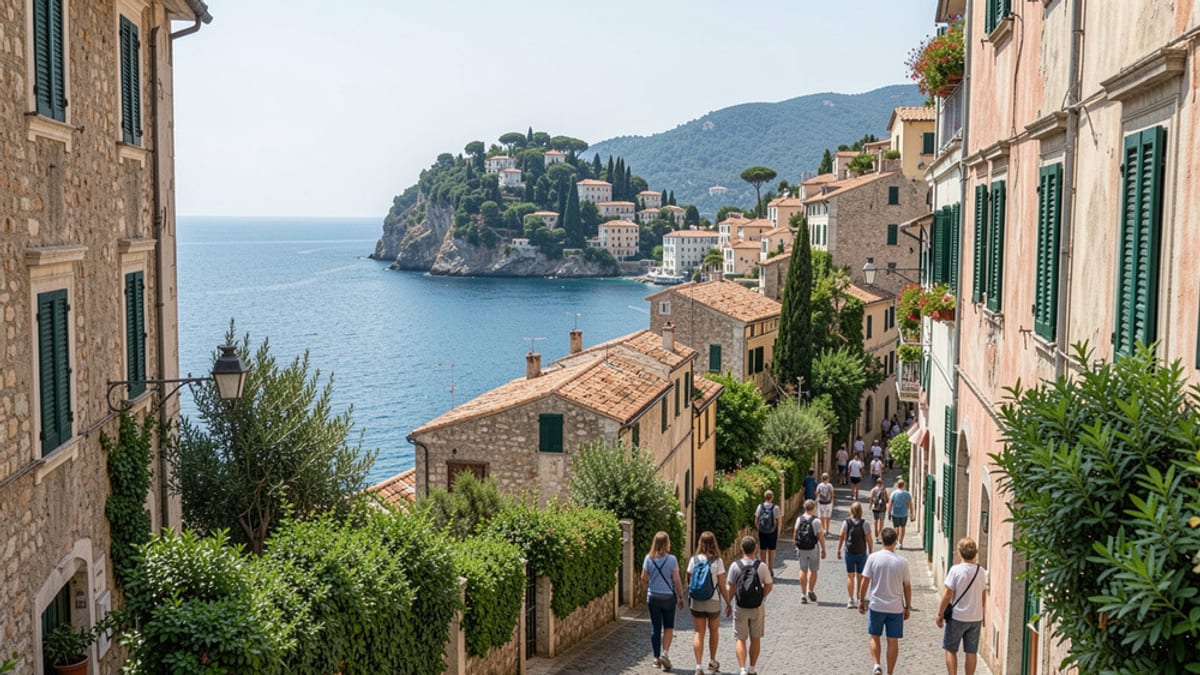
Image by Latest International / Global Travel News, Breaking World Travel News
A Mediterranean Icon at a Breaking Point
Long celebrated for its limestone cliffs, designer boutiques and celebrity cachet, Capri has also become a textbook example of overtourism in the Mediterranean. Travel industry reporting indicates that on peak summer days the island can receive tens of thousands of visitors, many of them day-trippers arriving in tightly packed time windows from Naples and Sorrento, far outnumbering the roughly 15,000 residents of Capri and Anacapri.
Observers note that crowding has intensified in a handful of pressure points, including the funicular corridor between Marina Grande and the Piazzetta, the pedestrian lanes around Via Camerelle, and the viewpoints near the Faraglioni and the Gardens of Augustus. These bottlenecks have been linked to noise, congestion and strain on water and waste systems, and have raised concerns that the island’s high-end hospitality model is being undermined by sheer volume.
Capri has not been alone in confronting these pressures. Other Italian destinations such as Venice have moved to charge day-tripper entry fees and tighten controls on short-term rentals, and national transport regulations already limit vehicle access to several small islands. Capri’s new 2026 package builds on this context but goes further by concentrating on the way people move, gather and consume resources once they are ashore.
Publicly available information shows that the island had already experimented with more targeted measures in recent years, from higher landing taxes during the busiest months to seasonal bans on bringing vehicles from the mainland. The 2026 reforms are presented as the next step, shifting from temporary fixes to a more comprehensive management model.
Tour Group Caps, Quiet Guiding and the End of Umbrella Parades
The most visible pillar of Capri’s overhaul is a new framework for organized tours. Coverage from travel industry outlets describes a binding cap on group size from summer 2026, generally limiting organized parties moving through town centers and popular sites to a maximum of 40 people, with lower thresholds in the most congested alleys and viewpoints.
In parallel, Capri is tightening rules on how guiding is conducted. Reports indicate that amplified loudspeakers are being heavily restricted or prohibited for larger groups, particularly around the Piazzetta, Marina Grande and primary scenic overlooks, in an effort to curb the soundscape that has become a hallmark of mass tourism across Europe’s hotspots.
There is also a targeted ban on the flags, umbrellas and other highly visible markers that guides often hold aloft to corral large parties. Travel and consumer media note that these props, long a symbol of industrial-scale tourism, are being phased out on Capri both to reduce visual clutter in narrow streets and to encourage smaller, more nimble groups that integrate better with resident life.
Tour operators face new compliance obligations as a result. Advisories circulating in the trade press recommend that agencies confirm in advance how itineraries will respect group-size limits, noise rules and circulation patterns, particularly for combined Amalfi Coast and Capri day trips that previously relied on high-volume, fast-paced circuits of the island.
Managing Arrivals, Landings and Day-Tripper Flows
Alongside measures on the streets, Capri is sharpening its control of who arrives and when. Italian and local media have reported in recent years on higher disembarkation taxes for visitors during the core season and on experiments with restricting vehicle landings from non-residents during busy months, supported by national transport regulations for small islands.
By 2026, these instruments are being folded into a broader approach to visitor flows. Port management guidance published ahead of the season points to tighter coordination of ferry schedules, with the goal of smoothing out the morning peaks that previously saw boatloads of day-trippers converge at Marina Grande within short timeframes, overwhelming funicular queues, bus stops and taxi ranks.
Local planning documents and tourism analyses describe a gradual move toward capacity-based management at the port. Digital systems are being used to monitor landings in real time and link them to the collection of the landing fee, which has been framed as a contribution to the maintenance of public services and environmental protection on the island.
These shifts do not constitute a ban on day visits, but they are likely to change visitor behavior. Travel advisories already suggest that prospective visitors for 2026 should pay closer attention to sailing times, pre-booking requirements and potential daily caps on certain types of organized excursions, especially during the July and August high season.
Heritage, Public Space and the Everyday Life of Residents
Beyond crowd counts and ticket systems, Capri’s new policy mix is explicitly framed around preserving the character of the island’s historic centers and public spaces. Commentaries in Italian and international press emphasize that narrow alleys, stepped lanes and small piazzas, which evolved around local life, are being transformed when they must routinely accommodate industrial-scale tourism.
The 2026 regulations are designed to limit the occupation of key squares and viewpoints by large formations of visitors, commercial signage and guiding equipment. Restrictions on umbrellas and flags, as well as on amplified commentary, are presented as tools to restore visual harmony and reduce the sense that public spaces function primarily as corridors for transient groups.
Analyses of Capri’s evolving strategy also highlight social sustainability. Reports on housing pressures and seasonal employment patterns describe how high visitor volumes, combined with limited land, have pushed up rents and squeezed local residents in ways familiar from other resort islands. By focusing on quality rather than raw numbers, municipal policy makers are seeking to stabilize year-round life as much as to refine the tourist offer.
At the same time, there is an effort to reinforce Capri’s positioning as a destination for slower, higher-value stays rather than quick, one-size-fits-all excursions. Travel writers note a renewed emphasis on encouraging overnight visits, shoulder-season stays and more dispersed itineraries that include Anacapri and less-trafficked walking paths, easing pressure on the most iconic corners of the island.
What Capri’s 2026 Reset Means for Future Visitors
For travelers planning Capri in 2026 and beyond, the immediate impact of the overhaul is likely to be felt in how trips are organized rather than in the availability of the island itself. Travel guides updated for the new rules recommend that visitors expect more structured port procedures, quieter streets, and smaller groups, along with a stronger push toward car-free mobility and the use of public transport, taxis and walking once ashore.
Day-trippers booking through agencies can anticipate stricter group management, potentially higher per-person costs for guided services and a stronger focus on compliance with time slots and circulation limits. Independent visitors may find that pre-booking ferries and key experiences becomes more important during peak dates, even as the on-the-ground atmosphere becomes calmer and easier to navigate.
Industry observers suggest that Capri’s model will be closely watched by other Mediterranean destinations confronting similar pressures, from cruise-port cities to smaller islands struggling with the balance between economic dependence on tourism and the erosion of local life. The island’s combination of group-size caps, behavioral rules, landing management and fiscal tools is seen as an emerging template for high-demand, low-capacity sites.
As the 2026 season approaches, publicly available information indicates that Capri’s leaders intend to continue refining the system, including potential adjustments to boat-traffic windows, crowd management at key nodes and the use of data to anticipate surges. The result is a living experiment in how a globally recognized destination can attempt to preserve its allure while drawing clearer boundaries around what its landscapes, infrastructure and communities can sustainably support.