

More news on this day
Capri is entering the 2026 summer season with a tougher rulebook for visitors, combining higher tourist charges with an expanding web of behavioral fines that signal a decisive shift in how the island manages mass tourism.
Get the latest news straight to your inbox!
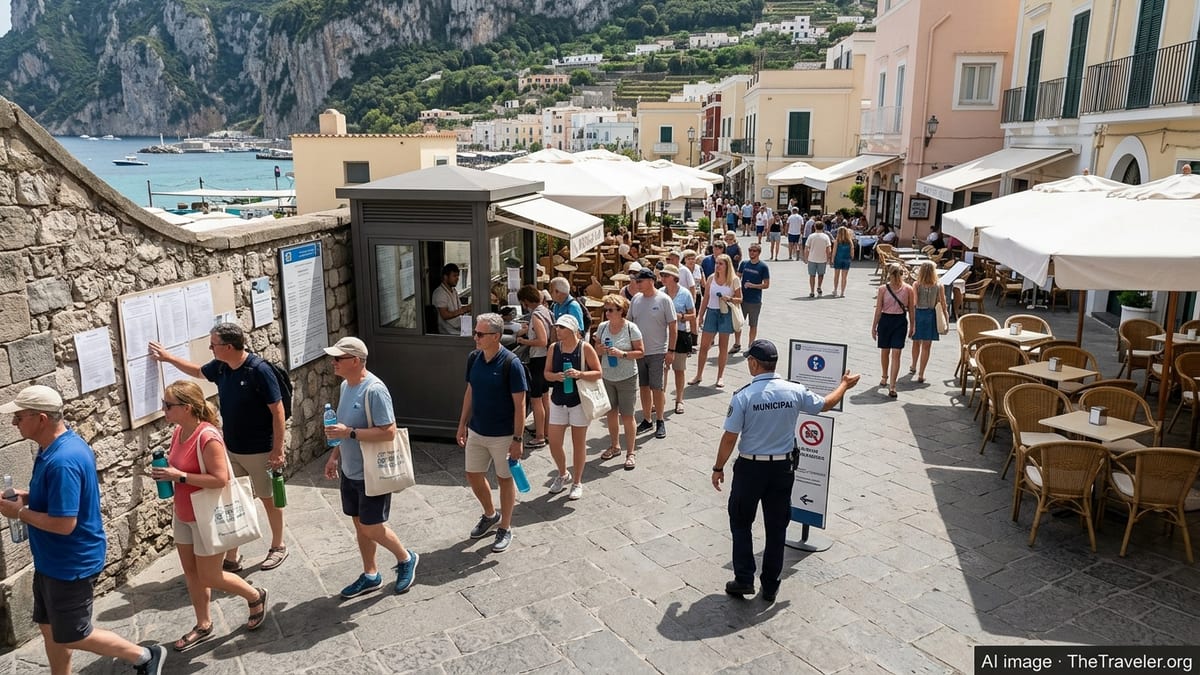
From Day-Tripper Hotspot to Controlled Access Destination
Capri has long been synonymous with carefree Mediterranean holidays, but recent seasons brought visitor numbers that local reports describe as overwhelming. In peak summer 2024, daily arrivals were estimated at more than 30,000 people on some days, against a resident population of around 15,000 across Capri and Anacapri. Published coverage notes a roughly 25 percent growth in tourism over the past decade without matching upgrades in transport and basic services, sharpening concerns about crowding in the island’s narrow lanes and at Marina Grande.
Against this backdrop, 2026 is shaping up as a consolidation year for rules that Capri began rolling out in 2024 and 2025. The island is not introducing a Venice-style turnstile fee to walk into town, but it is relying more heavily on existing Italian tourist taxes linked to overnight stays and on targeted landing and port charges baked into ferry and excursion prices. Industry advisories for 2025 and 2026 highlight incremental increases on accommodation levies across Italy, which Capri’s hospitality sector is expected to mirror as local authorities seek more funds for cleaning, waste collection and crowd management.
Travel briefings on Italy’s tax framework indicate that regional and municipal tourist levies can be adjusted annually, up to nationally defined ceilings. While Capri has not announced a headline-grabbing new entry toll, tour operators are warning clients to anticipate slightly higher nightly charges on the island from January 2026, paired with stricter enforcement of existing city tax payments in cash at check-in.
The shift aligns Capri with a broader Italian trend in which destinations lean on fiscal tools to cope with overtourism, while stopping short of hard visitor caps. In practice, visitors may feel the change less as a single new bill and more as a pattern of surcharges on rooms, transfers and day trips.
Behavioral Fines: From Street Hawking to Group Control
Alongside higher tourist-related charges, Capri is sharpening its focus on visitor and commercial behavior in crowded public spaces. In June 2025, the municipality introduced an ordinance targeting restaurant and bar staff who aggressively solicit passersby in central streets and near the port. According to Italian media coverage of the measure, venues whose staff stop tourists on the street or obstruct pedestrian traffic can face fines approaching 700 euros, with repeat violations risking short suspensions of activity.
Local reports frame the ordinance as a response to what officials describe as an invasive commercial presence in some of the island’s most congested lanes. The aim is to keep pedestrian flows moving and reduce the sense of being pressured or harassed while choosing where to eat or book excursions. For visitors in 2026, this means fewer “bouncers” at restaurant doors and a quieter atmosphere on Capri’s main promenades, though it also raises the stakes for businesses competing for limited high-season footfall.
New controls are also arriving for organized tour groups. A February 2026 update from European travel media details a package of summer rules that cap the size of tour groups on Capri and prohibit the use of raised umbrellas and similar markers by guides in the historic center. The changes are designed to prevent large clusters of people from blocking narrow viewpoints, stairways and piazzas, and to reduce visual clutter that residents say erodes the island’s character.
For travelers, the practical impact will be most visible on guided excursions. Groups are expected to be smaller, itineraries more staggered and the traditional forest of guide umbrellas replaced by less obtrusive identification methods. Independent visitors may find it marginally easier to navigate Capri’s lanes during peak hours, even as overall demand remains strong.
Environmental Rules and Plastic Bans Reinforce the Message
The financial and behavioral measures introduced for 2026 sit alongside a broader environmental push that Capri has been building in recent years. Coverage from early 2026 highlights strict enforcement of island-wide bans on many single-use plastics, including disposable bottles, with fines for non-compliant visitors reported in the hundreds of euros. These rules are part of a multi-year “green” strategy backed by European funding and aimed at cutting waste volumes that surge each summer with the arrival of day-trippers and cruise passengers.
Public information about the program indicates that authorities are using environmental regulations to influence the way tourists move and shop, nudging them toward refillable containers, tap or fountain water where available, and lower-waste purchases. Businesses have been encouraged or required to replace plastic items with biodegradable or reusable alternatives, adjusting supply chains ahead of the 2026 peak season.
For visitors, the result is a more regulated experience that demands a degree of preparation. Travelers are now advised by tour operators and travel media to check local plastic rules before arrival, bring compliant reusable bottles and avoid assuming that familiar single-use items will be permitted. Failure to do so can lead not just to inconvenience, but to significant on-the-spot penalties.
Combined with higher tourist taxes, these fines underline Capri’s intent to shift some of the environmental cost of tourism directly onto visitor behavior. The island joins a small but growing list of Mediterranean destinations that treat waste reduction and crowd management as two sides of the same policy challenge.
What the New Rules Mean for the 2026 Visitor
For travelers planning Capri in 2026, the new landscape translates into a more structured and somewhat more expensive stay, though not necessarily a less enjoyable one. Publicly available guidance suggests that overnight visitors should budget extra for increased city taxes on accommodation and potentially higher transport surcharges, particularly in high season. Day-trippers may see ticket prices for ferries and organized excursions adjusted to reflect local landing and port fees.
Behaviorally, visitors will notice stricter expectations around how they move through the island. Large organized groups will be less visible, and the absence of street touts outside many venues may make Capri feel calmer than in previous years, even if crowd levels remain intense at marquee spots such as the Piazzetta or the Blue Grotto access points. At the same time, the risk of fines for ignoring environmental rules or contributing to congestion is higher, making it important to pay attention to posted signage and tour briefings.
Travel analysts point out that Capri’s approach mirrors a broader European experiment with “soft caps” on tourism, where prices and codes of conduct are used to influence demand rather than imposing strict visitor quotas. Early reactions in Italian and international media suggest that some residents welcome the changes as overdue, while parts of the hospitality sector worry about potential friction at the point of sale and a perception of Capri as less welcoming.
For now, there is little sign that visitor appetite is waning, particularly among luxury travelers who form a core part of Capri’s market and are less sensitive to incremental taxes and fines. The real test in 2026 will be whether the new rules meaningfully ease pressure on infrastructure and public spaces, or whether the island will eventually need to consider more radical tools, such as daily caps on arrivals, to maintain the delicate balance between global fame and local livability.