

More news on this day
Long before low fares and flash sales became routine in Indian aviation, Captain G R Gopinath set out to prove that flying could be as accessible to small-town shopkeepers and schoolteachers as to corporate executives, challenging decades of perception that air travel was only for the elite.
Get the latest news straight to your inbox!
From village roots and army khaki to the cockpit
Gorur Ramaswamy Iyengar Gopinath was born in 1951 in the village of Gorur in Karnataka, a background far removed from the glass-and-steel world of modern airports. Publicly available biographical information describes a childhood shaped by modest means and government schooling, a contrast that would later inform his insistence that aviation should not remain a preserve of the wealthy.
After graduating from the National Defence Academy, he was commissioned into the Indian Army at the height of the 1971 Bangladesh Liberation War. Accounts of his early career recount postings to remote frontiers such as Sikkim, where he served as a young officer before rising to the rank of captain. His years in uniform exposed him to the logistical challenges of terrain and distance, and to the symbolic power of aircraft in shrinking both.
Gopinath chose early retirement from the army in his late twenties, opting for an entrepreneurial path that initially had little to do with aviation. He experimented with an ecologically focused sericulture farm in Karnataka that later drew international recognition, and he dabbled in ventures ranging from motorcycle dealerships to hospitality. These early businesses did not make him a household name, but reports indicate that they sharpened his appetite for risk and his belief that markets in India’s hinterland were underestimated.
It was in the mid-1990s that he returned to the skies, co-founding Deccan Aviation as a charter helicopter service. Working closely with former Air Force colleagues, he began operating charters for corporate clients, emergency services and remote-area connectivity. This niche operation gave him a close-up view of unmet demand for quick, affordable travel across India’s vast geography, setting the stage for a more disruptive idea.
Air Deccan and the one-rupee ticket revolution
In 2003, Deccan Aviation launched Air Deccan, widely described in industry and academic studies as India’s first low-cost carrier. Inspired by budget airlines such as Southwest in the United States and Ryanair in Europe, Gopinath sought to transplant the model to a market where flying was still perceived as aspirational. Air Deccan stripped away frills, focused on single-class cabins and tight aircraft utilisation, and promised fares that could undercut air-conditioned rail tickets on many routes.
Air Deccan’s marketing quickly became part of Indian aviation folklore. The airline publicised limited promotional fares as low as one rupee before taxes, a symbolic gesture designed less for revenue than for headlines and word-of-mouth. Coverage in business media at the time highlighted images of first-time fliers garlanding aircraft and posing on tarmacs, visible proof that the customer base for air travel was expanding beyond metropolitan elites.
The network strategy was as radical as the pricing. Instead of focusing only on trunk routes between major metros, Air Deccan connected Tier 2 and Tier 3 cities such as Hubballi, Tuticorin and Vijayawada, often operating into underused or previously neglected airports. Aviation analysts have noted that by 2006 the carrier had become one of India’s largest by market share, even as it struggled operationally with rapid expansion, infrastructure bottlenecks and rising fuel costs.
Operational missteps, intense competition from new entrants and financial pressures eventually caught up with the airline. In 2007, Air Deccan agreed to a strategic alliance that led to its merger with Vijay Mallya’s Kingfisher Airlines, and the brand was later reconfigured and rebranded before disappearing from the domestic skies. Yet policy papers and case studies continue to describe Air Deccan as the catalyst that forced established players and new rivals alike to re-think pricing and network access.
Democratizing the skies and reshaping a market
Industry commentators often argue that the true legacy of Air Deccan lies less in its balance sheet and more in the competitive landscape it helped to create. As low fares and no-frills travel gained traction, other carriers such as SpiceJet, IndiGo and Go First embraced elements of the model, leading to what some observers call a transition from “rare privilege” flying to “mass” flying in India.
According to academic research on the sector, the entry of a genuine low-cost operator accelerated a broader shift in consumer behaviour. Middle-class families that once saved for a rare train journey began comparing airline fares online; migrant workers and small-business owners priced overnight flights against days lost on the road; pilgrimage travel, weekend visits and domestic tourism increasingly moved to the air. In this environment, “airline sale” became a regular fixture in the media, and the language of aviation marketing shifted decisively toward affordability.
Gopinath’s mantra of making the “common man fly” also intersected with evolving public policy. Years after Air Deccan’s heyday, regional connectivity schemes sought to revive underutilized airports and subsidize routes to smaller towns, echoing the airline’s original map of underserved destinations. Deccan-branded entities later won bids on several of these routes, indicating that his interest in connecting small-town India by air remained intact even after the original low-cost venture vanished.
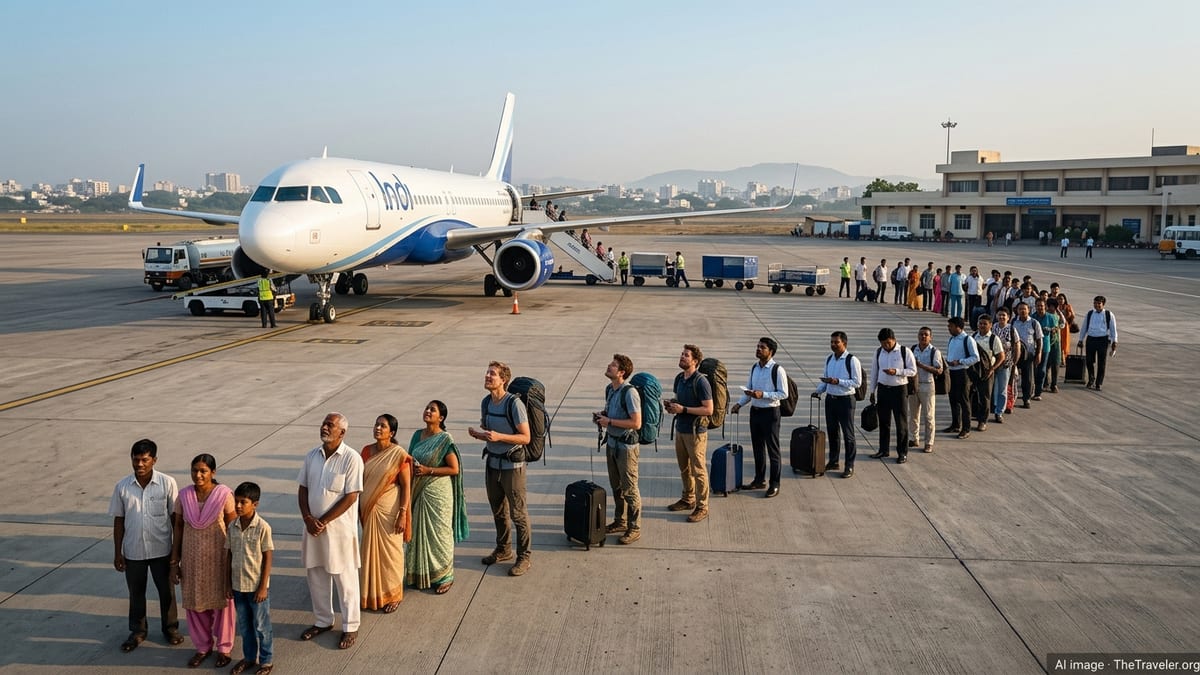
At a symbolic level, the first wave of low-cost flying helped transform the experience of Indian airports. Terminal scenes of backpackers, students and first-time passengers became as common as those of business executives in suits. This visual democratization fed back into popular culture, news photography and cinema, reinforcing the idea that air travel had become part of everyday aspiration rather than distant fantasy.
Setbacks, reinventions and the Deccan brand
The Air Deccan story did not mark the end of Gopinath’s aviation ambitions. Following the merger and eventual dissolution of the low-cost carrier brand, he turned to cargo aviation with Deccan 360, an express logistics venture designed to build an integrated air and ground network. Despite early optimism and high-profile partnerships, publicly available information indicates that the business faced funding and regulatory challenges and eventually shut down.
Parallel to these ventures, the original charter business survived under the Deccan Charters name, operating helicopters and small fixed-wing aircraft. Media coverage over the past decade has periodically highlighted attempts by Gopinath and his partners to revive the Deccan brand in regional passenger aviation, often aligned with government initiatives to boost connectivity to smaller cities and remote regions.
These subsequent chapters have not matched the headline-grabbing impact of Air Deccan’s launch, but they underscore a pattern of experimentation. Instead of exiting aviation entirely after setbacks, Gopinath has repeatedly returned to niches such as regional connectivity, medical evacuation and non-scheduled operations, positioning himself at points where commercial opportunity intersects with infrastructure gaps.
Beyond aviation, he has also been visible in public life as an author, commentator and occasional political candidate, using columns, books and media appearances to argue for entrepreneurship, regulatory reform and inclusive growth. His memoir of the Air Deccan years and the broader entrepreneurial journey has circulated widely among business readers, further cementing his persona as a risk-taker willing to narrate both successes and failures.
From boardrooms to the big screen and beyond
The cultural afterlife of Air Deccan has extended well beyond aviation circles. Gopinath’s story inspired the acclaimed Tamil film “Soorarai Pottru,” released in 2020, in which the protagonist launches a low-cost airline against entrenched interests. A forthcoming Hindi adaptation titled “Sarfira,” fronted by a major Bollywood star, again draws on his published life story and writings, underlining the resonance of the narrative with a mass audience.
These cinematic portrayals have introduced his journey to millions who may never have flown Air Deccan but who recognize the broader theme of challenging hierarchies and disrupting closed markets. For many viewers, the image of passengers from small towns boarding their first flights carries as much emotional weight as balance-sheet figures or market-share charts.
In aviation policy discussions, meanwhile, his name continues to surface in debates on pricing freedom, regional airport development and the financial fragility of Indian carriers. Analysts point out that the wave of consolidation, bankruptcies and restructurings that followed the first low-cost boom has not erased the structural change that began when a retired army captain decided that even a carpenter could afford a seat on a plane.
Two decades after Air Deccan first advertised a one-rupee ticket, Indian skies are busier, fares remain fiercely contested and low-cost carriers dominate domestic market share. Yet the idea that sparked that transformation can be traced back to Gopinath’s conviction that a vast, aspiring population would choose speed and connectivity if only the price of entry fell within reach. The enduring presence of that conviction, in policy, business strategy and popular culture, is perhaps the clearest measure of how far his project to democratize Indian skies has flown.