

More news on this day
Cruise operators and tourism analysts are pointing to 2026 as a breakout year for tropical itineraries, with fresh deployment plans, larger ships and strong early bookings signaling potential record traffic to Mexico, the Bahamas and Hawaii.
Get the latest news straight to your inbox!
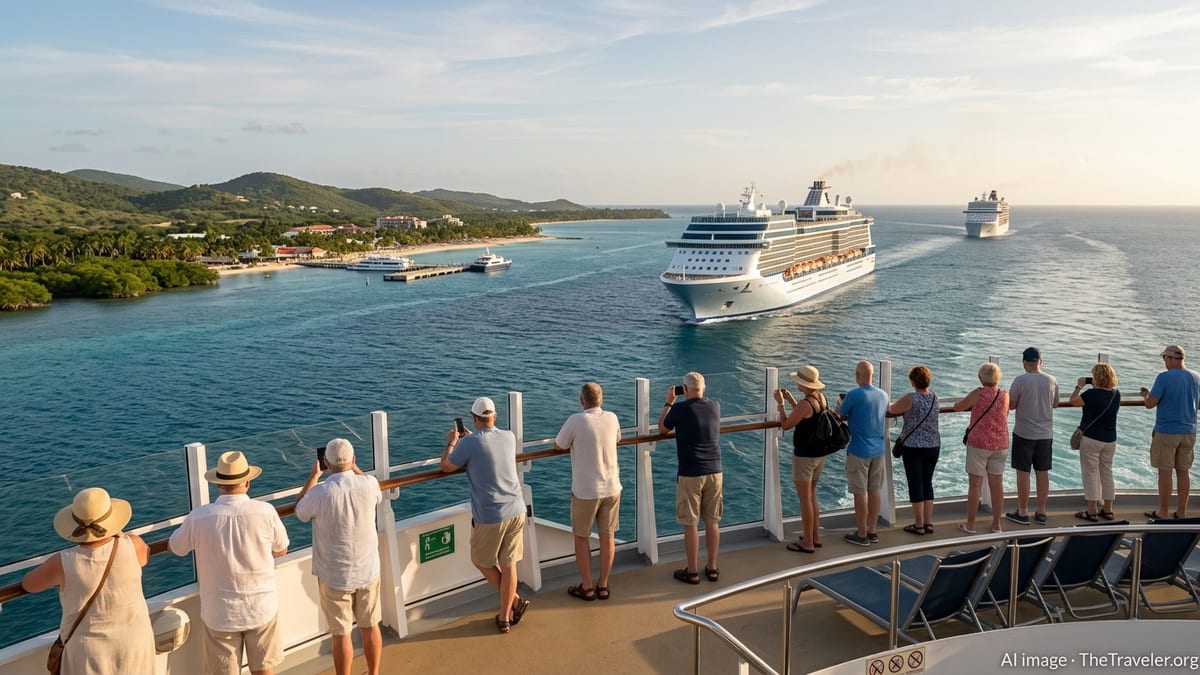
Record Passenger Projections Reshape the Caribbean Map
Industry forecasts for 2026 build on the sharp rebound in global cruising seen through 2024 and 2025, when the Cruise Lines International Association projected worldwide passenger totals approaching 38 million travelers by the end of 2025. Publicly available port and booking data indicate that the Caribbean remains the single most in-demand region, with Mexico’s marquee ports, Bahamian islands and Hawaii’s inter-island routes set to benefit from increased ship deployments and longer seasons.
Mexico is emerging as a clear winner in this shift. Mid‑2025 figures compiled by cruise industry outlets showed 5.6 million cruise passengers calling at Mexican ports in just the first half of that year, a double‑digit percentage increase over comparable pre‑pandemic periods. With more large‑capacity ships scheduled to homeport in Florida, Texas and California through 2026, operators are positioning Mexico’s Caribbean and Pacific coasts as the backbone of Western Caribbean and Mexican Riviera itineraries.
The Bahamas is also primed for a banner year. Major cruise brands continue to route high‑capacity vessels through Nassau and nearby private island destinations, using short three to five night getaways from Florida to keep ships sailing at or near full occupancy. Event cruises already scheduled into early 2026, such as theme sailings targeting younger travelers, illustrate how operators are using the Bahamas as both a stand‑alone vacation draw and a gateway to longer Caribbean voyages.
In the Pacific, Hawaii is preparing for a complex but potentially robust 2026 season. Cruise lines are signaling interest in maintaining or restoring capacity following several years of regulatory debate and environmental scrutiny. Longer repositioning voyages from the West Coast that combine Hawaii with Mexico or the broader Pacific are increasingly prominent in 2025‑2026 brochures, suggesting that demand for multi‑week, once‑in‑a‑lifetime itineraries is strengthening among experienced cruisers.
Mexico’s Coasts Lead a Wave of New Hardware
New ship deployments are central to the expected 2026 boom, and many of those vessels are headed straight for Mexican waters. Cozumel, one of the world’s busiest cruise ports, is preparing for what local tourism operators describe as a transformative season, with cruise news outlets reporting that multiple next‑generation megaships carrying between 5,000 and 7,000 passengers are due to make regular calls on the island in 2026. These larger vessels bring not only higher passenger volume, but also more varied onboard spending patterns and shore excursion demand.
Cruise deployment documents and destination brochures for 2025‑2026 show an intensified focus on Western Caribbean loops that link Florida or Gulf Coast homeports with Cozumel, Costa Maya and Roatán, often supplemented by calls at private islands in Belize or the Bahamas. In the Pacific, Mexican Riviera runs to Cabo San Lucas, Mazatlán and Puerto Vallarta are set to be bolstered by ships repositioning from Alaska and Asia, turning what were once shoulder‑season sailings into high‑profile holiday products.
New and upgraded shore infrastructure is following the fleet. Operators in Cozumel have publicized plans for expanded terminals and enhanced resort‑style experiences, including private‑access beaches and upgraded dining aimed at higher‑spending guests. On the Pacific side, ports such as Ensenada and Cabo San Lucas are pursuing phased improvements to handle larger ships more efficiently, with investments in tendering operations, security and passenger flow designed to reduce congestion on peak days.
For travelers, these changes translate into a wider range of itinerary lengths and price points. Shorter four‑ and five‑night Mexico sailings remain price‑competitive entry points for new cruisers, while longer 10‑ to 14‑night voyages that combine Mexican ports with Central America and the ABC islands cater to repeat guests seeking new landscapes without sacrificing the convenience of North American departure ports.
Bahamas and Private Islands Anchor Short‑Haul Getaways
The Bahamas, long a staple of the short‑cruise market, is positioned as a primary beneficiary of the 2026 expansion in three‑ and four‑night sailings. Booking engines and promotional materials for 2025‑2026 show dense deployment of large ships on loops from Miami, Port Canaveral and other Florida ports to Nassau, Freeport and a growing roster of private island destinations. These itineraries are proving attractive to travelers looking for quick tropical escapes that require minimal time off work.
Private islands in particular are reshaping expectations for what a short cruise can deliver. Cruise companies are heavily marketing beach clubs and activity‑focused retreats in the Bahamas as all‑inclusive style experiences at sea, with water parks, cabana zones and curated dining designed to keep spending within the brand’s ecosystem. Analysts note that these developments help lines manage crowding, environmental impact and security more directly than in some traditional ports of call.
At the same time, Nassau is undergoing its own evolution, with ongoing waterfront enhancements and a diversified excursion portfolio that includes cultural tours, culinary experiences and marine conservation‑oriented outings. These offerings are aimed at encouraging passengers to come ashore and distribute their spending more evenly across the local economy rather than concentrating solely within port‑adjacent shopping districts.
Combined, these trends point to the Bahamas retaining its role as the entry gateway to Caribbean cruising in 2026, especially for first‑time cruisers and younger travelers who may later trade up to longer Western or Southern Caribbean voyages that include Mexico and beyond.
Hawaii Balances Strong Demand With Policy Uncertainty
Hawaii’s cruise outlook for 2026 is shaped by both strong traveler interest and a fluid regulatory backdrop. In 2025, state lawmakers approved climate‑related tourism legislation that, among other measures, extended an 11 percent levy to portions of cruise fares tied to days in Hawaiian ports. Cruise lines argued that the measure would raise prices significantly for guests and potentially alter deployment plans on certain itineraries.
The policy picture shifted again around the turn of 2026, when a federal appeals court ruling temporarily blocked enforcement of the cruise‑focused portion of the climate tax. Legal commentary suggests that additional court proceedings are likely, leaving cruise planners to navigate a period of uncertainty as they finalize Hawaii itineraries for late 2026 and 2027. Industry observers note that while Hawaii remains a marquee destination that commands premium pricing, prolonged ambiguity over costs could influence how many ships are assigned to the region and how long they stay in port.
Despite the legal wrangling, new season announcements from major brands continue to highlight Hawaii in 2025‑2026, often as part of extended repositioning voyages from North America or Asia. Some lines are promoting hybrid itineraries that link Hawaii with the Mexican Riviera or the Panama Canal, giving travelers multiple warm‑weather regions in a single trip and allowing operators to spread operational costs over a longer, higher‑revenue sailing.
For visitors, the evolving tax environment is likely to translate into modest price adjustments and a closer look at what is included in cruise fares versus shore‑based spending. Travel advisors are encouraging prospective guests to monitor booking terms, fuel supplements and tax line items closely, particularly on itineraries that spend several days in Hawaii’s ports.
Travelers Face a Competitive but Risk‑Aware Booking Landscape
With more capacity deployed into warm‑weather markets, competition for cruise passengers in 2026 is expected to be intense. Travel forums and agency reports indicate that booking windows have stretched further in advance, with many travelers locking in 2026 sailings during late‑2025 promotional periods. Cruise lines are using bundled Wi‑Fi, beverage packages and onboard credit offers to fill cabins on new ships without significantly discounting base fares.
Analysts caution that travelers should factor climate and weather risk into their planning, particularly for peak hurricane months in the Caribbean and Atlantic. While ships can adjust routes around storms, the growing complexity of itineraries that connect Mexico, the Bahamas and other islands means that schedule disruptions may have wider ripple effects. Flexible airfare options, comprehensive travel insurance and a willingness to accept port substitutions are increasingly being framed as prudent, rather than optional, parts of cruise planning.
Environmental concerns are also likely to remain a central theme as 2026 approaches. Hawaii’s contested climate levy is one high‑profile example, but ports throughout the Caribbean and Mexico are gradually tightening rules around emissions, waste handling and visitor volume. Cruise companies are responding with investments in cleaner fuels, shore‑power connections and improved waste treatment systems, measures that may increase operating costs in the short term but are widely seen as essential to maintaining long‑term access to sensitive coastal destinations.
For travelers eyeing a 2026 escape, the net effect is a market rich in choices across Mexico, the Bahamas and Hawaii, but one that rewards early research and careful reading of the fine print. Those willing to plan ahead are likely to find a combination of new ships, reimagined ports and competitively priced itineraries that could make 2026 one of the most memorable years yet for tropical cruising.