

More news on this day
Caribbean cruise operators are confronting renewed scrutiny over onboard illness outbreaks at the same time that a wave of new, larger ships and expanded deployments is intensifying visitor numbers across the region’s most popular ports.
Get the latest news straight to your inbox!
Illness Incidents Keep Cruise Health Risks in Focus
Recent gastrointestinal illness outbreaks have kept attention on the health vulnerabilities of cruise travel, including itineraries touching the Caribbean. Publicly available data from the U.S. Centers for Disease Control and Prevention’s Vessel Sanitation Program shows that 2024 was the worst year in more than a decade for stomach illness incidents on cruise ships, largely driven by norovirus cases as cruising rebounded to and exceeded pre-pandemic volumes.
That trend has continued into 2025 and early 2026, with multiple ships reporting norovirus outbreaks across different brands. CDC outbreak summaries list several vessels sailing Caribbean and Florida-linked routes among those affected, including Holland America Line and Royal Caribbean International ships, as well as luxury and premium lines. While not all of the recorded outbreaks occurred on Caribbean sailings, the concentration of large vessels in the region during winter seasons means the Caribbean remains closely associated with broader industry health patterns.
Individual incidents have also drawn coverage beyond industry circles. Reports in U.S. and international media during 2025 highlighted several voyages where dozens or, in some cases, more than one hundred passengers and crew experienced symptoms such as vomiting and diarrhea. Public health authorities generally describe these episodes as consistent with norovirus, a highly contagious pathogen that spreads quickly in crowded, shared environments.
Recent updates to the CDC’s publicly available outbreak list in early 2026 show that gastrointestinal events continue to be logged even as operators promote enhanced sanitation, upgraded ventilation, and revised food-handling protocols. For Caribbean-focused itineraries, where rapid turnarounds and high passenger volumes are the norm, these measures are likely to remain central to maintaining traveler confidence.
New Mega-Ships Drive Capacity Surge in the Caribbean
At the same time that illness reports are surfacing, cruise companies are investing heavily in new vessels that are reshaping the scale of Caribbean tourism. Royal Caribbean’s Icon-class ships, led by Icon of the Seas, which entered service in early 2024, are among the largest passenger vessels ever built and have been marketed around weeklong Caribbean itineraries from Florida. Industry analyses describe these ships as floating resort destinations, with water parks, multi-deck entertainment spaces and upgraded family-focused neighborhoods designed to capture higher-spending vacationers.
Additional tonnage is following quickly. Star of the Seas, the second Icon-class ship, is beginning service in 2025 with Caribbean-focused voyages, while Royal Caribbean has confirmed plans for further Icon-class vessels later in the decade. Other brands are also adding capacity that touches the region. Princess Cruises’ new Sphere-class ships Sun Princess and Star Princess are scheduled to rotate between European and Caribbean deployments, and Carnival Cruise Line’s Excel-class ship Carnival Jubilee is based in Texas with Western Caribbean routes.
Deployment data compiled by outlets such as Travel Weekly indicates that Norwegian Cruise Line Holdings intends to increase the proportion of its fleet devoted to the Caribbean in 2026 while slightly reducing its presence in Europe. Cruise specialists quoted in that coverage describe the Caribbean as a consistently strong market for U.S. families, leading brands to concentrate newer hardware there during peak seasons.
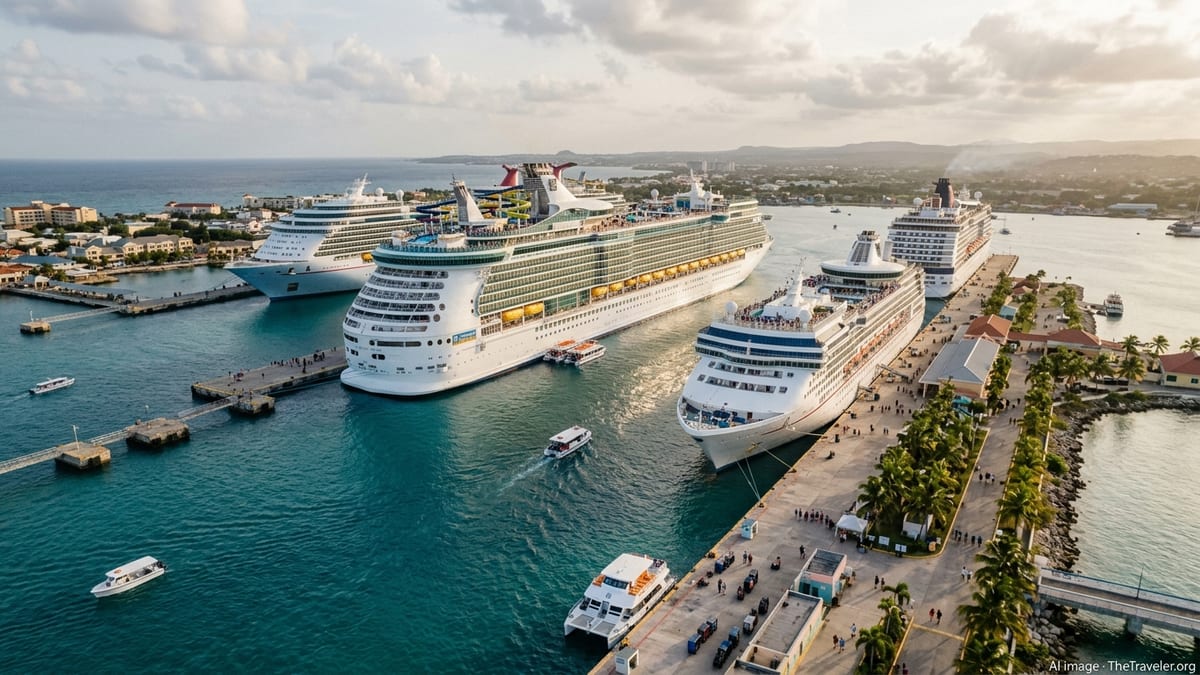
The result is a pronounced capacity surge into Caribbean ports from 2024 through 2026, led by the arrival of mega-ships that can each carry more than 5,000 passengers. For destinations with established cruise infrastructure, this promises higher visitor numbers and spending. For smaller islands and secondary ports, the sheer size of new ships poses sharper questions about how to manage daily influxes of guests alongside existing environmental and public health constraints.
Balancing Outbreak Management With Strong Passenger Demand
Despite recurring reports of gastrointestinal illness, cruise demand for Caribbean itineraries remains robust. Industry-focused publications and booking data trackers describe tight pricing and fewer discount offers on many Caribbean departures during the 2025 and 2026 booking cycles, suggesting that ships are sailing with high occupancy. Commentators point to the appeal of short three and four night getaways from Florida, alongside seven night family holidays tied to major school breaks, as key drivers of continued demand.
Operators have responded to illness concerns by emphasizing long-established public health measures such as frequent handwashing, widespread availability of sinks and dispensers near dining venues, and temporary service changes during outbreaks, including enhanced cleaning of high-touch surfaces and modified buffet service. Cruise lines also publish sanitation scores from the CDC’s Vessel Sanitation Program and highlight shipboard medical facilities as part of their marketing to reassure hesitant travelers.
From a tourism standpoint, Caribbean destinations must navigate the tension between these health risks and the economic importance of ship calls. When outbreaks occur on vessels visiting regional ports, local businesses that depend on shore excursions, dining and retail purchases face potential disruptions if itineraries are adjusted or if news coverage prompts short-term booking slowdowns. However, most reported outbreaks are limited in duration, and sailings typically continue with added precautions rather than being cancelled outright.
Travel advisors and cruise analysts note that many guests now factor health protocols into their choice of ship and line, weighing the perceived rigor of onboard measures and cleanliness scores alongside itinerary and price. That dynamic may favor newer ships, which often include redesigned food-service layouts, more spacious public areas and upgraded air-handling systems intended to reduce transmission risks.
Caribbean Ports Adjust to Bigger Ships and Concentrated Traffic
The combination of growing ship size and strong Caribbean demand is reshaping port development strategies across the region. Ports such as Miami, Port Canaveral and Galveston have invested in new or expanded cruise terminals capable of handling Icon-class and other large vessels, allowing more mega-ships to homeport close to major U.S. air gateways. Regional destinations, meanwhile, are upgrading piers and creating new private or semi-private beach experiences designed specifically for high-capacity ships.
Royal Caribbean’s planned Royal Beach Club projects near Nassau and in Cozumel, together with other private island and private-destination concepts in the Bahamas and Western Caribbean, reflect a broader push to manage thousands of guests in controlled environments. Industry observers describe these developments as a way to spread visitors across purpose-built spaces with expanded restrooms, dining cabins and medical facilities that may make it easier to implement health and hygiene protocols at scale.
For traditional city-center and heritage ports, concentrated calls from the newest ships can strain existing infrastructure. Local authorities and tourism boards are debating how best to stagger arrivals, coordinate with multiple cruise lines and manage crowding in narrow streets, beaches and popular historical sites. Some destinations are exploring visitor caps or differentiated pricing structures for port calls, while others are focusing on expanding transportation links and shore excursion offerings into less visited interior areas.
Publicly available planning documents and industry commentary also highlight growing interest in environmental and wastewater standards tied to larger ships. As the Caribbean absorbs more mega-vessels, coastal communities are examining how stricter discharge rules, improved port reception facilities and expanded use of shore power may intersect with onboard health and sanitation systems, particularly in sensitive marine ecosystems.
Health Concerns Shape the Next Phase of Cruise Growth
The intersection of renewed illness outbreaks and rapid fleet expansion suggests that health management will remain a central theme in the Caribbean cruise market over the next several years. Cruising’s recovery has brought record passenger volumes back to familiar routes, compressing many more people into ships and ports that were already among the busiest in global tourism before the pandemic.
Industry data indicates that new tonnage entering service through 2026 is heavily oriented toward warm-weather destinations, with the Caribbean absorbing a significant share of that capacity. As these vessels debut, they bring not only upgraded leisure amenities but also new public health design features, from touchless doors and handwashing stations to more flexible dining layouts that can be adjusted quickly during an outbreak.
For travelers, the changing landscape means weighing the appeal of larger, more feature-rich ships and expanded itineraries against the persistent possibility of onboard illness. For Caribbean destinations, the stakes involve both economic gains from higher arrivals and the responsibility of managing public health, environmental pressures and community impacts. How cruise operators sustain health standards at scale, and how ports adapt to concentrated traffic from the world’s largest ships, will help determine whether the current growth cycle strengthens or strains the region’s tourism model in the years ahead.