

More news on this day
Caribbean travel plans were thrown off course after a wave of operational disruptions in San Juan led to 28 delayed departures and nine cancellations in a single day, snarling links between Puerto Rico and major U.S. gateways including Dallas, Miami and Orlando.
Get the latest news straight to your inbox!
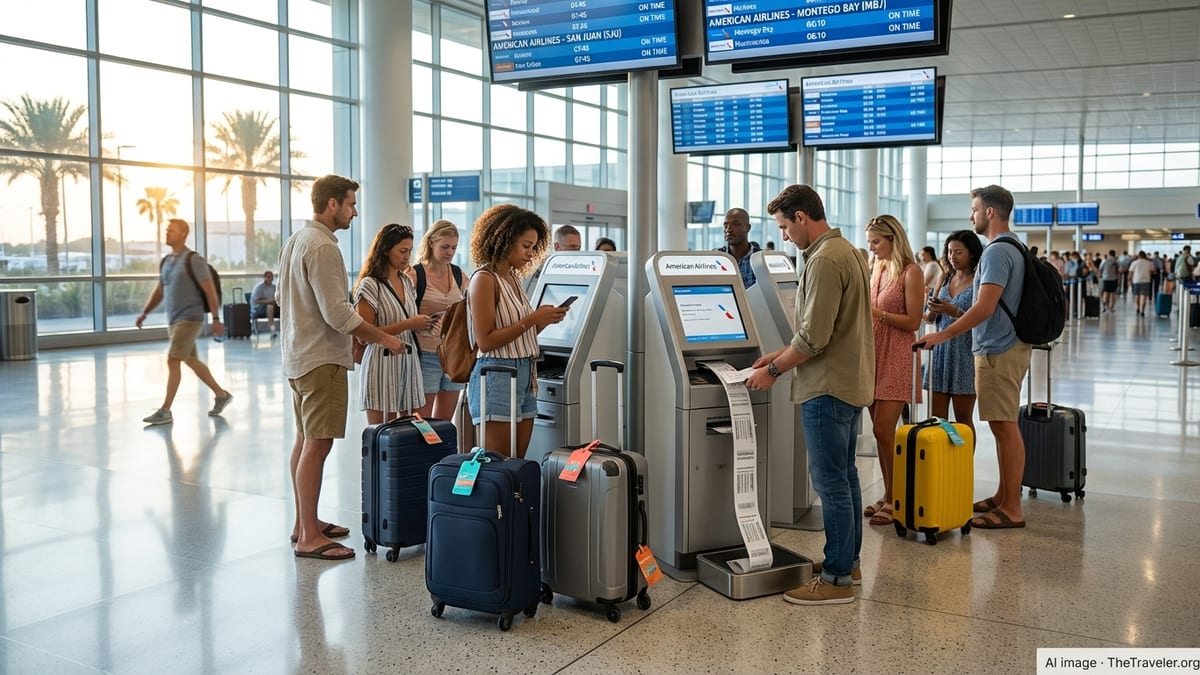
San Juan Bottleneck Sends Disruptions Across Key U.S. Gateways
Publicly available flight-tracking data for Luis Muñoz Marín International Airport in San Juan shows a concentrated spell of disruption, with American Airlines, JetBlue, Tradewind Aviation, Frontier and several smaller carriers accounting for 28 delayed flights and nine cancellations on affected schedules. The disruption period left aircraft and crews out of position on both sides of the Caribbean, complicating travel for passengers headed to and from Puerto Rico.
The impact rippled most visibly across high-demand links connecting San Juan with Dallas Fort Worth, Miami and Orlando, as well as other mainland cities that feed Caribbean itineraries. Travelers on both point-to-point routes and through itineraries toward other islands reported missed connections, overnight stays and last-minute rebookings as airlines worked to recover their schedules.
San Juan’s role as a strategic bridge between the continental United States and the wider Caribbean region meant that relatively small absolute numbers of delays and cancellations created outsized effects. Even a handful of grounded or late-departing aircraft on hub routes reduced available seats downstream, tightening capacity into peak leisure markets and heightening competition for remaining seats.
Published coverage of recent U.S. airline operations highlights how bottlenecks at a single connecting airport can disrupt entire networks when they affect primary hubs. In the case of San Juan, the combination of busy northbound evening departures and early southbound morning flights left limited flexibility to reassign equipment once irregular operations began to cascade.
Weather, Congestion And Operational Strains Combine
While no single overriding cause has been identified, operational data and media reporting around recent U.S. flight disruptions point to a familiar cocktail of factors: pockets of adverse weather, air traffic control constraints and individual carrier staffing or maintenance challenges. Flight status platforms tracking San Juan departures and arrivals showed rolling delays accumulating across multiple carriers rather than a single isolated outage, consistent with a network-level squeeze rather than a localized technical failure.
American, JetBlue and Frontier all maintain high-utilization fleets on leisure-heavy Caribbean and Florida routes, where quick turnarounds leave little room to absorb unexpected slowdowns. When one flight arrives late into San Juan from a mainland hub such as Dallas Fort Worth or Miami, the outbound sector to another destination can be pushed back, in turn affecting the next rotation. This pattern appeared repeatedly as departure times were revised and ground times lengthened.
Reports from other recent disruption events across the United States underscore how constrained air traffic corridors into Florida and the Caribbean can quickly amplify minor scheduling issues. When weather or congestion reduces runway capacity at a single hub, aircraft bound for the region may be held on the ground at their origin or rerouted, tightening already busy evening and weekend schedules popular with leisure travelers.
Industry analysts note that smaller premium operators such as Tradewind, which connects San Juan with upscale resort destinations using small aircraft, can also feel the knock-on effect. Even if their own flights operate close to schedule, delayed arrivals from large U.S. carriers reduce the number of connecting passengers able to make onward departures, prompting schedule tweaks and, in some cases, consolidation of lightly loaded flights.
Travelers Face Missed Connections And Last-Minute Changes
The combination of 28 delays and nine cancellations in San Juan translated into hours of uncertainty for passengers, many of whom were attempting to reach cruise departures, resort stays or family gatherings around the Caribbean. With Dallas, Miami and Orlando functioning as critical domestic gateways, any disruption to these links can quickly jeopardize same-day connections to secondary island airports.
Travel forums and social media posts from recent irregular operations across U.S. carriers illustrate the types of challenges passengers commonly encounter in such situations, including rolling delay notifications that shift departure times in small increments and late confirmation of cancellations. In San Juan, similar patterns left some travelers uncertain whether to remain in the terminal, seek overnight accommodation or attempt to reroute through alternate hubs such as Charlotte or New York.
Consumer advocates point out that, under current U.S. regulations, airlines are not required to provide compensation for most weather-related delays, though some carriers voluntarily offer meal vouchers or hotel discounts when disruptions are prolonged. For cancellations within an airline’s control, options usually include rebooking on the next available flight or providing a refund, but specific responses vary by carrier and by the circumstances of the disruption.
Passengers caught up in the San Juan bottleneck who held through-tickets incorporating multiple segments had particular difficulty, as missing a single leg could invalidate subsequent flights. In these cases, travelers often depended on gate agents or customer-service channels to re-protect itineraries onto alternative routings through other mainland hubs or, in some instances, entirely different airlines.
Caribbean Tourism Braces For Knock-On Effects
The short-term operational challenges in San Juan arrive at a time when Caribbean tourism is heavily reliant on consistent air access from U.S. cities. Puerto Rico itself has seen strong recovery in visitor numbers, and neighboring island destinations are similarly dependent on smooth flows through regional hubs, including San Juan, to fill hotels, villas and cruise cabins.
Tourism boards and hospitality operators have previously expressed concern that recurring disruption events can undermine traveler confidence, particularly among first-time visitors less familiar with the region’s reliance on complex air networks. When Miami, Orlando and Dallas experience simultaneous schedule pressure, options for same-day recovery routings into the Caribbean narrow, increasing the likelihood that vacations will be shortened or postponed.
Carriers serving Puerto Rico and the broader Caribbean continue to adjust schedules seasonally, adding capacity in peak months and cutting back during shoulder periods. Industry observers suggest that higher aircraft utilization and denser schedules, while commercially attractive, leave less slack in the system when unexpected storms or airspace constraints emerge. The San Juan incident illustrates how even limited numeric disruptions can translate into material commercial impacts for hotels, tour operators and cruise lines if passengers arrive late or not at all.
Some tourism analysts advocate closer coordination between airlines, airports and destination marketing bodies, arguing that better sharing of operational information could help local businesses anticipate and respond to disruption. For example, allowing hotels and tour operators to access aggregated delay data in near real time may enable more flexible check-in policies or rescheduled excursions when large numbers of guests are known to be arriving late.
What Passengers Can Do When Caribbean Flights Go Awry
Aviation consumer agencies and travel publications outline several steps passengers can take when confronted with disruptions similar to those seen at San Juan. The first is to monitor flight status frequently through airline apps and independent tracking tools, since gate displays may not always update as quickly as mobile notifications. When a pattern of rolling delays emerges, travelers may be better positioned to request alternative routings before seats on later flights disappear.
Experts also recommend reviewing the conditions of carriage and specific airline policies for delays and cancellations on routes between San Juan and mainland hubs such as Dallas, Miami and Orlando. Some major U.S. carriers maintain customer-service commitments that, while not legally binding, outline when they may provide meal vouchers, hotel assistance or waivers of change fees during irregular operations.
For travelers with time-sensitive plans, such as cruise departures or prepaid resort stays, travel insurance can offer an additional layer of protection, particularly policies that cover trip interruption and missed connections. However, coverage terms differ significantly, and passengers are encouraged to review exclusions, especially those related to weather and air traffic control issues, before relying on a policy during peak Caribbean travel seasons.
As airlines work to stabilize schedules in and out of San Juan, the recent cluster of delays and cancellations serves as a reminder of how quickly conditions can change on heavily traveled leisure routes. For passengers, combining close monitoring, flexible planning and an understanding of carrier policies remains the best defense against the kind of cascading disruptions that recently rippled from Puerto Rico to Dallas, Miami, Orlando and beyond.