

More news on this day
A powerful winter storm sweeping across the northeastern United States is rippling deep into the Caribbean, triggering 38 flight delays and 13 cancellations on routes operated by JetBlue Airways, American Airlines, Delta Air Lines and Air France, and disrupting travel to Philipsburg, Sint Maarten and several other popular island gateways.
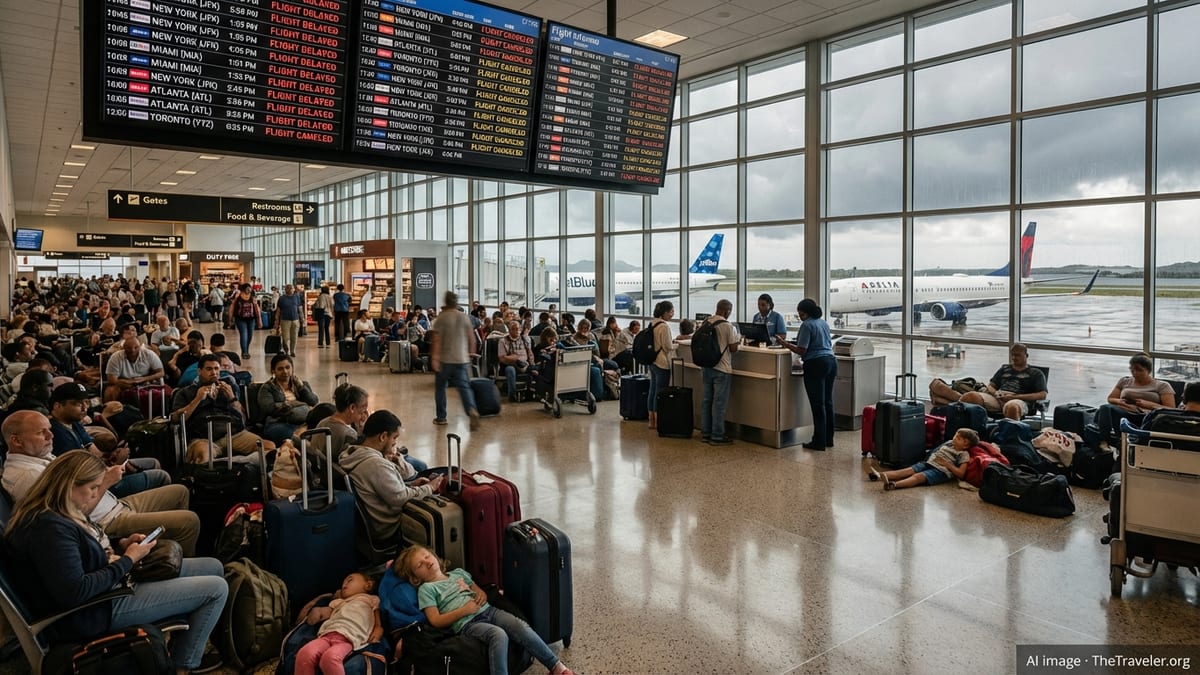
Storm in the U.S. Sends Shockwaves Through Caribbean Air Travel
The latest wave of Caribbean travel disruption stems from a fast-intensifying winter storm that has blanketed much of the U.S. Northeast in heavy snow and high winds, prompting thousands of cancellations and delays at major American hubs. Airlines with extensive Caribbean networks, including JetBlue, American, Delta and partners such as Air France, have been forced to trim schedules, divert aircraft and hold departures as conditions deteriorated.
Because most flights into Sint Maarten, Aruba and neighboring islands feed through northeastern U.S. and transatlantic gateways, the storm’s impact has quickly cascaded south. Aircraft and crews scheduled to operate Caribbean legs remain out of position in New York, Boston and Philadelphia, while additional knock-on delays are spreading through the network as carriers attempt to recover.
By Monday afternoon, operational data and local airport advisories indicated at least 13 outright cancellations and 38 delays across routes touching Philipsburg and other Caribbean destinations, with JetBlue and Delta seeing particular strain on services to and from New York. Air France, which relies heavily on codeshare and partner operations into the region, has also been affected through cancellations on joint routes operated with Delta.
Airports and aviation authorities across the Caribbean stressed that runway and weather conditions on the islands themselves remained largely favorable. Instead, they said, the turbulence in the skies was being driven almost entirely by the storm-disrupted U.S. mainland, underscoring how dependent regional connectivity is on a relatively small number of North American hubs.
Philipsburg and Princess Juliana Airport Hit by Cancellations
Princess Juliana International Airport, serving Philipsburg and the island of St. Maarten, has emerged as one of the most visible Caribbean victims of the storm-triggered disruption. The airport’s operating company issued a late-Sunday travel advisory confirming that several outbound flights to the United States were canceled as the weather system intensified over the Northeast.
Among the flights scrubbed were JetBlue services to New York, a Delta departure to New York and an American Airlines flight to Philadelphia. Airport officials said these cancellations were directly tied to weather-related constraints at the receiving airports, as well as to broader network recovery measures by the airlines. Revised departure times were published for some services, with certain aircraft held overnight on the island to await improved conditions and new slots in the United States.
While inbound traffic into Sint Maarten has so far been less severely affected, passengers arriving from Europe and other parts of the Americas have encountered missed connections and extended waits as airlines re-sequence their operations. The airport urged travelers to arrive early, verify flight status directly with carriers and prepare for the possibility of last-minute gate changes as schedules remained fluid.
Local tourism and hospitality businesses, highly dependent on reliable air access, reported a wave of same-day cancellations and delays among guests due to arrive from the northeastern United States. Hoteliers in Philipsburg and the broader Simpson Bay area said many visitors were calling from U.S. airports seeking assistance with rebooking accommodations as unplanned extra nights on the mainland cut into their island stays.
Knock-On Effects Spread to Aruba and Other Island Gateways
The storm’s reach has not been limited to St. Maarten. In Aruba, Queen Beatrix International Airport reported a concentrated cluster of cancellations affecting JetBlue, Delta and American services. Airport data compiled on Monday showed a combined total of 13 flights by these carriers withdrawn from the schedule, forcing hundreds of travelers to rebook and lengthening queues at ticket counters.
Operational setbacks in Aruba, while numerically smaller than the thousands of flights affected across the continental United States, have outsized consequences in an island context where frequency is lower and alternative carriers are limited. A single canceled rotation between Aruba and a U.S. gateway can strand passengers for 24 hours or more, particularly during the busy winter travel period when remaining seats are already heavily booked.
Other Caribbean airports, from San Juan and St. Thomas to smaller regional fields, have also reported scattered delays and equipment swaps as U.S. airlines redirect aircraft toward recovering core domestic routes. Flight-tracking services show extended ground times for a number of northbound departures to New York and Boston, while some southbound flights have left late or arrived behind schedule as crews timed out under duty regulations.
Regional aviation observers note that the current episode illustrates a chronic vulnerability in Caribbean air connectivity. With a handful of U.S. and European airlines operating the majority of long-haul links, any disruption at a major hub can rapidly fragment island access, complicating travel for both tourists and residents who depend on these flights for medical care, education and business.
JetBlue, American, Delta and Air France Grapple with Network Recovery
For JetBlue Airways, a carrier with a strong presence in the Caribbean and a heavy reliance on New York airports, the storm has created a particularly complex recovery challenge. Previous operational data on its New York to Sint Maarten route already showed a relatively high rate of delays during winter, and the latest weather event has compounded those trends. Multiple rotations involving Sint Maarten and Aruba have seen prolonged ground holds, with some aircraft and crews reassigned to absorb disruptions at busier hubs.
American Airlines and Delta Air Lines, both of which serve key Caribbean destinations from New York, Philadelphia, Atlanta and other gateways, have implemented wide-ranging measures to cope with the storm. These include preemptive cancellations, expanded rebooking options and temporary schedule simplification. By canceling select flights in advance, the carriers aim to avoid chaotic last-minute scrubs while ensuring that remaining operations run as reliably as possible given the constraints.
Air France, strongly linked to the Caribbean through its alliance with KLM and codeshare relationship with Delta, has also felt the impact indirectly. Transatlantic flights to and from the northeastern United States have seen disruptions, including at least one codeshare service canceled between New York and Europe that would typically connect onward to regional routes. Passengers bound for Caribbean islands via European hubs have therefore faced a second layer of uncertainty, even when their long-haul sectors originate outside the storm zone.
Industry analysts point out that network recovery can take several days after a major storm event, even once skies clear. Aircraft are scattered across atypical airports, crew rosters are out of balance and maintenance windows may need adjustment. For Caribbean travelers, this means residual delays and sporadic cancellations are likely to persist beyond the immediate weather emergency, especially on thinner routes where airlines operate just one daily frequency.
Passengers Stranded, Rebooking and Compensation Options Tested
For travelers already in the Caribbean, the disruption has manifested in crowded departure halls, anxious check-in lines and long waits at customer service counters. At Princess Juliana and Queen Beatrix airports, passengers reported receiving rolling updates about their flights as airlines assessed whether connections in the United States could be maintained, sometimes only to see departures canceled hours before scheduled takeoff.
Airlines have responded by activating flexible rebooking policies that allow passengers to change travel dates without penalty, subject to seat availability in the same cabin. Some carriers have extended fee waivers across a broad swath of routes touching the East Coast and Caribbean, recognizing that the storm’s effects are not limited to a single origin or destination. For those whose flights have been canceled altogether or delayed beyond several hours, refund and travel voucher options are also being made available.
However, navigating these options has not always been straightforward. With call centers overwhelmed and airport staff stretched, many passengers have turned to airline apps and online portals to manage their trips. Travel insurers report a spike in claims and inquiries from policyholders seeking clarity on coverage for hotel costs, missed tours and other out-of-pocket expenses stemming from missed or delayed flights into Caribbean resorts.
Consumer advocates are reminding passengers to document everything, from boarding passes and delay notifications to receipts for meals and lodging. In some jurisdictions, travelers on long-haul international routes may be eligible for statutory compensation when flights are significantly delayed or canceled under certain conditions, though weather-related events are often treated differently from technical or operational faults.
Local Authorities and Tourism Sector Race to Contain the Fallout
Governments and tourism boards in affected islands have moved quickly to limit the reputational damage that can arise when visitors face major travel headaches at the start or end of their trips. In Sint Maarten, officials emphasized that local infrastructure, including roads, power and the airport itself, remained fully functional despite the disruption, and that the island was ready to welcome guests as soon as flights could resume a normal rhythm.
Hotel associations urged members to adopt flexible policies for late arrivals and early checkouts, including waiving certain change fees and working closely with tour operators to reshuffle itineraries. Some resorts reported allowing stranded guests to extend their stays at discounted rates or on a night-by-night basis, recognizing that firm departure dates were difficult to predict amid shifting airline schedules.
In Aruba, tourism officials said they were coordinating with airport management and ground handlers to ensure adequate staffing as rebooked flights began to arrive in tighter waves once the U.S. storm abates. With passenger loads compressed onto fewer services, arrival and departure peaks may become more pronounced, requiring additional customs, immigration and baggage-handling resources to keep processing times reasonable.
Across the region, tour companies and cruise excursion providers have also felt the knock-on effects, with some guests missing pre-booked day trips or arriving partway through multi-island itineraries. Operators have responded by offering more flexible rebooking terms and, in some cases, credits for future travel to retain goodwill among affected customers.
What Travelers Headed to the Caribbean Should Do Now
For travelers with imminent plans to fly to Philipsburg, Aruba or other Caribbean destinations, aviation experts and tourism officials are recommending a cautious but proactive approach. The first step, they say, is to monitor flight status closely using both airline communication channels and airport information boards, since schedules may shift multiple times as carriers work through their backlog.
Passengers are being advised to build in additional buffer time for connections, especially when itineraries route through major northeastern U.S. hubs that remain under weather-related strain. Where possible, rebooking to flights earlier in the day, when operations are typically more resilient, can reduce the risk of cascading delays. Travelers who have not yet departed are also encouraged to consider travel insurance that explicitly covers weather-related disruptions, though coverage terms can vary widely.
Experts suggest that anyone holding tickets on affected airlines should download carrier apps, enable notifications and keep payment and contact details up to date. Mobile tools often provide the fastest pathway to rebooking, seat selection and digital boarding passes, especially when airport counters are swamped. For those already in the islands, staying in close touch with hotel front desks and local tour providers can help synchronize ground arrangements with changing flight times.
Despite the current turbulence, Caribbean tourism officials stress that the region remains open and eager to welcome visitors. They argue that while weather-driven disruptions are an unavoidable reality of global aviation, ongoing investment in infrastructure, improved communication systems and closer coordination between airlines and local authorities can help ensure that when storms strike far away, the islands themselves remain as accessible and enjoyable as possible once skies clear again.