

More news on this day
Brazil’s peak Carnaval travel rush has tipped the country’s busiest airports into disruption, with LATAM, Azul and GOL among the airlines scrambling to cope after 25 flights were cancelled and 166 delayed across key hubs, stranding passengers in São Paulo, Rio de Janeiro, Brasília and Campinas during one of the most important tourism weekends of the year.
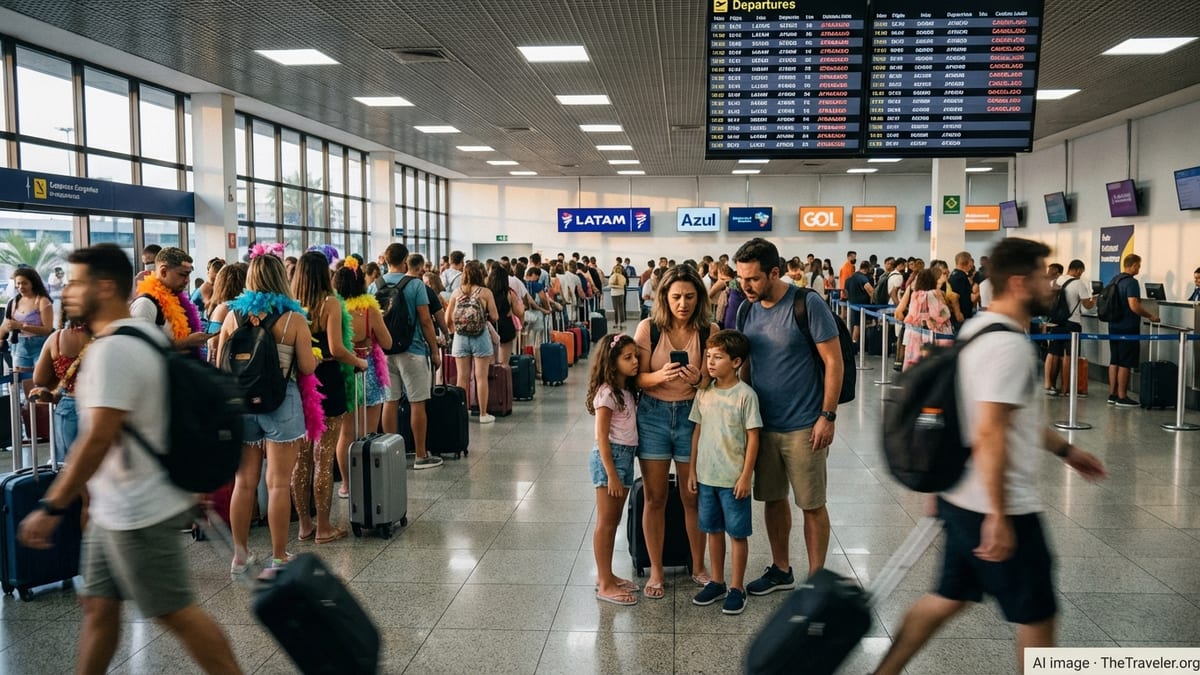
Flight Disruptions Hit Brazil at the Height of Carnaval
The latest figures from aviation trackers and local media show a turbulent picture across Brazil’s top airports as Carnaval crowds pour into and out of major cities. On multiple peak days leading into the long holiday, at least 25 flights were cancelled and 166 delayed across São Paulo, Rio de Janeiro, Brasília and Campinas, leaving terminals packed and airline operations stretched.
Operationally, the squeeze has been sharpest at São Paulo’s Congonhas and the twin Rio de Janeiro airports of Santos Dumont and Galeão, as well as at Viracopos in Campinas and Brasília’s Juscelino Kubitschek International Airport. These airports form the backbone of Brazil’s domestic air network, funnelling business and leisure traffic across the country and connecting to international services bound for North America and Europe.
For travellers, the timing could scarcely be worse. Carnaval is Brazil’s marquee festival season, with parades, street parties and beach events drawing tens of millions of people. Airlines build extra capacity into their schedules, but that buffer has been eroded by storms, staffing shortfalls and knock-on effects from earlier disruptions, leaving little room to absorb fresh shocks.
The cumulative result is a spike in same-day cancellations and creeping delays, some measured in hours. Passengers have reported missed connections, overnight stays in airport hotels and last-minute rebookings on already full flights as airlines attempt to re-sequence aircraft and redeploy crews.
Congonhas, Santos Dumont, Galeão and Viracopos Under Pressure
Among individual hubs, São Paulo–Congonhas has emerged as the most disrupted by volume, with a cluster of cancellations and more than 60 delays in a single day of peak travel. The airport is heavily focused on domestic business and leisure routes, dominated by LATAM and GOL, which leaves its schedule particularly vulnerable when demand surges and weather or staffing issues disrupt tight turnarounds.
In Rio de Janeiro, both Santos Dumont and Galeão have faced a combination of cancellations and delays affecting domestic shuttles to São Paulo and Brasília as well as international services. Galeão, the city’s long-haul gateway, has seen schedule slippage ripple into connections to destinations such as Buenos Aires and European capitals, amplifying the impact beyond Brazil’s borders.
Campinas’ Viracopos International Airport, an important base for Azul, has also been hit with cancellations alongside dozens of delays. As Azul channels much of its domestic and regional operation through Viracopos, even modest disruptions can quickly cascade through its network, complicating efforts to reposition aircraft to less busy airports.
Brasília’s Juscelino Kubitschek International Airport rounds out the list of most affected hubs. As the political capital and a key connecting point for travel between Brazil’s regions, disruptions there have forced some travellers onto longer routings or overnight stays, straining hotel availability amid Carnaval festivities.
LATAM, GOL and Azul Bear the Brunt
The three giants of Brazil’s domestic aviation market, LATAM Brasil, GOL Linhas Aéreas and Azul Brazilian Airlines, are carrying the majority of the disruption. Across the worst-affected days, GOL has logged the highest combined number of cancellations and delays, while LATAM and Azul have each seen scores of flights operate behind schedule.
Industry analysts note that this pattern reflects the sheer dominance of the trio in Brazil’s domestic market, particularly on trunk routes connecting São Paulo, Rio de Janeiro, Brasília and regional capitals. With aircraft and crews already optimised for high utilisation during Carnaval, even minor delays early in the day can snowball, leaving little slack to absorb additional shocks such as thunderstorms or temporary airspace closures.
While some international carriers serving Brazil have reported isolated delays, the scale of disruption for foreign airlines remains far smaller. For most passengers feeling the effects of the current crisis, the issues lie squarely with domestic legs operated by LATAM, GOL and Azul, whether as standalone journeys or as feeder flights connecting to long-haul itineraries.
All three carriers have activated contingency plans that include voluntary rebooking options, flexible travel policies on selected routes and a heavier reliance on digital channels to manage a surge in customer inquiries. Nevertheless, queues at airport service desks and long waits on call centres have become a familiar sight at the busiest terminals.
Drones, Storms and Staffing: A Perfect Storm of Disruption
Behind the headline figures is a complex mix of causes that has converged around the Carnaval period. Seasonal summer thunderstorms in southeastern Brazil have repeatedly forced temporary suspensions of take-offs and landings, creating backlogs that can take hours to unwind. Crew duty time limits then restrict how long staff can continue operating, sometimes pushing airlines into cancellations when conditions fail to improve quickly.
Staffing constraints, a lingering legacy of pandemic-era cutbacks and the subsequent rapid rebound in travel demand, have further reduced operational flexibility. Even when airlines have aircraft available, finding rested crews and ground staff in the right place at the right time has proved challenging on peak days.
In a striking incident on Carnival Sunday, São Paulo’s Guarulhos International Airport, which handles more international traffic than any other airport in Latin America, was partially shut for several hours after pilots reported multiple drones near active runways. That closure triggered diversions and cancellations, with LATAM, GOL and Azul among the airlines forced to reroute or scrub flights as aircraft burned extra fuel holding or were sent to alternate airports such as Rio de Janeiro, Campinas and Belo Horizonte.
Safety protocols require immediate action when drones are sighted in protected airspace, and Brazilian authorities have vowed to step up enforcement. However, the episode has highlighted how relatively low-cost consumer technology can bring a major hub to a standstill at precisely the moment when demand is highest.
Travellers Face Long Lines, Missed Connections and Rising Costs
For passengers, the operational turmoil is most visible in packed departure halls, snaking check-in lines and departure boards dominated by orange and red status updates. On some peak Carnaval days, hundreds of travellers have been left waiting hours for updated departure times or for confirmation that they can be rebooked onto later flights.
Missed connections have become a particular concern for travellers relying on domestic flights to feed into long-haul departures out of São Paulo and Rio de Janeiro. A delayed shuttle from Congonhas to Galeão or from Santos Dumont to Guarulhos can mean an unplanned overnight stay and the loss of a non-refundable international ticket if airlines decline to take responsibility for separate bookings.
The financial impact on travellers is compounding the frustration. Hotel prices in major Carnaval destinations routinely spike during the holiday period, and last-minute bookings near airports can be especially costly. Ride-hailing fares have also surged at times as stranded passengers scramble for transport, occasionally exceeding regulated taxi rates on the most disrupted evenings.
Some travellers have reported difficulties obtaining clear information on their rights or accessing promised meal vouchers and accommodation. While airline staff are generally present and attempting to assist, bottlenecks appear quickly when multiple flights are affected at once, leading to a perception of inconsistent treatment among passengers on similar itineraries.
What Brazilian Rules Require Airlines to Do
Brazil’s civil aviation rules set out specific obligations for airlines when flights are cancelled or heavily delayed, aiming to protect passengers during exactly the kind of disruption seen this Carnaval season. Depending on how long a delay lasts and whether the airline is deemed responsible, carriers may be required to provide communication assistance, meals, and hotel accommodation with transport between the airport and lodging.
In cases where flights are cancelled at short notice or passengers are denied boarding, airlines must also offer rebooking on the next available service or a refund, with some scope for rerouting via alternative airports if that allows travellers to reach their destination sooner. These protections apply regardless of whether travel is for business or leisure and cover both residents and foreign visitors.
Consumer advocates in Brazil argue that enforcement of these rules remains uneven in practice, particularly during peak periods when airlines face simultaneous operational and staffing pressures. They are calling for higher automatic compensation thresholds and tougher penalties for carriers that fail to provide assistance promptly, especially at major hubs where disruption can ripple across the national network.
Regulators have signalled that they are reviewing both passenger rights and operational rules, including slot coordination and the use of drones near airports, but any formal changes are unlikely to come into force in time to help travellers caught up in this year’s Carnaval turbulence.
How Airlines and Airports Are Responding in Real Time
Faced with mounting disruption, airlines are leaning heavily on real-time data and digital tools to try to keep passengers informed. Official apps and websites have become the primary channels for notifying travellers of gate changes, revised departure times and voluntary rebooking options, with push notifications often arriving faster than updates on airport information screens.
At airports, operational control centres are coordinating closely with air traffic control authorities to sequence arrivals and departures once weather or drone-related closures are lifted. Priority is typically given to long-haul flights and to services carrying large numbers of connecting passengers, with some shorter domestic sectors rescheduled or cancelled outright to free up runway capacity and aircraft.
Ground handling teams are working extended shifts to turn aircraft quickly and manage baggage flows, while airport operators deploy extra staff to help direct passengers and answer questions in crowded terminals. In some cases, temporary queuing systems and additional security lanes have been introduced to cope with spikes in passenger numbers at particular times of day.
Despite these efforts, industry insiders acknowledge that there are limits to how much resilience can be built into an air transport system operating so close to maximum capacity during Carnaval. They point to investment in additional infrastructure, more flexible slot rules and clearer protocols for emerging threats such as drones as key to reducing the risk of similar crises in future.
Practical Advice for Travellers Flying During Carnaval
For travellers planning to pass through Brazil’s main airports over the remainder of the Carnaval period, preparation and flexibility are emerging as the best defences against disruption. Airlines and travel advisors alike recommend arriving at the airport earlier than usual, particularly for flights departing in the late afternoon and evening, when knock-on delays from the morning’s operations are most likely to peak.
Checking flight status regularly through airline apps and signing up for alerts can provide early warning of schedule changes, allowing passengers to adjust ground transport plans or explore alternative connections. Those holding separate tickets for domestic and international legs should pay especially close attention, as they may need to contact multiple airlines quickly if delays put their onward journey at risk.
Travellers are also encouraged to understand their rights under Brazilian aviation rules and to document interactions with airlines, including keeping boarding passes, receipts and any written confirmation of delays or cancellations. This documentation can prove important when seeking refunds, claiming travel insurance or pursuing compensation later.
Despite the current challenges, most flights are still operating, and for many visitors Carnaval will remain an unforgettable celebration rather than a travel nightmare. Yet the latest wave of cancellations and delays has underlined how finely balanced Brazil’s air transport system is during peak season, and how quickly that balance can tilt when weather, staffing and security threats collide.