

More news on this day
Carnival Corporation is signaling a new phase in its post-pandemic recovery, tightening the brakes on aggressive new ship orders while stepping up spending to refresh and redeploy its existing fleet as part of a more disciplined long-term strategy.
Get the latest news straight to your inbox!
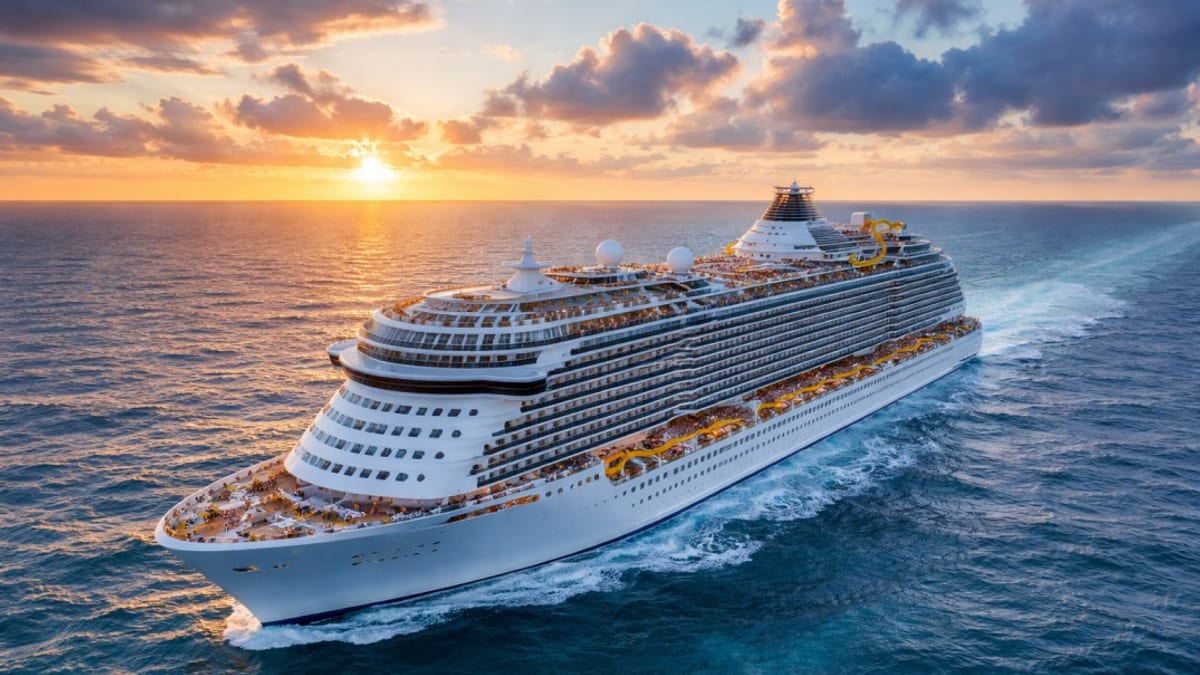
Image by International Cruise News: Latest Cruise Line & Cruise Ship News
Disciplined Capacity Growth After the Pandemic Surge
Public filings and earnings materials from Carnival Corporation outline a shift away from the rapid capacity expansion that defined the pre-2020 era, toward a model built on modest growth and higher profitability from the current fleet. Company reports describe its orderbook as the lowest in decades and emphasize that future capacity increases will be limited and measured, rather than driven by large waves of new ships entering service at once.
Presentations covering the 2025 financial year show Carnival targeting roughly flat capacity, with net income growth coming from stronger pricing and higher onboard spending rather than sheer volume. The company’s capital plans highlight low single-digit annual capacity growth through the end of the decade, framed as a way to protect pricing power while global demand for cruising continues to rise.
Industry analysts note that this approach contrasts with the years before the pandemic, when the world’s largest cruise groups routinely ordered multiple ships per year. Carnival’s recalibrated stance is being interpreted as an effort to balance growth with balance sheet repair after the heavy borrowing that kept operations afloat during the long shutdown of guest sailings.
Capital Allocation Shifts Toward Existing Fleet
Recent disclosures indicate that a growing share of Carnival’s capital expenditures is being directed to non-newbuild projects, including refurbishments, hotel upgrades, and technical improvements to ships already in service. Investor presentations for 2025 outline billions of dollars of planned spending, with a substantial portion earmarked for projects that refresh public spaces, update cabins, and enhance onboard revenue-generating venues.
Public information shows that alongside funds allocated to newbuilds, Carnival is investing heavily in technology and energy efficiency retrofits for existing vessels, from advanced air lubrication systems and waste heat recovery technologies to upgraded propulsion and hotel systems. These projects are presented as a way to improve fuel efficiency and reduce emissions while extending the competitive life of mid-career ships.
The fleet plan also relies on strategic transfers and brand realignments rather than simply adding new tonnage. Carnival has been redeploying ships between its brands and markets and sunsetting certain regional brands, using vessel moves and refurbishments to concentrate capacity in higher-yielding segments instead of expanding indiscriminately into every region.
Lean Newbuild Pipeline Anchors Long-Term Plan
Despite the focus on revitalization, Carnival has not exited the newbuild market. Publicly available documents show a compact pipeline, with just one major delivery scheduled for most years between 2025 and 2033. Recent orders include very large vessels for Carnival Cruise Line due in 2029, 2031, and 2033, along with additional large ships for other brands later in the decade.
Financial summaries and industry data indicate that newbuild capital expenditures are spread over many years, keeping annual outlays comparatively contained relative to the pre-pandemic boom. Carnival’s long-term schedule points to nine large ships on order representing tens of thousands of new berths, but these additions are staggered so that they can be absorbed without destabilizing pricing or overwhelming existing demand.
The company’s communications describe this measured pipeline as part of a broader responsible capital strategy that prioritizes deleveraging and shareholder returns over maximizing fleet size. With only a handful of new ships arriving each side of 2030, growth is expected to be driven more by the quality and efficiency of the fleet than by sheer ship count.
Fleet Modernization Tied to Sustainability Targets
Carnival’s emphasis on upgrading existing ships is closely linked to its climate and sustainability commitments. Corporate reports detail a long-running program to cut carbon intensity, including investments in more efficient hull designs, low-carbon fuels, and energy-saving technologies that can be retrofitted to current vessels.
The company has highlighted that it peaked in absolute carbon emissions more than a decade ago, despite adding capacity since then. Current plans call for further reductions in emissions intensity by 2030, with retrofits to older vessels seen as a cost-effective lever alongside the introduction of new, more efficient ships powered by liquefied natural gas and other advanced systems.
Analysts point out that focusing capital on retrofits supports both environmental and financial goals. Upgraded ships can command higher ticket prices and onboard spend, while fuel and maintenance savings improve margins. This dynamic reinforces Carnival’s decision to favor fleet revitalization projects that deliver near-term returns over a heavy slate of new orders with long construction lead times.
Competitive Positioning in a Crowded Orderbook
Industry data for the global cruise sector show dozens of large ships on order across major operators through 2030, representing a sizeable expansion of worldwide capacity. Within that context, Carnival’s slower pace of newbuilds and heavier emphasis on redeployments and refurbishments appears designed to avoid oversupply while still maintaining its status as the world’s largest cruise company.
Reports from cruise research firms indicate that other players are taking more aggressive stances on new tonnage, with long lists of large ships scheduled over the next decade. Carnival’s strategy of concentrating growth in its highest-returning brands, while tidying its portfolio and enhancing the onboard product of existing vessels, is described as a way to keep pace with competitors without taking on excessive risk.
For travelers, the shift means that many of Carnival’s offerings over the next several years are likely to come from refreshed and reimagined ships rather than a constant stream of brand-new vessels. For investors, the company’s focus on fleet revitalization and disciplined newbuild spending is being framed as a sign that the post-pandemic recovery has moved into a more mature, earnings-driven phase rather than a race to add capacity at any cost.